How to Run an HR Audit That Finds Risk Before It Costs You.
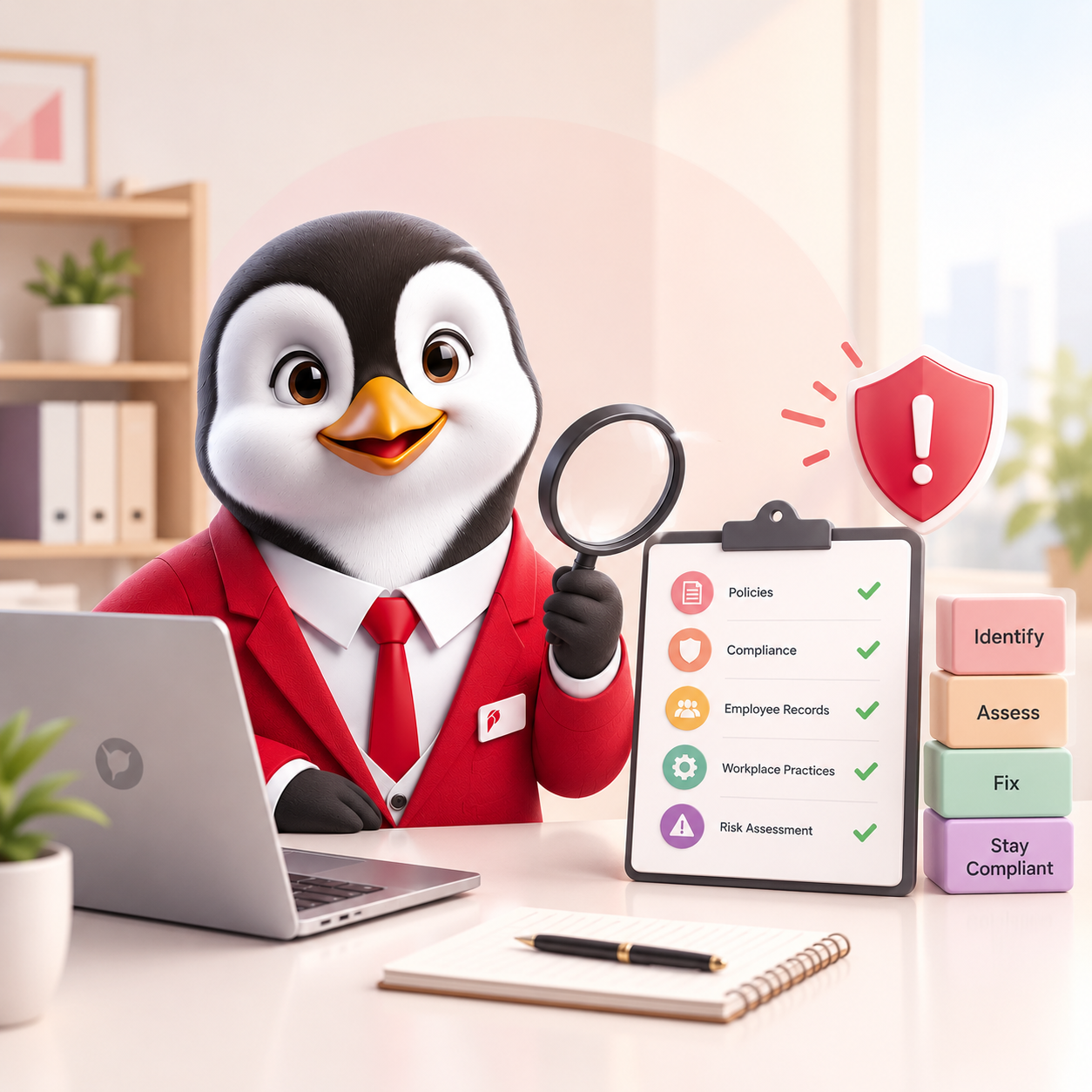
Introduction
Most HR problems do not announce themselves. A statutory return goes unfiled, an offer letter quietly contradicts the handbook, an onboarding step everyone assumes someone else owns gets skipped. Nothing looks wrong until a dispute, an inspection or a resignation turns a small gap into a real cost.
An HR audit is how you find those gaps while they are still cheap to fix. It is a structured review of how your people function actually runs, measured against good practice and the rules that apply where you operate. This guide covers what an HR audit checks, how a maturity score works, and how to run one without building a framework from scratch.
What an HR audit actually is
An HR audit looks past whether a policy exists to whether it is followed, current and defensible. A handbook sitting in a folder nobody opens is not compliance. The point is not to tick boxes, it is to surface the gaps that quietly build risk before they cost you money or a dispute.
Done well, an audit gives you two things a checklist cannot: a clear picture of where you stand today, and a running order for what to fix first. That second part matters most, because every HR team has more to fix than time to fix it.
Signs your company is due for an HR audit
You do not always need a crisis to justify an audit, but a few signals mean one is overdue. Policies have not been reviewed in over a year. Offer letters, contracts and the handbook no longer say the same thing. Statutory filings depend on one person remembering them. Onboarding looks different depending on which manager runs it. Headcount has grown faster than the processes meant to support it. Any one of these on its own is manageable. Several together usually mean risk is building somewhere you cannot see, which is exactly what an audit is designed to surface.
Internal audit or external audit
There are two broad ways to run an HR audit, and each has a place. An internal audit is run by your own HR team using a consistent framework. It is quick, cheap and good for regular health checks, though it can miss what the team is too close to see. An external audit, run by a consultant or an independent tool, brings a fresh, defensible view that carries more weight with a board or an investor. Many growing companies use a hybrid rhythm: a self serve audit every quarter to stay on top of the basics, and a deeper external review once a year or before a major event.
The areas a strong HR audit checks
A good audit covers the full HR lifecycle rather than one slice of it, and works the same way in any country.
Governance and structure. Who owns HR decisions, how they are documented, and whether responsibilities are actually clear.
Statutory compliance. Registrations, filings and mandatory contributions for your location, tracked on a calendar rather than remembered at the last minute.
Policies and documentation. Whether the core policies exist, are current, and match what happens day to day.
Onboarding and exits. Consistent joining and leaving processes, with the right paperwork and handovers every time.
Payroll and benefits. Accurate, on time pay with proper approvals and a clean trail behind every payment.
People operations. Records, leave, performance and grievance handling, and how well they hold up as you grow.
How the maturity score and risk flags work
The value of an audit is in how it prioritises. A useful approach rates each area Red, Amber or Green. Red is a gap that needs attention now. Amber is partly in place but not reliable. Green is working as it should.
Those ratings roll up into a single maturity score from 0 to 100 and a tier, from early stage to well established, so leadership can read the health of HR at a glance and track whether it improves over time. Because the report ranks the riskiest gaps first, you get a running order, not a flat list, and can fix what matters before moving on.
How to run an HR audit step by step
The process is the same whether you do it manually or with a tool, and it comes down to five moves.
Set the scope and context. Decide which areas you are assessing and record your country, industry, size and operating model, so the findings fit your situation rather than a generic template.
Gather the evidence. Pull the actual artefacts: policies, contracts, the payroll register, onboarding records, the statutory filing calendar. The audit judges what happens, not what is supposed to happen, so real documents beat memory.
Assess each area honestly. Rate every area against good practice and the rules that apply to you. Resist the urge to mark something Green because it usually works. If it is not reliable, it is Amber.
Score and prioritise. Roll the ratings into a maturity score and sort the gaps by risk, so the most dangerous issues rise to the top of the list.
Build and work the action plan. Turn each Red and Amber into a task with an owner and a deadline, then re run the audit later to confirm the score moved.
Common gaps an HR audit uncovers
Different companies fail in similar places. The recurring ones are worth watching for: statutory filings tracked in someone’s head rather than a calendar, a handbook that no longer matches current practice, offer letters and contracts that contradict each other, onboarding that varies by manager, payroll approvals with no clear trail, and employee records scattered across inboxes and spreadsheets. None of these look urgent on any given day, which is precisely why an audit that scores and ranks them is what forces them onto the priority list.
Why context and location matter
HR obligations differ from one country to the next, and often by region within a country. An audit that ignores that produces generic advice you cannot act on. The fix is to feed in your context, your country, industry, company size and operating model, so both the questions and the recommendations stay relevant.
Where an area turns on local statute, treat the audit as a pointer to the kind of rule to confirm for your location, not a final legal answer. It tells you where to look, then you verify the specifics for where your people are based.
When to run an HR audit
Some moments make an audit especially worth it. Run one before a funding round or due diligence, when scaling headcount quickly, after entering a new country or state, or simply once a year as a health check. Founders and small teams benefit most, because HR risk tends to build silently in the years before anyone hires a dedicated HR lead.
Who gets the most out of it
An HR audit serves several jobs at once. HR and people teams use it to benchmark the function and turn gaps into a board ready plan. Founders and small business owners use it to learn their risk before it becomes a fine or a dispute. HR consultants use it as a fast, defensible baseline for each client. People leaders use one consistent score to track progress and prove HR improved.
Conclusion
The point of an HR audit is not paperwork. It is catching the quiet gaps, the unfiled return, the contradictory letter, the skipped step, while they are still cheap to close. Score where you stand, flag the risk, and fix the most dangerous gaps first.
If you would rather not build the framework yourself, HRTailor.AI has a free HR audit tool that turns a short questionnaire into a maturity score, colour flagged risk report and a prioritised action list tailored to your country, size and model, in about a minute.

Frequently Asked Questions
It reviews governance, statutory compliance, policies, onboarding and exits, payroll and people operations against good practice and local rules.
With a guided questionnaire it takes only a few minutes to get a scored report, rather than the weeks a manual review can run to.
At least once a year, and also before a funding round, a fast scaling phase, or entering a new country or state.

What a Complete Employee Onboarding Checklist Actually Covers.
What a Complete Employee Onboarding Checklist Actually Covers. Introduction A...
Read More
How to Run an HR Audit That Finds Risk Before It Costs You.
How to Run an HR Audit That Finds Risk Before...
Read More
Why HR Teams Swap Spreadsheets for a Payslip Generator.
Why HR Teams Swap Spreadsheets for a Payslip Generator. Introduction...
Read More
Build a Job Ready Resume in Minutes With an AI Resume Builder.
Build a Job Ready Resume in Minutes With an AI...
Read More