Introduction
A new hire accepts the offer, and then nothing happens for two weeks. They arrive on day one to a desk with no laptop, no email login, and a manager in back to back meetings. By lunch they are quietly wondering whether they made a mistake. Nobody meant for it to go this way. The tasks were simply never written down or handed to anyone.
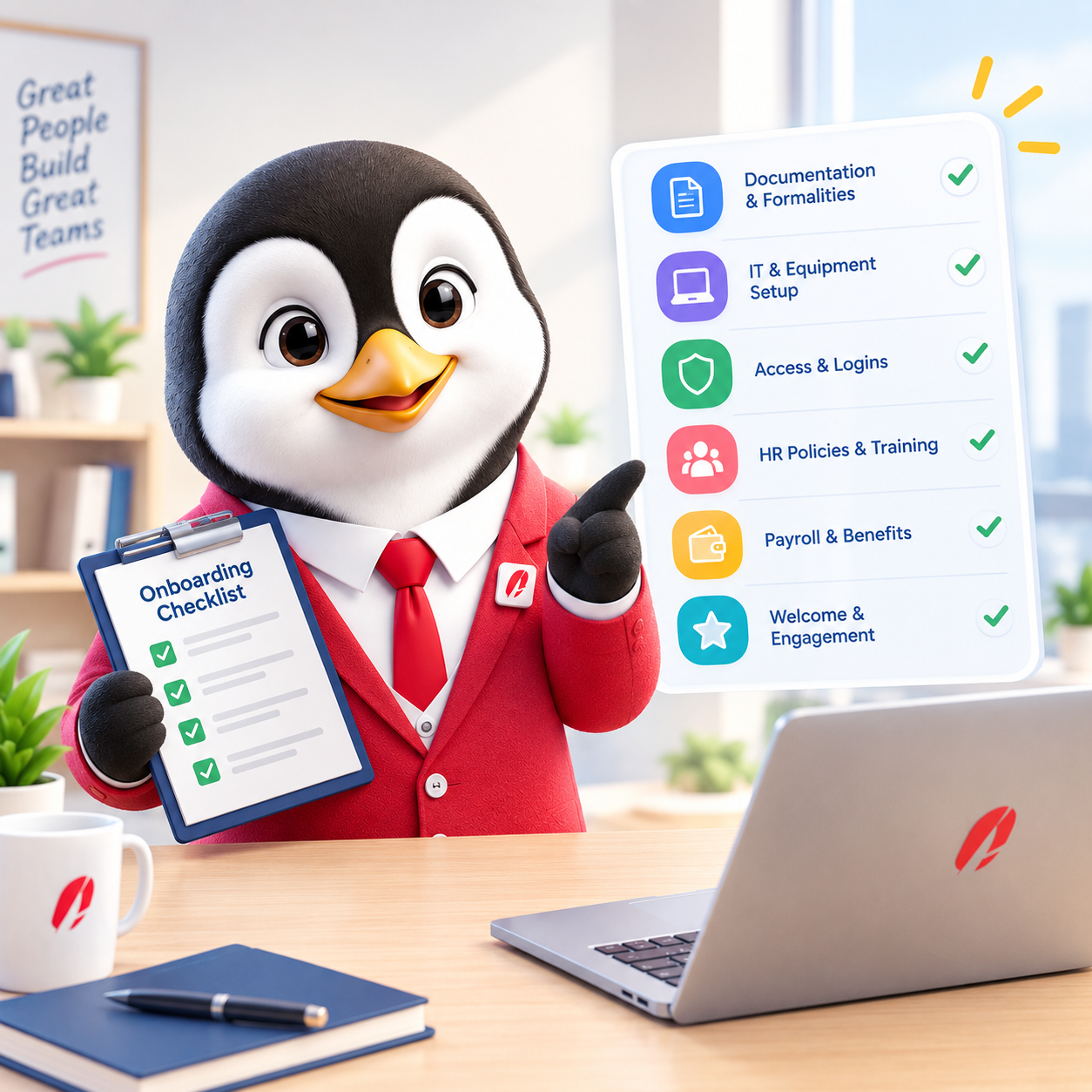
That is exactly the gap a good employee onboarding checklist closes. It turns a start date into a sequenced plan, so equipment, access, paperwork, introductions and early goals all have an owner and a deadline. This guide walks through what a complete employee onboarding checklist actually covers, phase by phase, so every new hire gets the same strong start.
Pre boarding vs onboarding, and why the split matters
A lot of onboarding failures happen before the person even walks in. Pre boarding is everything between offer acceptance and day one: sending paperwork early, ordering equipment, provisioning accounts, sharing a first day agenda, and keeping the new hire warm so they do not get cold feet.
Onboarding is what happens from day one onward: orientation, training, meeting the team, and ramping into the actual work. Teams that treat both as one last minute scramble lose the first week to admin. Teams that pre board well let day one be about people and purpose, not filling forms.
The phases a strong employee onboarding checklist covers
Sequencing the plan by phase keeps everyone clear on what happens when, and who owns it.
Pre boarding. Paperwork, equipment order, account provisioning, a first day agenda, and staying in touch after the offer so the hire stays committed.
Day one. A proper welcome and orientation, access checks, workspace or kit handover, and meeting the immediate team.
First week. Role briefing, training on the tools and systems, key introductions, and early context on how the team actually works.
First 30, 60 and 90 days. Ramping goals and regular check ins, so a new hire always knows what settling in well looks like.
Group every task by owner
A checklist that lists tasks but not owners still leaves room for the laptop nobody ordered. The fix is to split responsibilities clearly. HR handles documents, statutory forms and orientation. The hiring manager owns the role briefing, goals and check ins. IT covers accounts, access and equipment. The new hire has their own list too, such as submitting documents and completing early training.
When each item has a named owner, someone will sort the laptop stops being a hope and becomes a task with a deadline.
Do not stop at day one
The habit that separates good onboarding from great is not stopping at the first day. The strongest programmes carry structured goals and check ins through the first 30, 60 and 90 days, so a new joiner becomes productive and confident sooner rather than being left to find their own way.
Because a role based plan is reusable, you can build the checklist once, save your version, and run the same thorough process every time you hire for that role.
A quick note on local rules
Statutory onboarding requirements differ by country and often by region. Mandatory forms, verifications and registrations are not the same everywhere, so always confirm the requirements where your employee is based and adapt the plan to your own policies. A generated checklist is a strong starting point, not a substitute for local compliance.
Who benefits most
An employee onboarding checklist helps anyone responsible for a new joiner. HR managers get consistency, so every hire gets the same professional start whichever manager they report to. Founders and small teams onboard their first employees without a formal process in place. Team leads get a ready made ramp plan. Distributed and remote first teams get kit shipping, early access and virtual introductions handled well before day one.
Conclusion
Give every new hire the same strong start and you protect the thing that is hardest to win back: their confidence in the decision to join. A complete employee onboarding checklist makes that repeatable by sequencing every task, assigning every owner, and carrying the plan past day one.
If you would rather not build it from scratch, HRTailor.AI has a free tool that turns a role and a start date into a phased onboarding checklist, grouped by owner and ready to edit, share and export. You customise everything and reuse it for the next hire.
Build an Onboarding Checklist | Explore HR Toolkit