HRD Policies in 2026: How to Create Effective HR Policies with AI

Effective HR policies come from a repeatable process, not a template: decide what each policy must achieve, check the law and your existing contracts, draft, test the draft with the people who will use it, approve it, communicate it, and review it on a fixed cycle. AI is genuinely useful at the drafting stage because it produces a clear, well-structured first version in minutes. It cannot confirm the current law in your state or know how your organization really works, so every AI draft needs a human check before it is issued.
What HRD policies are
“HRD policies” is a common term, especially in India, for the written rules an HR department maintains on how people are hired, developed, paid, managed and separated. Strictly, human resource development refers to training and growth, but in practice the term covers the whole policy manual:
- Joining and employment: recruitment, onboarding, probation, appointment terms.
- Time: working hours, attendance, leave, holidays, remote and hybrid work.
- Pay and benefits: salary structure, reimbursements, travel, statutory benefits.
- Conduct: code of conduct, anti-harassment, conflicts of interest, IT and data use.
- Development: training, performance management, promotions.
- Exit: resignation, notice, termination, full and final settlement.
If you are deciding which policies to write first, start with our list of essential HR policies a growing company cannot skip.
The 8-step policy development process
Use the same process for every policy, whether it is a one-page dress code or a full leave policy. It keeps quality consistent and gives you an audit trail.
- Define the problem and the owner. Write one sentence on why the policy is needed (a legal duty, a recurring dispute, a new work model) and name a single owner who will maintain it.
- Collect the facts. Current practice, relevant contracts and appointment letters, past disputes, and what managers actually do today. Many policy failures come from writing an ideal rule that nobody follows.
- Check the legal baseline. Identify which laws apply in each location. In India, the four Labour Codes have been in force since 21 November 2025, with Central Rules notified on 8 May 2026, and states make their own rules too. Policies written around the old Acts need updating; our guide to which HR policies to rewrite for the Labour Codes lists the usual suspects.
- Draft. Use a standard structure (see the table below). This is where AI saves the most time.
- Review with users. Ask two or three line managers, someone from finance or payroll, and, where you have them, employee representatives to read the draft and say where it is unclear or unworkable.
- Legal and leadership sign-off. Have the statutory parts checked, then approve the policy formally and record the version number and effective date.
- Communicate and collect acknowledgement. Publish it where people can find it, explain what changed and why, and record that employees have read it.
- Monitor. Track questions, exceptions and disputes. They tell you what to fix in the next version.
India note: changing existing terms
Under the Industrial Relations Code, 2020, if an employer intends to change a service condition listed in the Code’s Third Schedule, it must give prescribed notice to the affected workers, and the change can take effect only after 21 days from the notice. Industrial establishments with 300 or more workers are covered by the Code’s standing orders provisions, and a policy cannot quietly override certified standing orders. Check both before changing anything that touches wages, hours, leave or classification.
A standard structure for every policy
| Section | What it contains |
|---|---|
| Title, version, effective date, owner | So everyone knows which version applies and who to ask |
| Purpose | Two or three sentences on why the policy exists |
| Scope | Which employees, locations and worker types it covers |
| Definitions | Only the terms that would otherwise be argued about |
| Policy statements | The actual rules, in short numbered clauses |
| Procedure | Step-by-step: who does what, by when, using which form |
| Exceptions and approvals | Who can approve a departure from the rule |
| Breaches | How non-compliance is handled, linked to the disciplinary policy |
| Related documents and law | Linked policies, forms and the statutory references checked |
| Review date and change log | When it will be reviewed and what changed last time |
Using AI to draft policies safely
What AI does well
- Turns rough notes into a clean structure with consistent headings and numbering.
- Suggests sections you may have missed, such as exceptions or approvals.
- Rewrites legal-sounding text into plain language employees will actually read.
- Produces location-specific variants of the same policy for comparison.
- Keeps tone and terminology consistent across a whole manual.
Where AI drafts go wrong
- Outdated law. A model may cite repealed Indian Acts as current, or miss that a rate or threshold has changed.
- Wrong jurisdiction. Drafts can slip in rules from another country, such as “at-will employment” language that has no place in an Indian policy.
- Invented specifics. Section numbers, deadlines and amounts that look plausible but are not checked.
- Promises you cannot keep. Generic commitments (“all requests answered within 24 hours”) that your team cannot deliver.
- Conflict with contracts. A draft that contradicts appointment letters, standing orders or existing settlements.
A safe AI drafting workflow
- Give precise inputs: country, state, headcount, worker types, industry, and your current practice.
- Ask the tool to leave placeholders for every number, date and legal reference instead of filling them in.
- Fill each placeholder from an official source (the relevant ministry, gazette or state labour department) and record where it came from.
- Compare the draft line by line with your contracts and other policies.
- Keep personal data out of prompts. Use roles, not names. India’s Digital Personal Data Protection Act, 2023 governs how digital personal data is processed, and employee data deserves the same care in AI tools as anywhere else.
- Have a named person approve the final text. The approver, not the tool, is accountable.
For a side-by-side look at the trade-offs, see AI vs manual HR policy writing.
Quick review checklist for an AI draft
| Check | Question to ask |
|---|---|
| Law | Is every legal reference current and verified on an official source? |
| Location | Does it reflect the state or country where these employees work? |
| Numbers | Is every figure sourced, not guessed? |
| Fit | Does it match what managers actually do, and can HR deliver every promise? |
| Consistency | Does it agree with contracts, standing orders and other policies? |
| Readability | Could a new joiner follow the procedure without asking HR? |
Setting a review cycle
Review every policy at least once a year on a fixed calendar, and also when a trigger event happens. Spread annual reviews across the year so they do not all land in one month.
| Trigger | What to do |
|---|---|
| New law, rules or notification | Review all policies the change touches before the effective date |
| Expansion into a new state or country | Create a local annexure for leave, holidays, hours and statutory benefits |
| New work model (hybrid, shifts, remote) | Update attendance, leave, IT and expense policies together |
| Dispute, incident or audit finding | Fix the gap the incident exposed, then check related policies |
| Restructuring or acquisition | Harmonise policies and check notice requirements before changing terms |
Version control and acknowledgement
- Keep one master copy per policy. Archive old versions with their effective dates; you will need them if a past decision is challenged.
- Number versions (1.0, 1.1, 2.0) and keep a short change log at the end of each policy.
- Record acknowledgements for every employee, including new joiners during onboarding.
- Make clear in each policy which version prevails if a printed copy is out of date.
Our article on the role HR managers play in creating and maintaining policies covers ownership in more detail.
Common mistakes to avoid
- Copying a template from another company, country or industry without adapting it.
- Writing policies nobody owns, so nobody updates them.
- Publishing AI output without checking the legal references.
- Changing terms of employment without the notice the law requires.
- Long, legalistic documents that employees never read.
- Policies that contradict each other on the same topic.
To produce a structured first draft quickly, the HRTailor.AI HR policy generator offers templates such as leave, code of conduct, remote work and POSH, with location-aware drafts you can edit and download. Run every draft through the review checklist above before you publish it.
Last reviewed: 26 October 2026. General information, not legal or tax advice.
Official sources
- PIB: Four Labour Codes effective from 21 November 2025
- Compliance Handbook for Employers under the Four Labour Codes (Ministry of Labour and Employment)
- Digital Personal Data Protection Act, 2023 (MeitY)
Related reading


Frequently Asked Questions
HRD policies are structured guidelines that define employee development, workplace behavior, and organizational processes.
They provide clarity, improve employee management, and ensure compliance with labor laws.
AI speeds up first drafts, keeps structure and wording consistent, and can adapt a draft to a location and industry. A person still needs to check every legal reference and figure against official sources before the policy is issued.
How to Create a Workplace Code of Ethics: A Practical Guide.
How to Create a Workplace Code of Ethics: A Practical...
Read More
How to Calculate Employee Attrition Rate: Formula and Examples.
How to Calculate Employee Attrition Rate: Formula and Examples. Understand...
Read More
What Is a Performance Improvement Plan (PIP)? Steps, Examples and Template.
What Is a Performance Improvement Plan (PIP)? Steps, Examples and...
Read More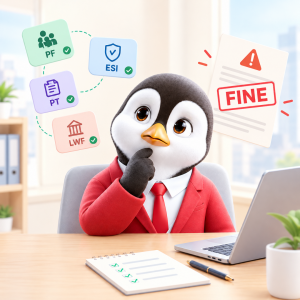
The HR Compliance Gaps That Quietly Turn Into Fines
The HR Compliance Gaps That Quietly Turn into Fines Introduction...
Read More