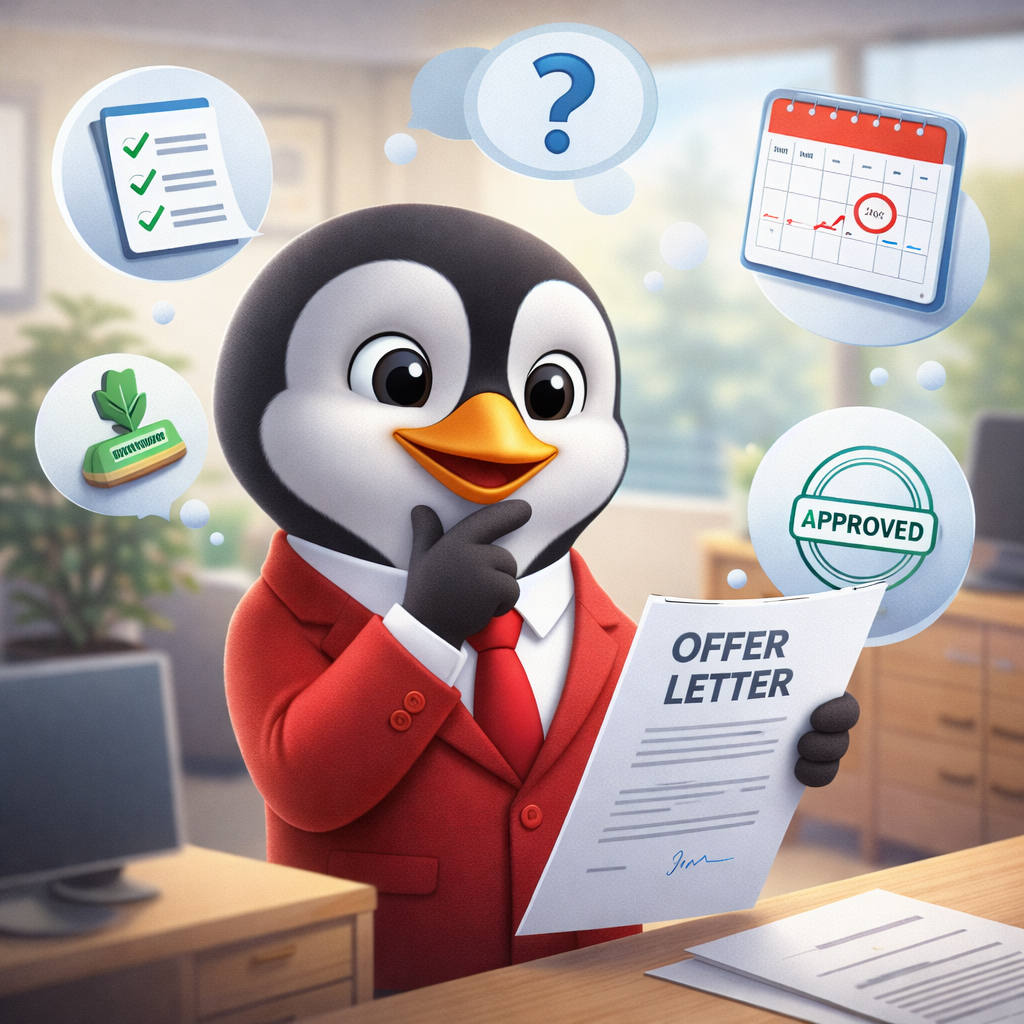
Sending an offer letter often feels like the final step in hiring. However, experienced HR teams know it is also a critical checkpoint. Once an offer is shared, expectations are set, assumptions are formed, and trust begins to solidify.That is why the moments before an offer letter goes out matter just as much as the hiring process itself. A few unanswered questions can turn an exciting milestone into unnecessary confusion.
Is the role definition fully aligned internally?
Before drafting anything, HR should confirm that everyone involved agrees on the role itself.Job title, responsibilities, reporting structure, and seniority level must match what was discussed during interviews. Even small mismatches can cause confusion later.Alignment upfront prevents revisions after the offer is issued.
Are compensation details final and approved?
Compensation is one of the most sensitive sections of any offer letter.Salary structure, incentives, bonuses, and benefits should be clearly finalized and approved internally. Verbal discussions should match written terms exactly.When numbers are clear, trust forms faster.
Have start dates and work arrangements been confirmed?
Joining date, work location, and work mode (onsite, remote, or hybrid) must be confirmed before the offer is shared.Changes after sending the offer often create hesitation or delays. Therefore, clarity here protects both the organization and the candidate.Clear details reduce follow-up conversations.
Does the offer reflect the correct employment type?
Permanent, contractual, probationary, or temporary roles must be stated correctly.This affects notice periods, benefits, and legal obligations. HR teams should double-check that the employment type aligns with internal policy and the hiring plan.Accuracy here prevents compliance issues later.
Are legal and policy references up to date?
Offer letters often reference company policies or terms.HR should ensure these references reflect the latest versions. Outdated clauses or incorrect policy links can weaken the document’s credibility.Regular reviews help keep letters current.
Is the offer letter language clear and consistent?
Tone matters. The language should be professional, direct, and easy to understand.Overly complex or legal-heavy wording often confuses candidates. Clear language, on the other hand, builds confidence.Consistency across offers also strengthens employer communication.
Has the correct offer letter template been used?
Using the wrong template can lead to missing sections or incorrect terms.A reliable offer letter template ensures all essential elements are included while allowing customization where needed.Templates support structure, not shortcuts.
Have approval and sign-off processes been completed?
Before sending the offer, HR should confirm that all required approvals are complete.Skipping this step can lead to retractions or revisions—both of which damage candidate experience.A final review saves time later.
How the offer letter fits into the candidate experience
From the candidate’s perspective, the offer letter is a moment of validation.Clear structure, timely delivery, and accurate information signal professionalism. On the other hand, errors or delays raise doubts—even after a positive interview process.The offer letter often defines the emotional peak of hiring.
Speed is important. However, accuracy matters more.
Rushing an offer without answering key questions increases the risk of renegotiations, declined offers, or early disengagement.
Preparedness creates smoother hiring outcomes.
How HR teams maintain consistency at scale
As hiring volumes grow, consistency becomes harder to manage manually.
This is where structured workflows and tools help HR teams maintain reliable offer letter format standards while adapting to role-specific needs.
The goal is balance and structure with flexibility.
Final Thoughts
An offer letter is not just a document—it is a commitment in writing. The questions HR teams answer before sending it often determine how smoothly the hiring process concludes.
When clarity, accuracy, and preparation come together, offer letters build trust instead of confusion. With support from tools like the HRTailor.AI HR Letter Generator, HR teams can structure, review, and finalize offer letters more efficiently—while keeping judgment and decision-making firmly in human hands.
The best offers are not rushed. They are thoughtfully prepared.