Before candidates read about benefits or company culture, they look for clarity. They want to understand what the role actually involves. When that clarity is missing, interest drops quickly.
This is why job duties and responsibilities play such a critical role in hiring success. They shape expectations, influence who applies, and set the tone for performance later on. When written well, they attract candidates who understand the role and feel confident applying. When written poorly, they invite confusion instead.
Writing this section clearly does not require complexity. Instead, it requires intention, structure, and a candidate-first mindset.
Why Job Duties and Responsibilities Influence Applications
Candidates scan job descriptions fast. Therefore, they rely heavily on this section to decide whether a role fits their skills and goals.
Clear duties help candidates imagine themselves in the role. At the same time, clear responsibilities explain what success looks like. As a result, stronger candidates apply while mismatched ones move on.
Moreover, clarity early prevents misalignment later. That alone saves time for both candidates and hiring teams.
Understanding the Difference Between Duties and Responsibilities
Although often grouped together, duties and responsibilities serve different purposes.
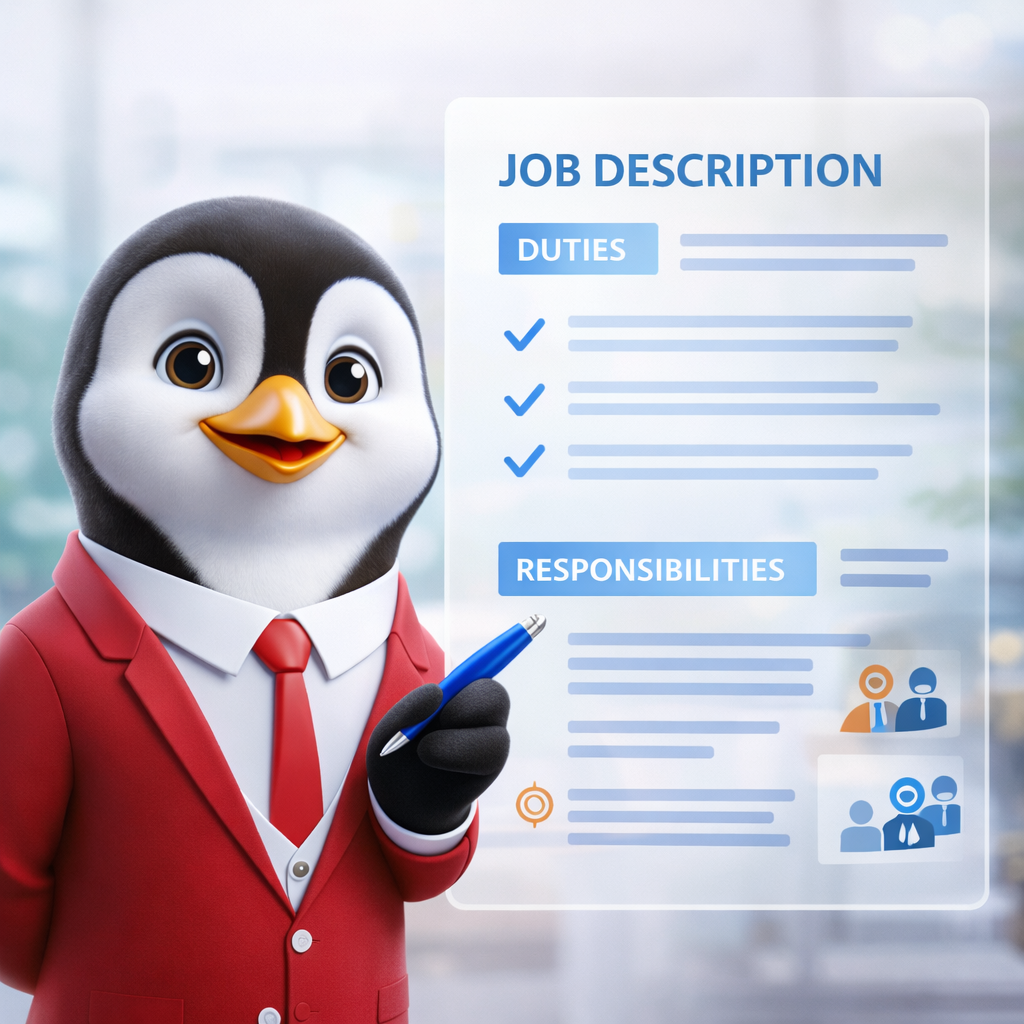
Job duties describe the tasks someone performs regularly. Responsibilities explain ownership, accountability, and expected outcomes. Together, they create a complete picture of the role.
When one is missing, the role feels incomplete. When both are present and balanced, expectations stay realistic.
How to Write Job Duties That Feel Real
Focus on What Actually Happens
Start with the work that fills most days. Candidates trust descriptions that feel practical and grounded.
Instead of vague phrases, describe tasks clearly. For example, explain what the person will manage, create, review, or support.
As a result, candidates gain confidence in what they are applying for.
Use Clear, Action-Based Language
Strong duties begin with action verbs. This approach keeps sentences direct and engaging.
Additionally, active language improves readability and reduces confusion. Candidates understand expectations faster when language stays simple.
Group Related Tasks Together
Long lists feel overwhelming. Instead, group duties by function or outcome.
This structure makes the role easier to scan. Consequently, candidates stay engaged longer.
How to Write Responsibilities That Set Clear Expectations
Define Ownership Early
Responsibilities should explain what the role owns, not just what it touches.
When ownership is clear, accountability follows naturally. This clarity helps candidates understand the level of responsibility involved.
Highlight Outcomes, Not Effort
Candidates care about impact. Therefore, responsibilities should focus on results rather than activity alone.
For example, explain what the role is expected to achieve instead of listing every step involved.
Show Where Collaboration Matters
Most roles involve teamwork. Responsibilities should reflect how the role works with others.
This transparency helps candidates assess fit before interviews begin.
Common Writing Mistakes That Reduce Clarity
Being Broad
Phrases like “assist with projects” lack meaning. Candidates interpret them differently.
Specific language always performs better.
Overloading the Role
Too many responsibilities signal unclear priorities. As a result, strong candidates may hesitate to apply.
Focus attracts confidence.
Reusing Generic Descriptions
Copied content feels disconnected. Each role deserves tailored duties and responsibilities.
Custom writing builds trust.
Writing With Candidates in Mind
Job descriptions are not internal documents. They are conversations with potential employees.
Therefore, clarity should always come first. Short sentences, smooth transitions, and clear structure help candidates stay engaged.
When candidates understand the role easily, they apply with confidence.
How AI Helps Create Clear Job Duties and Responsibilities
Writing role descriptions manually takes time. Even experienced teams struggle with consistency.
With the Job Description Maker, teams can create structured job duties and responsibilities faster. The tool helps organize tasks, define ownership, and remove vague language—while still allowing full customization.
As a result, teams save time without losing clarity or control.
Keeping Duties and Responsibilities Relevant
Roles evolve. Tools change. Expectations shift.
Because of this, job duties and responsibilities should be reviewed regularly. Small updates keep descriptions accurate and aligned with reality.
This habit prevents confusion later.
Why Clear Writing Attracts the Right Candidates
Clear descriptions filter candidates naturally. People who understand the role apply. Others opt out.
Consequently:
-
Interviews become more focused
-
Onboarding feels smoother
-
Performance discussions start on the same page
Clarity attracts alignment.
Final Thoughts
Clear job duties and responsibilities attract clarity-driven candidates. They set expectations early and support stronger teams over time.
With the HRTailor.AI Job Description Maker, teams can write clear, structured, and engaging job descriptions efficiently—while keeping human judgment at the center.
Clarity doesn’t complicate hiring. It improves it.