Introduction
For HR leaders and employers, workplace safety goes beyond general guidelines—it requires structured governance. Drug testing policies are rarely implemented on ordinary days; instead, organisations rely on them during incidents, audits, or disputes. In these critical moments, clarity and fairness become non-negotiable. For this reason, clearly defined workplace drug testing rules are essential.
Many organisations assume that referencing drug testing in an employee handbook is sufficient. However, gaps in policy language often create confusion, inconsistencies, and legal exposure. A robust policy anticipates challenges rather than reacting to them.
1. Purpose and Scope of the Policy
Every effective policy starts with a clear purpose. From an employer’s perspective, the goal is not policing—it is protecting people, operations, and organisational credibility.
To achieve this, HR teams should define:
-
The rationale behind testing
-
Which roles or teams the policy applies to
-
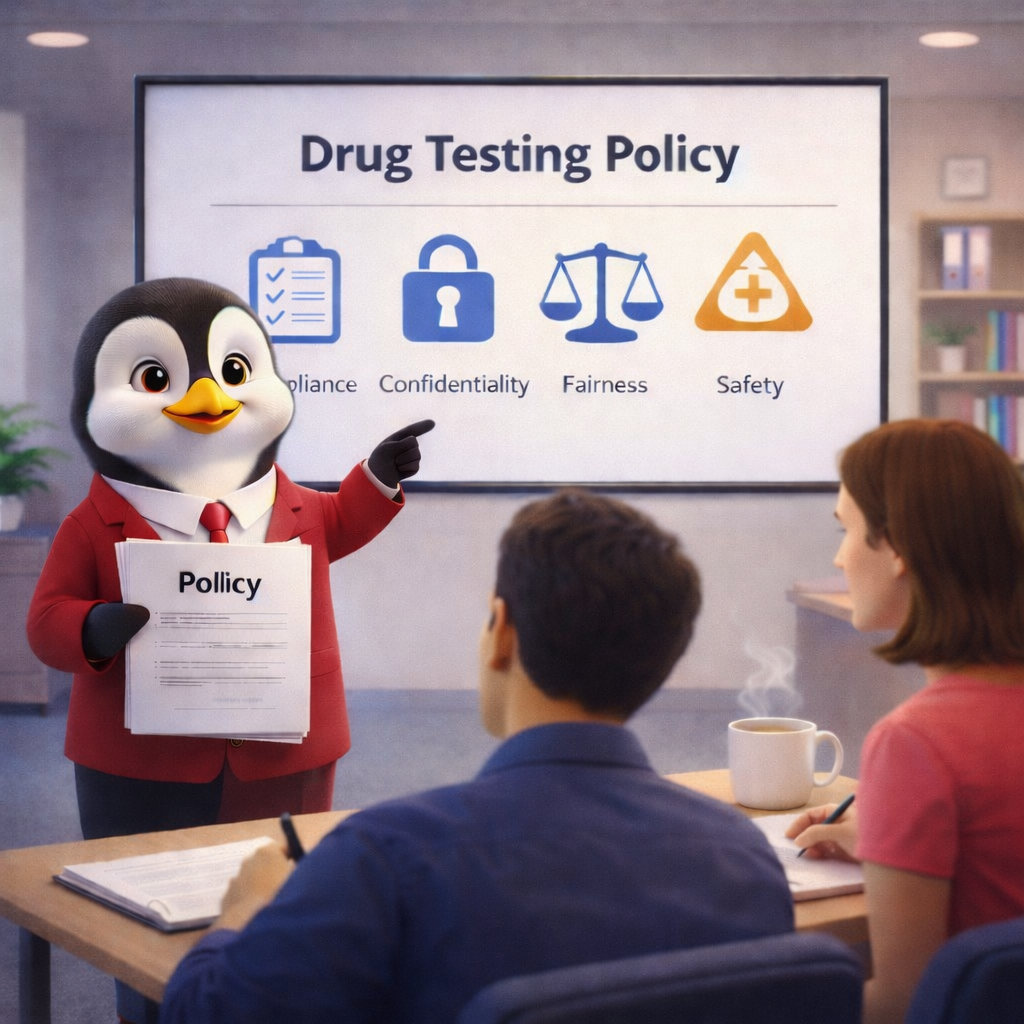
How safety, compliance, and fairness are balanced
When clearly articulated, workplace drug testing rules help HR justify actions with consistency and confidence.
2. Situations Triggering Testing
To prevent ambiguity and potential disputes, policies must clearly define when testing occurs.
Typically, this includes:
-
Incident-based testing following accidents or safety events
-
Role-specific requirements in high-risk environments
-
Regulatory or contractual obligations
As a result, well-documented triggers ensure decisions remain policy-driven rather than subjective.
3. Roles and Responsibilities
Unclear authority remains a common pitfall in drug testing programs. Questions often arise around who initiates testing, who documents it, and who communicates results.
To avoid this, a strong policy outlines:
-
Responsible HR and managerial roles
-
Escalation and review processes
-
Confidentiality ownership and record keeping
This clarity ensures accountability while also protecting HR and management teams.
4. Substances and Testing Procedures
Ambiguity around substances or testing methods can create compliance gaps. Therefore, HR teams should clearly document:
-
Categories of substances tested
-
Whether prescription medications are considered
-
High-level testing procedures without unnecessary operational detail
Precise language strengthens both defensibility and transparency in all situations.
5. Consent, Privacy, and Data Handling
Testing without clear consent and privacy rules exposes organisations to serious risk. For this reason, policies must explain:
-
How consent is obtained and recorded
-
How results are stored and accessed
-
Who can view test information and for how long
-
Measures used to maintain confidentiality
For HR leaders, privacy protection remains central to ethical governance.
6. Managing Outcomes Fairly
Workplace drug testing outcomes require consistent, process-driven handling rather than reactive decisions.
Accordingly, the policy should clarify:
-
How results are reviewed
-
Corrective or disciplinary steps
-
Alignment with broader HR frameworks
-
Options for review or appeal
By separating testing procedures from outcomes, organisations reinforce fairness and procedural integrity.
7. Consistency Across Teams and Locations
As organisations scale, inconsistent policy application becomes a hidden risk. Clearly documented workplace drug testing rules help HR teams:
-
Apply standards uniformly
-
Reduce managerial bias
-
Simplify training and onboarding
-
Maintain audit-ready documentation
Ultimately, consistency strengthens both compliance and trust.
8. Policy Updates and Review
Workplaces and regulations continue to evolve. As a result, HR teams must clearly define:
Structured frameworks, such as the HRTailor.AI Policy Builder, enable HR teams to create policies that are easy to update, legally compliant, and consistent across locations—without starting from scratch each time.
9. Communicating the Policy
A policy remains effective only when employees understand it. However, communication must remain professional and transparent rather than fear-based.
To support this, HR should clarify:
-
Where and how the policy is accessible
-
How updates are communicated
-
Who employees can contact with questions
-
That the policy supports governance, not surveillance
Clear communication reinforces professionalism and builds trust.
10. Documentation and Audit Readiness
Policies must withstand scrutiny when it matters most. Therefore, HR teams should ensure that:
-
Policy language reflects actual practices
-
Documentation remains standardised and retrievable
-
Decisions can be traced directly to policy clauses
Strong documentation transforms workplace drug testing rules from static documents into active governance tools.
Conclusion
Workplace drug testing policies are designed not for ordinary days but for critical moments. By clearly defining rules, responsibilities, and procedures, HR leaders protect their organisations, employees, and overall credibility. Structured, consistent, and fair policies strengthen governance and foster trust across teams. Tools such as the HRTailor.AI Policy Builder support HR teams in creating policies that remain compliant, professional, and easy to maintain—ensuring clarity when it matters most.