Introduction
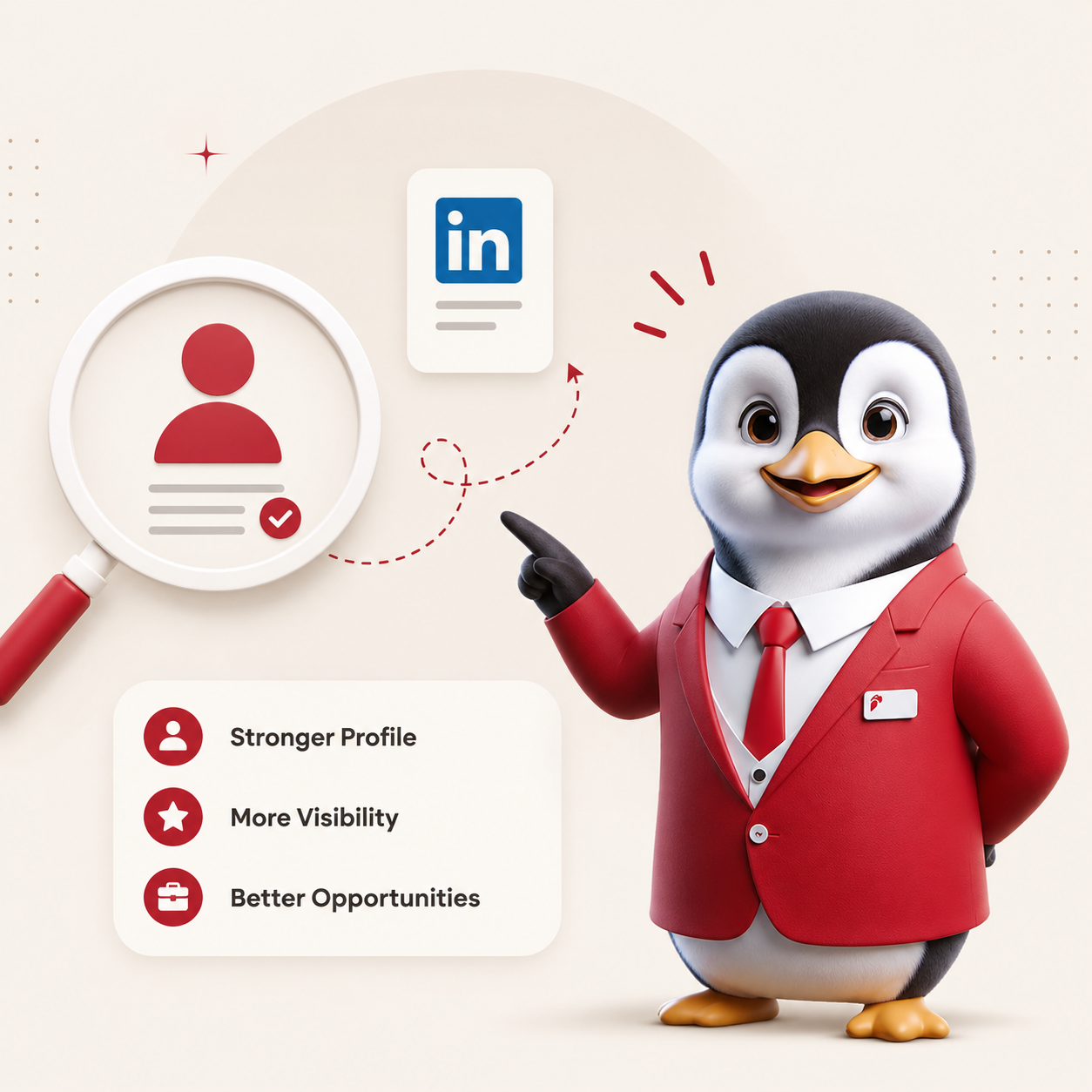
For a fresher, LinkedIn is often the first place a recruiter looks, before your resume, before your portfolio, and sometimes before your application even reaches them. A weak or half filled profile quietly costs you interviews you never knew you were being considered for.
The good news is that most freshers lose out not because they lack experience, but because their profile does not show what they already have. A few focused changes can turn a passive profile into one recruiters actually reach out to.
Why LinkedIn matters more for freshers than they think
Recruiters hiring for entry level roles rely heavily on LinkedIn search. They filter by location, skills, education, and keywords, and profiles that do not match those filters simply do not appear. As a fresher, you are competing with thousands of candidates with similar degrees and similar CGPAs, which means the profile itself is often the tiebreaker.
The other reality is that most freshers use LinkedIn like a static resume. They fill it once, forget it, and wonder why nothing happens. Profiles that get traction are the ones that are searchable, credible, and easy to skim in under thirty seconds.
The profile elements that actually move the needle
Not every field on LinkedIn carries the same weight. If you are short on time, focus on the ones that recruiters see first and search on most.
1. Photo and banner
- Use a clear, properly lit headshot with a plain background, and avoid group photos or heavy filters
- Dress the way you would show up to an interview for the role you want
- Add a simple banner that reflects your field, such as a subtle graphic, your university, or a clean colour block
- Skip stock backgrounds that look generic
2. Headline, your most valuable line
Your headline follows you everywhere on LinkedIn, including search results, comments, connection requests, and messages. The default “Student at XYZ University” wastes it.
A stronger headline signals what you can do, not just where you study. Combine your target role, a core skill, and something specific about you. For example, “Aspiring Data Analyst | Python, SQL, Power BI | Final year B.Tech, VJTI Mumbai” tells a recruiter more in one line than a full summary does.
3. About section
- Open with one sentence on who you are and what you are looking for
- Follow with two or three sentences on your key skills and where you have applied them, such as coursework, internships, freelance work, hackathons, or campus projects
- Close with what you are currently open to, whether internships, full time roles, or specific industries
- Keep it under 150 words, since recruiters skim, they do not read
The mistake most freshers make is filling this section with adjectives like passionate, hardworking, and dedicated. Recruiters skip past those. What holds attention is specifics such as tools you have used, problems you have worked on, and results you have produced.
4. Education and projects
- List your degree, university, and expected year of graduation clearly
- Under each degree, add relevant coursework, capstone projects, and academic achievements that connect to the role you want
- Use the Projects section to showcase anything you have built, analysed, or led, and even coursework counts if you frame it as a project
For a fresher, projects often carry more weight than internships. A well described college project with the problem, your approach, the tools you used, and the outcome can outperform a vague internship description.
5. Skills and endorsements
- Add 15 to 20 skills that match the roles you are targeting, not everything you have ever touched
- Keep the top three skills sharply relevant, since recruiters see only these on the profile card
- Take LinkedIn Skill Assessments where available, since a verified skill badge stands out against unverified lists
- Ask classmates, professors, and internship supervisors to endorse the skills that matter most
The keywords freshers usually miss
LinkedIn’s search runs on keywords. If a recruiter is looking for a “financial analyst intern” and your profile only says “commerce graduate exploring finance”, you will not appear in that search, even if you are a perfect fit.
Look at three or four job descriptions for the exact role you want. Note the tools, certifications, and terms that repeat across them. Then weave those naturally into your headline, About section, skills, and project descriptions. This is not stuffing, it is making sure the algorithm can actually find you.
Activity that signals you are serious
A polished profile with zero activity looks abandoned. You do not need to post daily, but consistent, low effort engagement changes how recruiters perceive you.
- Comment thoughtfully on posts from people in your target industry
- Share one or two things a month, such as a project, a course you finished, or a takeaway from an event
- Follow companies you want to work at so their updates appear in your feed and their recruiters see you engaging
- Connect with alumni from your college who work in roles you are targeting, with a short personalised note
Even ten minutes a week of this compounds over a semester. Recruiters check whether a candidate actually uses LinkedIn or just parked a profile there.
Common mistakes that quietly kill fresher profiles
- Generic headlines that only mention the college and degree
- Empty About sections, or ones filled with buzzwords instead of specifics
- Listing every skill you have ever encountered, which dilutes the ones that matter
- Ignoring the Projects and Certifications sections where freshers have the most to show
- Setting the profile to “Open to Work” without specifying roles, locations, or job types
Conclusion
Optimising your LinkedIn profile as a fresher is not about faking experience you do not have. It is about presenting what you do have, including your coursework, projects, skills, and direction, in a way that recruiters can actually find and evaluate quickly.
If you want a faster starting point, the HRTailor.AI LinkedIn Profile Optimizer analyses your profile, suggests targeted improvements to your headline, About section, skills, and keywords, and helps freshers turn a passive profile into one that actually attracts recruiter attention.