Introduction
A human resources compliance checklist is one of those documents every business assumes it has until something goes wrong, an audit, a complaint, a resignation that turns into a dispute, and it turns out no one can produce a current version. If yours is generic, copied from a template, or built five years ago and never revisited, you’re carrying risk that a good checklist would have flagged months earlier.
Here’s what a working HR compliance checklist should cover in 2026, and how to build one that actually reflects how your business operates rather than sitting in a folder no one opens.
What an HR compliance checklist actually does
An HR compliance checklist is not a fillable PDF or a Google-search template. A useful one is a structured list of the policies, records, and processes your business is legally required to maintain, mapped to your specific context, your location, your headcount, your industry, and your workforce mix.
Template-based checklists give you a starting document you edit manually and hope holds up. Location-aware, AI-generated checklists produce the actual items that apply to you, based on the statutes that govern your establishment. That distinction matters, because a checklist built for a national default rarely holds up in a state or jurisdiction with stricter rules.
Sections a quality compliance checklist should cover
Core policies and documentation
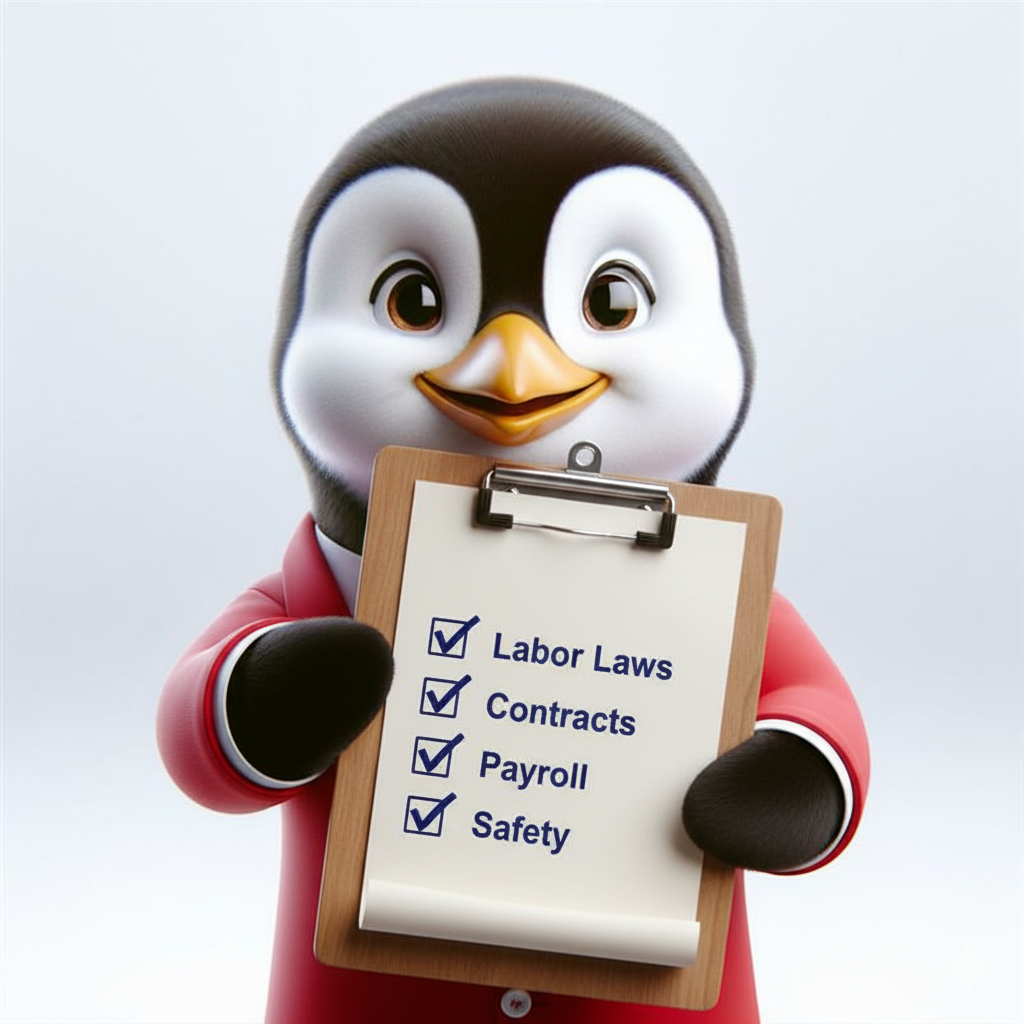
A reliable HR compliance checklist should include the following at minimum:
- Code of conduct
- Anti-harassment and anti-discrimination policies (including POSH where applicable)
- Leave and PTO policy
- Remote and hybrid work policy
- Confidentiality and data privacy
- Disciplinary and grievance procedures
- Workplace health and safety
- Wage, payroll, and statutory contribution records (PF, ESIC, gratuity)
These are the baseline. A checklist that skips any of them is leaving compliance gaps.
Statutory registers and returns
Beyond policies, compliance is about what you can produce on demand:
- Attendance and leave registers
- Wage registers and payslips
- Statutory deduction records (PF ECR, ESIC contributions)
- Appointment letters, confirmation letters, and full and final settlement records
- POSH committee constitution and annual report
Location- and role-specific additions
A checklist that treats every state or country identically misses the point. Under India’s Shops and Establishments Acts, requirements vary by state. Companies with a distributed workforce need a checklist that reflects each location’s rules, not one blanket document. Similarly, if you employ contractors, remote workers, or shift-based staff, the checklist should adapt rather than apply a single employee type across the board.
How to evaluate a compliance checklist tool
The most important factor is whether the tool keeps its content current as laws change. India’s four Labour Codes are in force from 21 November 2025, and any checklist that still reflects the pre-Codes framework is already out of date. Ask specifically how a tool tracks legal updates and flags which items in your checklist are affected before committing to it.
Beyond updates, look for customisation and export flexibility. You should be able to add company-specific items, export in PDF or DOCX, and integrate with your HRIS if you use one. A checklist you can’t share with your team or auditor in a usable format defeats the purpose.
A 5-step process for building your HR compliance checklist
- Define your company parameters. Enter your location (state and country), industry, headcount, and workforce types, full-time, part-time, contract, remote. These inputs drive what your checklist actually needs to contain.
- Select your required policy and record sections. Cover all core items plus anything triggered by your location or industry. Don’t skip a section because it feels unlikely to apply, missing leave or harassment items are the ones most frequently flagged in scrutiny.
- Customise company-specific details. Add your PTO structure, disciplinary process, benefits, and internal standards. This is where the framework becomes your actual checklist rather than a sample with your logo attached.
- Review the output item by item. Read each item as if you were an auditor. Flag anything that doesn’t match your actual practice, an item you claim but don’t follow is worse than not listing it at all.
- Export and version it. Save with a version date. If you ever need to show which policy or record was in effect at a specific time, this is what protects you. Version history also makes future updates traceable.
When to bring in a lawyer anyway
A well-built HR compliance checklist covers baseline scenarios for most standard businesses. Certain situations still warrant a legal review: operating across multiple states with conflicting rules, high-litigation sectors like healthcare or financial services, or the aftermath of an employment dispute or complaint. In those cases, a lawyer should verify your termination and disciplinary procedures specifically, since those sections carry the most exposure.
For everything else, a quality checklist covers what a first-draft attorney would prepare, jurisdiction-specific items, statutorily required records, and standard employment protections. The lawyer’s job is to review edge cases, not to build baseline content from scratch.
Conclusion
An HR compliance checklist is not paperwork for its own sake. It’s the fastest way to know what your business is actually required to maintain, and the quickest way to spot what’s missing before someone else does.
HRTailor.AI’s Compliance Checklist Generator produces a location-aware, role-specific HR compliance checklist in minutes, factoring in your state, establishment type, and workforce mix, so you’re not guessing which items apply to your business. Pair it with the HR Policy Builder to move directly from checklist to compliant policy documents without starting from a blank page.