Introduction
Most job seekers in 2026 are still applying with one resume for everything. The same document goes to online job portals, LinkedIn applications, recruiter emails, and networking events. That approach no longer works.
Over 97% of Fortune 500 companies now use AI powered Applicant Tracking Systems to screen resumes before a human ever sees them. At the same time, 62% of talent acquisition professionals say the most impactful hires still come through referrals and personal connections. These are two fundamentally different audiences, and they need different documents.
Why one resume no longer works
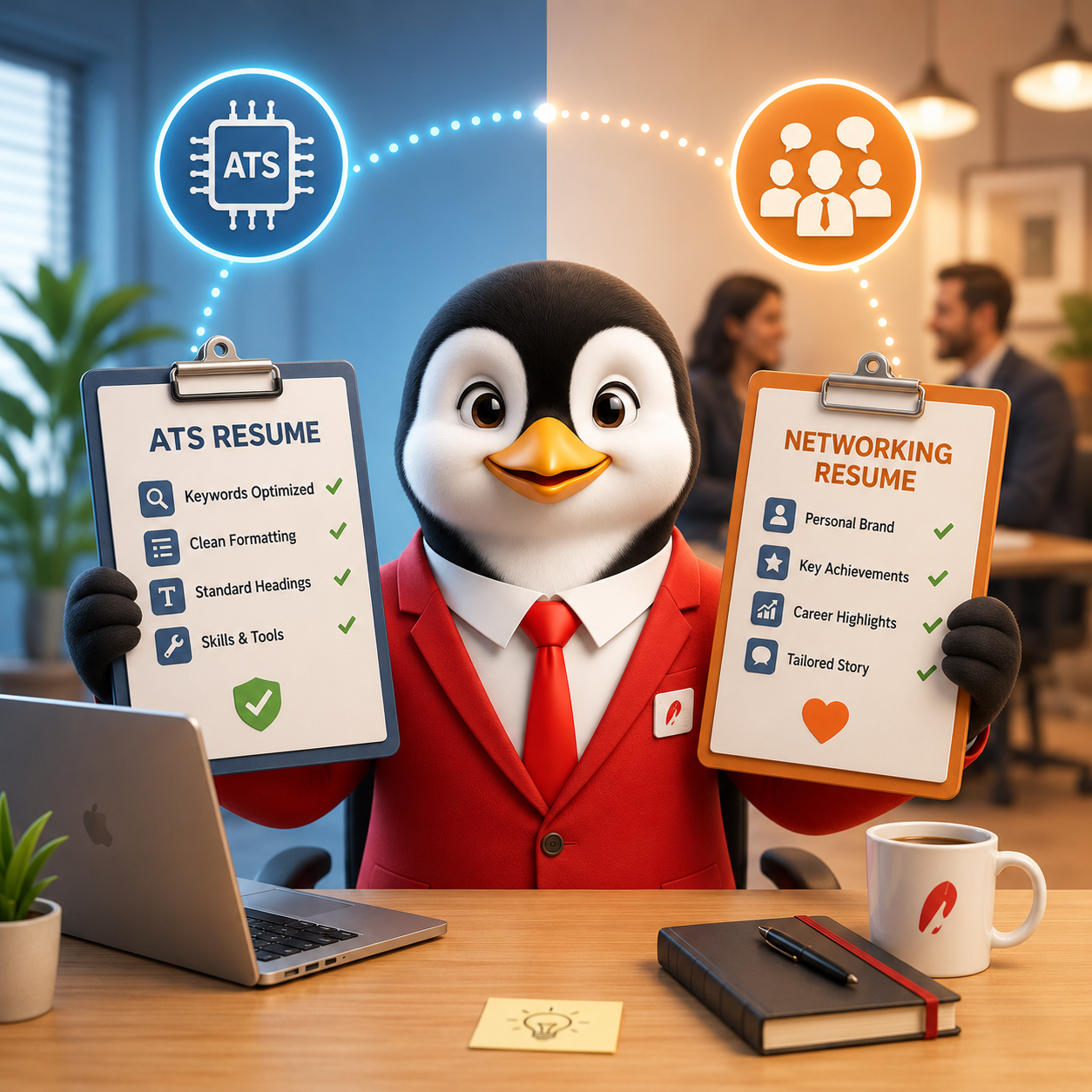
Track one is automated. When you apply through a job portal or career page, your resume is parsed by AI before a recruiter reviews it. These systems extract skills, job titles, and keywords, then score your resume against the job description. If the match is below a threshold, your application is filtered out. A resume with graphics, columns, or creative headers often gets misread or rejected entirely.
Track two is human. When a contact forwards your resume to a hiring manager or you hand it over at a conference, the first impression is visual and emotional. The reader scans for relevance, credibility, and fit in under 10 seconds. A plain, text-heavy document with no visual hierarchy does not stand out.
One resume cannot serve both tracks well. Optimising for one almost always compromises the other.
Resume 1: The ATS resume
This is the resume you submit through online portals, career pages, and any channel where software processes it before a human does.
Use a single column layout with no tables, text boxes, graphics, or images. Use standard section headers exactly as ATS systems expect them: “Work Experience,” “Education,” “Skills,” and “Certifications.” Avoid creative alternatives like “My Journey” because parsers cannot categorise them. Save it as a .docx or a simple PDF without embedded fonts or layers.
Mirror the exact language from the job description. If the posting says “cross-functional team leadership,” your resume should say the same, not “managed various teams.” Every bullet point should follow the impact format: what you did, the metric that proves it, and the result. Instead of “Handled social media,” write “Managed social media content calendar across 4 platforms, increasing engagement by 34% over 6 months.”
Include a dedicated skills section near the top, grouped into categories such as technical skills, tools, and methodologies. This is where ATS systems pull structured data most reliably.
The ATS resume is not a single static document. It is a base version you tailor for each application by comparing it against the job description and ensuring the core skills mentioned in the posting appear naturally in your document.
Resume 2: The networking resume
This is the resume you bring to events, share through referrals, and use when a human is the first reader.
Visual hierarchy matters here. Use a clean, modern layout with subtle design elements: a tasteful colour accent, clear section dividers, and generous white space. A two-column format works well because it displays skills and contact details in a sidebar without cluttering the main experience section. Add clickable links to your LinkedIn profile, portfolio, or project samples. Use a PDF format to preserve the layout across devices.
Lead with a strong value proposition summary rather than an objective statement. Instead of “Seeking a challenging role in marketing,” write “Brand strategist with 6 years of experience building go-to-market playbooks for SaaS products. Led campaigns generating $4.2M in pipeline across APAC and North America.”
The networking resume can afford to be more narrative. Explain transitions, highlight leadership moments, and show the trajectory of your career as a coherent story. Include a “Key Projects” or “Selected Achievements” section with 3 to 5 standout accomplishments.
What to include in both versions
Your core professional identity, including name, title, contact information, and LinkedIn URL, must be consistent across both versions. Employment history, company names, job titles, and dates must match exactly. Any discrepancy creates a credibility problem if both reach the same hiring team. Your top 5 to 8 skills should appear in both, though the ATS resume presents them as a structured list and the networking resume weaves them into context.
When to use which version
- Use the ATS resume when applying through any online job portal, company careers page, recruiter’s tracking system, or job listing on LinkedIn, Naukri, Indeed, or similar platforms.
- Use the networking resume when handing it to someone at a conference, when a contact forwards your profile to a hiring manager, when emailing a recruiter directly, or when sharing it in a WhatsApp or Telegram group.
- If you are unsure, ask one question: will software process this before a human sees it? If yes, use the ATS version. If a person is the first reader, use the networking version.
How AI skills fit into both resumes in 2026
- Companies are paying professionals with AI skills 56% more than those without, and 1 in 12 jobs on Indeed now has “AI” in the title even outside the tech sector.
- On your ATS resume, list AI tools in your skills section and reinforce them in experience bullets with context: “Used AI-powered analytics to identify 3 underperforming product lines, leading to a reallocation that increased quarterly revenue by 12%.”
- On your networking resume, frame AI skills as part of your working style. A line like “Combines traditional brand strategy with AI-powered workflow automation to deliver campaigns 40% faster” tells a more compelling story than a keyword list.
Common mistakes to avoid
The most common mistake is maintaining only one resume and trying to make it serve both purposes. The second is making the two versions so different that they appear to describe different people. Consistency in facts, divergence in format and emphasis.
Another frequent error is over-designing the ATS resume. A single column of icons or a skills bar chart can break an ATS parser completely. Conversely, submitting a plain text ATS resume through a referral channel makes you look generic alongside polished competitors.
Conclusion
Algorithms and people judge resumes on completely different terms. Having two versions, one for each audience, is no longer extra effort but the minimum a serious job search demands in 2026.
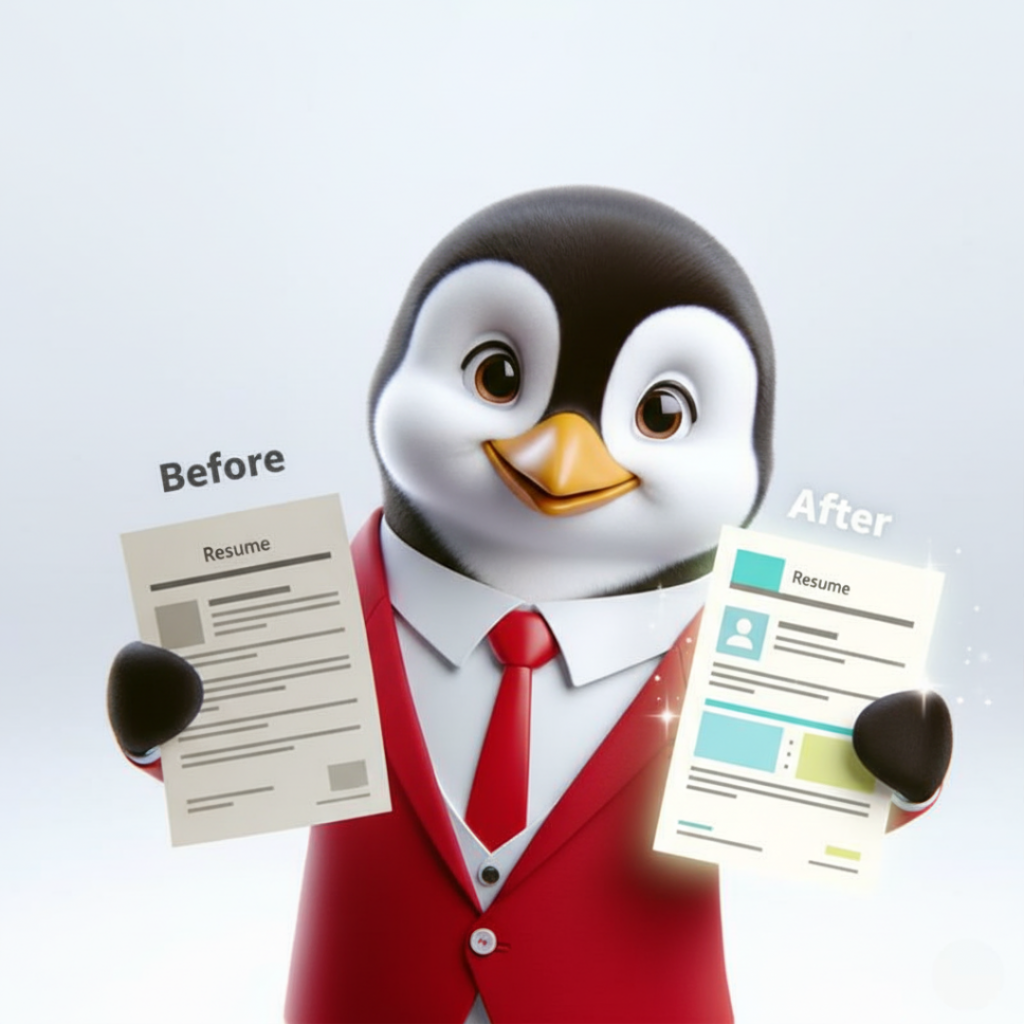
HRTailor.AI’s Resume Enhancer takes your existing resume and reshapes it into a targeted, role-ready document in minutes. Upload once and walk away with a version built to perform wherever it lands.