How AI Is Solving the Hidden Problem
of Inconsistent Salary Calculations
Introduction
Every HR manager has faced it — the same employee, the same salary, the same month, but somehow two different net pay numbers. Cue the panic. Emails start flying, spreadsheets are reopened, and what was supposed to be a clean payroll cycle suddenly turns into an audit exercise. Somewhere, a formula changed. Somewhere else, a tax rate wasn’t updated. No one meant to make an error — but the result is the same: mistrust, confusion, and wasted hours fixing something that should’ve been right the first time.
This is the hidden problem inside payroll — inconsistency. It’s not always visible, but it quietly chips away at credibility, efficiency, and employee confidence. And surprisingly, it’s not just human error that causes it. It’s structural.
The Truth Behind Payroll Inconsistency
Payroll looks deceptively simple from the outside — you take the gross salary, subtract taxes, add benefits, and you’re done. But HR professionals know that’s a fantasy. Behind every payslip is a web of dependencies: multiple data points, formula versions, tax slabs, regional rules, and benefits that change monthly. A single cell error in Excel can ripple across hundreds of calculations, and the scary part is, it often goes unnoticed until payday.
Every HR team also tends to have its own version of “how things are done.” One uses older templates, another tweaks formulas for exceptions, and someone updates the tax rules but forgets to share them. Before long, what should be a standardized payroll process becomes a collection of personalized spreadsheets. And personalized spreadsheets don’t play nice with consistency. Even with payroll software, most systems are still manually fed, manually updated, and manually verified. Meaning every time human hands touch payroll, the margin for inconsistency reopens.
When Inconsistency Becomes a Business Problem
At first, inconsistencies seem small — “just a few rupees or dollars off.” But those small cracks become big ones fast. Employees lose trust when their salaries fluctuate without explanation. HR teams lose time double-checking, recalculating, and justifying numbers that should have been right the first time. Leaders lose confidence in HR reliability, and compliance risks quietly increase with every mismatch in deductions or tax submissions.
Inconsistency might sound like a technical glitch, but it’s a reputational issue too. Payroll accuracy directly influences how employees perceive fairness and transparency. Inconsistent payroll doesn’t just cost money — it costs credibility.
Why Humans Alone Can’t Fix It
Here’s the hard truth: even the most detail-oriented HR professionals can’t manually guarantee perfect consistency. Payroll isn’t one system; it’s an ecosystem. Data comes from attendance logs, performance bonuses, expense trackers, regional tax updates, and benefit programs — each changing at its own pace. HR teams can review and recheck every number, but they’re still reacting to changes, not predicting them. That’s why inconsistencies keep reappearing. Not because HRs are careless, but because the process itself is fragmented and too dynamic to manage manually.
Enter AI: The Framework for Payroll Consistency
AI doesn’t come in as a magic wand — it comes as a stabilizer. It acts like the quality control layer between payroll logic and payroll output, quietly enforcing consistency through logic and pattern recognition.
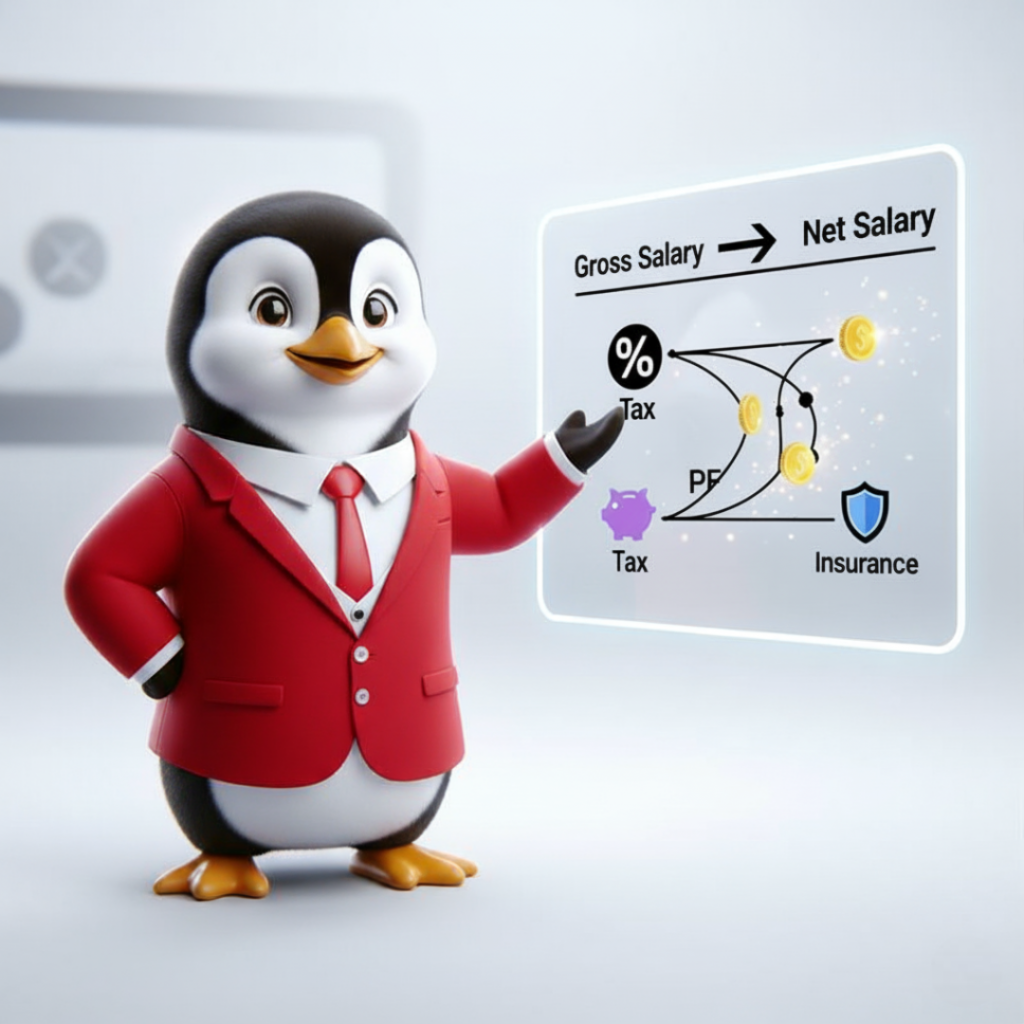
AI doesn’t rely on one static formula. It reads salary structures, tax brackets, benefits, and deductions as patterns. If something looks off — for example, if an employee’s deduction deviates from their usual pattern — it flags it instantly. It also standardizes payroll logic across the organization. No matter who runs payroll, every gross-to-net breakdown follows the same rules, the same logic, every time.
AI payroll engines also connect to compliance databases, automatically updating tax laws, deduction limits, and benefit policies. This ensures your payroll remains current across jurisdictions without any manual effort. Most importantly, AI doesn’t just see numbers — it sees context. It can tell whether a difference in pay is valid (like unpaid leave or a bonus adjustment) or an anomaly (like a miscalculated deduction). That’s how it filters real errors from expected changes, ensuring accuracy without the need for constant human supervision.
The Ripple Effect of Getting It Right
Once payroll becomes consistent, the effects ripple across the company. Employees stop double-checking their payslips and start trusting HR again. Managers can plan budgets without worrying about data errors. Finance teams gain clarity and predictability. And compliance becomes automatic — no more last-minute reconciliations or stress before audits.
What AI delivers is more than just mathematical accuracy; it restores credibility. It helps HR teams shift from firefighting mode to strategic mode — from fixing numbers to analyzing trends.
From Manual Checks to Predictive Consistency
Before AI, HR professionals worked like editors — scanning line by line for errors. Now, they function more like analysts, spotting patterns and optimizing workflows. AI doesn’t just fix inconsistencies; it prevents them.
Consider a global organization with employees in different regions — say, one in Berlin and another in Mumbai. Traditionally, HR teams would manually apply local tax rules and deductions for each country. AI-powered payroll systems can now map each jurisdiction’s regulations, update rates automatically, and apply them accurately across every location. Both employees get personalized, compliant payslips — but the logic behind them remains consistent.
This shift is why forward-thinking HR teams are scaling payroll operations with AI, not by hiring more people but by enforcing more precision.
When Consistency Builds Culture
Consistency isn’t just operational — it’s cultural. When employees see that their pay is always accurate, on time, and transparent, it strengthens their trust in the organization. They don’t question the math anymore; they believe in the intent behind it.
That trust is invaluable. It improves retention, engagement, and the perception of fairness. For HR teams, it means fewer payroll-related complaints, fewer disputes, and more time spent on people, not paperwork. Consistency becomes the foundation of reliability — and reliability is what great workplaces are built on.
The Future: Predictive Payroll Intelligence
The next evolution of payroll isn’t just automation — it’s anticipation. AI is moving from reactive to predictive. It won’t just calculate; it’ll forecast. It’ll notify HR when a new tax update will impact salaries next month or simulate the financial effects of a proposed salary revision. It will also predict potential compliance risks and highlight them before they turn into problems.
This is transforming payroll from a back-office task into a strategic business function. HR leaders will no longer be asking, “What went wrong?” but “What’s about to change?” And AI will already have the answer.
Conclusion
Payroll doesn’t fail because people fail. It fails because systems do. And AI is the first real system designed to protect HR teams from inconsistency. It doesn’t just automate processes — it enforces fairness, transparency, and reliability.
That’s why forward-thinking organizations worldwide are embracing AI-driven payroll tools. They’re not chasing efficiency for its own sake; they’re building trust, accuracy, and consistency into their most fundamental process — paying people.
And for teams ready to make that transition, HRTailor.AI’s Gross-to-Net Salary Calculator offers exactly that — a reliable way to ensure every payslip tells the same story, every single month.

Frequently Asked Questions
AI-powered payroll systems automatically apply local tax rules, deductions, and benefits for each jurisdiction, ensuring every employee’s net pay is calculated accurately and consistently, regardless of location.
Yes, AI provides clear, detailed breakdowns of gross-to-net salary, making it easier for employees to see how their pay is calculated.
No, AI supports HR by automating calculations and spotting errors, allowing teams to focus on strategic tasks instead of repetitive payroll work.

What a Complete Employee Onboarding Checklist Actually Covers.
What a Complete Employee Onboarding Checklist Actually Covers. Introduction A...
Read More
How to Run an HR Audit That Finds Risk Before It Costs You.
How to Run an HR Audit That Finds Risk Before...
Read More
Why HR Teams Swap Spreadsheets for a Payslip Generator.
Why HR Teams Swap Spreadsheets for a Payslip Generator. Introduction...
Read More
Build a Job Ready Resume in Minutes With an AI Resume Builder.
Build a Job Ready Resume in Minutes With an AI...
Read More