How AI Is Simplifying Gross-to-Net Calculations for Faster, Error-Free Payroll

Introduction
Payroll is one of the most critical functions of any organization. Yet, for many HR teams, it remains one of the most challenging. Calculating gross-to-net salaries—the exact take-home pay after taxes, statutory deductions, allowances, and bonuses—is a process that requires precision, knowledge of local regulations, and meticulous attention to detail. When payroll errors occur, the consequences can be severe: employee dissatisfaction, compliance violations, and wasted administrative resources.
According to a global survey by Deloitte, HR teams spend up to 30% of their weekly time managing payroll, and nearly 15% of payrolls require manual corrections due to errors. In multinational organizations, the complexity multiplies exponentially. Different tax regimes, social contributions, and statutory obligations across countries create a labyrinth that HR must navigate every month.
AI-powered tools are emerging as a game-changer in this space, transforming payroll into a faster, more reliable, and transparent process. This article dives deep into the mechanics of gross-to-net calculations, the challenges HR teams face globally, and how AI simplifies the process for more accurate, efficient payroll management.
Understanding Gross-to-Net Calculations
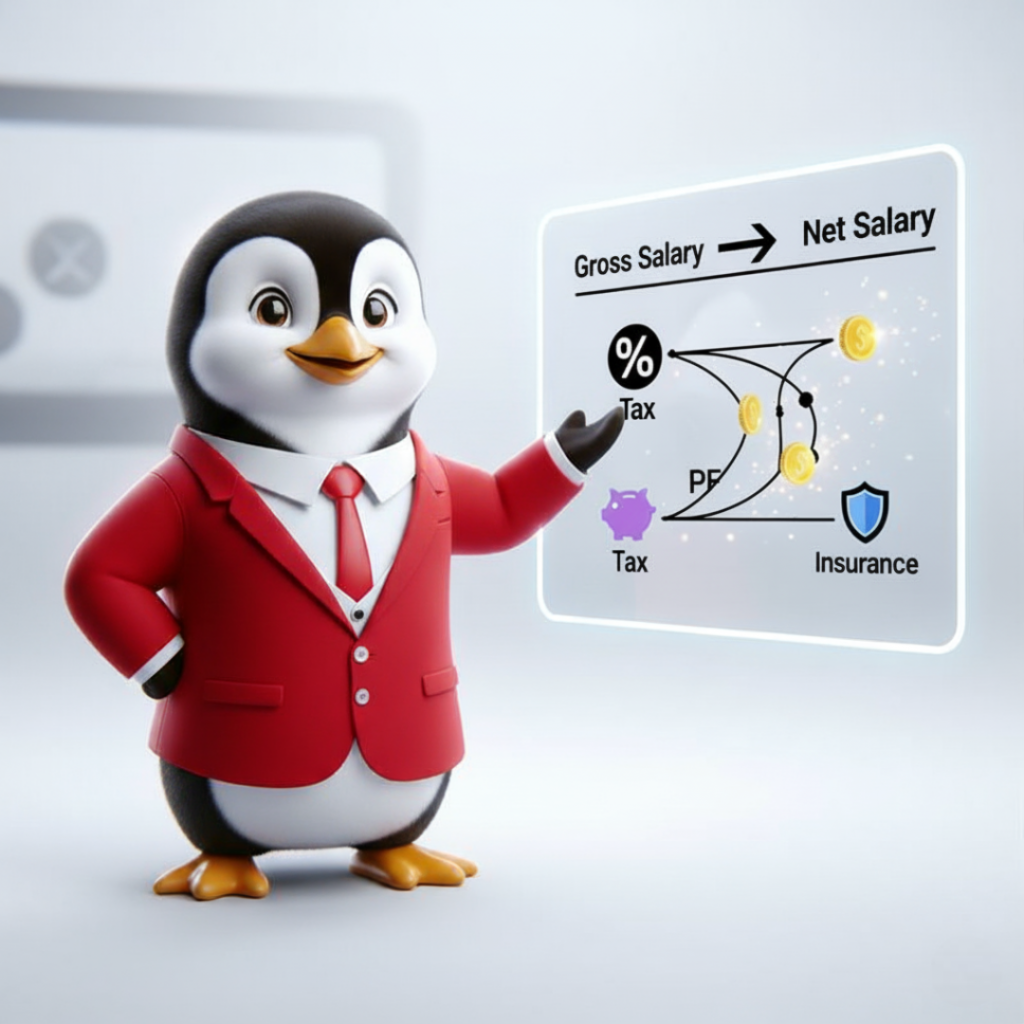
At its core, gross-to-net calculation involves converting an employee’s gross salary—the total amount earned before deductions—into net salary, which is the take-home pay. While this sounds straightforward, the process is anything but simple.
Components affecting the calculation include:
- Statutory deductions: Income tax, social security contributions, pension contributions, unemployment insurance, health insurance, and other country-specific deductions.
- Voluntary deductions: Employee contributions to retirement plans, union fees, charitable donations, or insurance premiums.
- Allowances and bonuses: Transport, meals, housing, performance bonuses, and other perks that can be taxable or non-taxable depending on the jurisdiction.
- Currency and regional variations: Multinational companies must account for currency conversion and local labor regulations.
Even small differences in interpretation, rounding, or local compliance can lead to discrepancies in net pay. For HR teams, particularly those managing payroll across borders, the margin for error is very slim.
Challenges of Manual Payroll Processing
Many organizations still rely on manual calculations or traditional payroll software. While functional, these methods introduce several challenges:
- Human Error: Mistakes in formulas, rounding errors, or missing updates to tax regulations can result in incorrect net pay.
- Time Consumption: Manually calculating salaries, cross-checking deductions, and generating reports can take hours—or even days—for mid-sized teams.
- Compliance Risks: Failure to apply correct tax slabs, social security contributions, or labor regulations can trigger fines, audits, or legal complications.
- Employee Dissatisfaction: Even minor mistakes in payroll can erode trust. Employees expect transparent and accurate salary information, and HR must be prepared to explain every line item.
- Scalability Issues: As companies grow, manual payroll becomes increasingly unsustainable. More employees, more countries, and more regulations mean more complexity and more risk.
Globally, payroll errors are costly. A PwC study found that inaccurate payroll not only affects employee morale but can also cost companies millions annually in corrections, penalties, and lost productivity.
How AI Streamlines Gross-to-Net Calculations
AI-powered payroll calculators address these challenges by automating complex calculations and ensuring accuracy at every step.
- Automated and Accurate Computations
AI systems are designed to apply all relevant rules, deductions, and allowances automatically. For example, if an employee is entitled to specific tax exemptions in Germany, AI applies them correctly without manual intervention. Thisreduces errors to near zero, eliminating discrepancies that can frustrate employees and consume HR resources. - Global Adaptability
For multinational companies, AI accounts forregional differences in tax law, currency conversions, and statutory obligations. Employees in New York, Berlin, or Singapore receive net salaries calculated according to local rules, ensuring compliance and consistency across borders. - Time Efficiency
Manual payroll processing can consume hours or even days each month. AI completes calculationsinstantly, freeing HR teams to focus on strategic initiatives like employee engagement, performance management, or benefits planning. - Transparent Salary Breakdowns
Beyond calculations, AI tools generateclear, visual breakdowns of salary components. Employees can see how gross pay is transformed into net pay, including all deductions and allowances. This transparency reduces questions, increases trust, and allows HR to communicate payroll confidently. - Scenario Testing and Forecasting
AI enables HR teams to simulate salary adjustments, bonus structures, or tax changes. By running multiple scenarios, organizations canforecast payroll budgets, plan compensation strategies, and prepare for regulatory changes without risking errors.
Practical Examples of AI in Action
Consider a company with employees in three different countries:
- Employee 1: John in the United States, $6,000 gross salary, federal and state taxes, healthcare deductions
- Employee 2: Anna in Germany, €5,500 gross, social security contributions, pension, health insurance
- Employee 3: Ravi in Singapore, SGD 7,000 gross, CPF contributions, health coverage
Manual calculations for each employee require different formulas, tax rules, and local knowledge. One mistake could trigger compliance issues or employee dissatisfaction.
With AI:
- All calculations are accurate, consistent, and compliant
- Multi-country payroll is handled seamlessly
- Visual breakdowns provide clarity for employees
- HR spends minutes, not hours, processing payroll
This example demonstrates that AI doesn’t just simplify calculations—it transforms payroll into a reliable and scalable process.
Global Trends Driving AI Adoption in Payroll
Several global trends are accelerating the adoption of AI in payroll management:
- Remote Work and Global Teams: Companies now hire talent from multiple countries, increasing payroll complexity.
- Rising Compliance Demands: Labor laws, taxes, and social security contributions are continually changing worldwide.
- Employee Expectation for Transparency: Employees demand clear, accurate salary information.
- HR Focus on Strategic Initiatives: By automating routine tasks, AI allows HR teams to focus on employee growth, engagement, and organizational development.
AI-powered payroll tools address all these trends, helping organizations adapt to a dynamic global workforce.
Measuring the Impact
Organizations that implement AI for gross-to-net calculations see measurable benefits:
- Reduction in Payroll Errors: Near-zero calculation mistakes
- Time Savings: Payroll processing time reduced by up to 80%
- Employee Satisfaction: Transparent breakdowns improve trust
- Scalability: Effortless management of larger, international teams
- Compliance Assurance: Automatically updated rules reduce legal risks
Conclusion
Gross-to-net salary calculation is a critical yet complex function that affects accuracy, compliance, and employee trust. Traditional methods—manual calculations, spreadsheets, or outdated software—are slow, error-prone, and increasingly unsustainable, especially for global teams.
AI-powered solutions streamline the entire process, offering accuracy, speed, transparency, and global adaptability. Payroll becomes not only faster and error-free but also a tool for building trust with employees and freeing HR teams to focus on strategic growth initiatives.
For HR teams looking to simplify payroll while ensuring consistency and reliability, HRTailor.AI’s Gross-to-Net Salary Calculator offers a sleek, powerful solution to manage salary calculations effortlessly across borders.

Frequently Asked Questions
AI tools stay updated with changing tax laws and statutory requirements across different countries. This means the system automatically adjusts calculations whenever regulations change, helping HR teams avoid penalties, audits, and legal issues.
HR only needs to enter employee salary components once; after that, the AI automatically applies all rules, tax updates, and calculations.
Yes. Once these components are added to the employee profile, the AI handles all taxable, non-taxable, and statutory rules automatically.

What a Complete Employee Onboarding Checklist Actually Covers.
What a Complete Employee Onboarding Checklist Actually Covers. Introduction A...
Read More
How to Run an HR Audit That Finds Risk Before It Costs You.
How to Run an HR Audit That Finds Risk Before...
Read More
Why HR Teams Swap Spreadsheets for a Payslip Generator.
Why HR Teams Swap Spreadsheets for a Payslip Generator. Introduction...
Read More
Build a Job Ready Resume in Minutes With an AI Resume Builder.
Build a Job Ready Resume in Minutes With an AI...
Read More