Customizing HR Letters for Global Teams —
AI Makes It Easy
Introduction: Global Hiring Needs Local Precision
Hiring across borders opens new opportunities for growth, innovation, and access to global talent. At the same time, it introduces complexity that many HR teams underestimate. Every country brings its own labor laws, statutory clauses, cultural expectations, and language norms. Because of this, a single generic template can quickly become a compliance risk.
Global HR letters must balance legal accuracy, cultural sensitivity, and brand consistency. However, doing this manually across multiple regions often leads to delays, errors, and inconsistent employee experiences. This is where AI-powered HR Letter Builders play a transformative role. By combining localization logic with automation, AI makes it possible to scale global HR letters without overwhelming HR teams.
In this guide, you’ll learn why global HR documentation is becoming harder, how AI simplifies the process, and how organizations can roll out a compliant, scalable system with confidence.
Why Global HR Documentation Is Getting More Complex
Global teams are expanding faster than ever. Meanwhile, regulations continue to evolve at different speeds across regions. As a result, HR documentation now carries more variables than traditional templates can handle.
To begin with, notice periods and termination rules vary not only by country but sometimes by state or city. In addition, tax disclosures, benefits, gratuity, or end-of-service rules must be stated clearly and accurately in each letter. On top of that, tone and language expectations differ widely—what sounds friendly in one culture may feel informal or even inappropriate in another.
Furthermore, HR teams must issue letters across the entire employee lifecycle. Offers, confirmations, promotions, warnings, transfers, and exits all require precise documentation. Consequently, managing global HR letters through manual editing and copy-paste workflows increases both legal and operational risk.
How an AI HR Letter Builder Changes the Game
An AI-driven HR Letter Builder is not just a faster way to write letters. Instead, it becomes a structured system for accuracy, consistency, and governance.
1. Automatic Localization
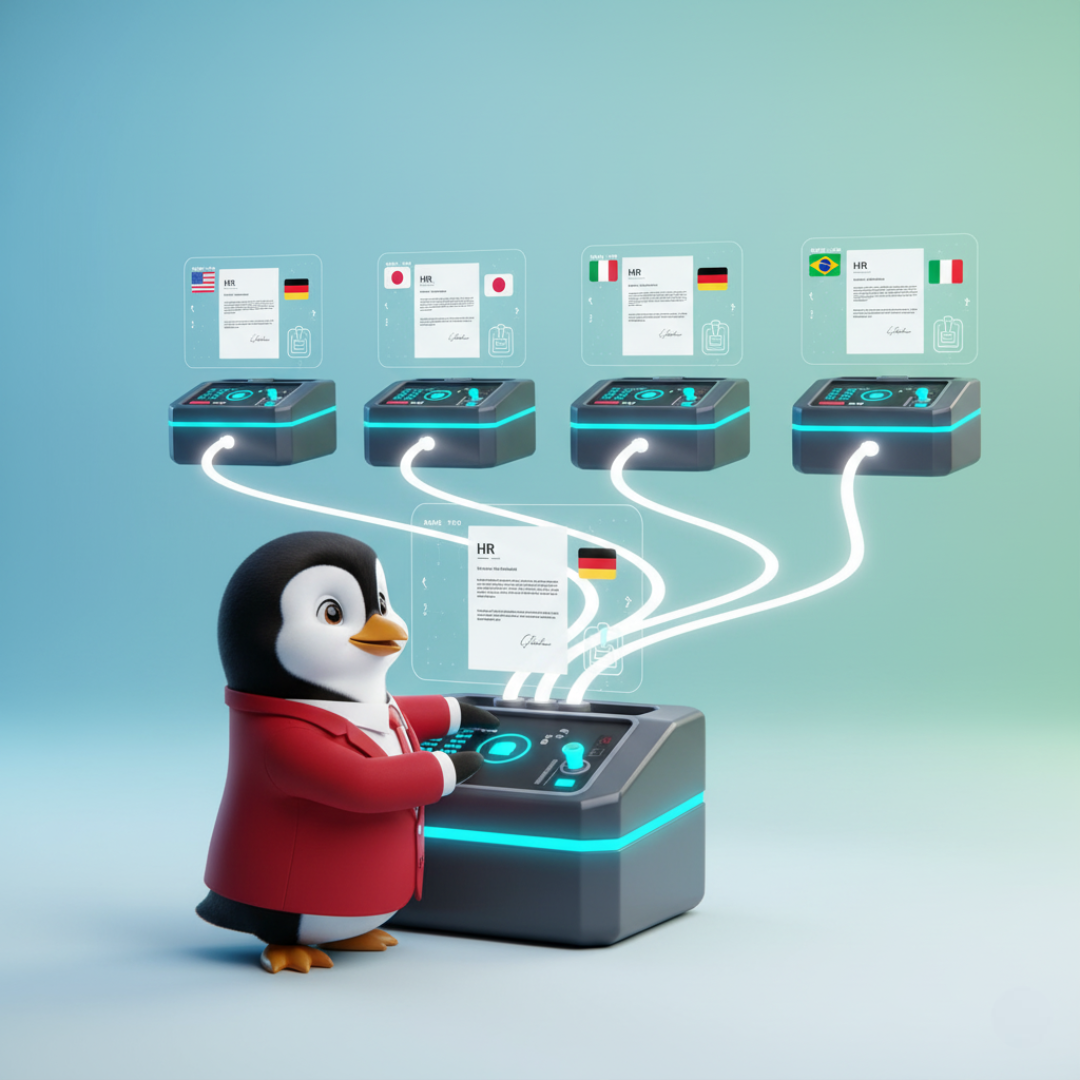
First, the system detects the selected country and region. Based on this input, it inserts the correct statutory language, notice rules, benefits clauses, and formatting standards.
2. Brand Consistency Across Borders
At the same time, branding remains unified. Logos, fonts, headers, and signature blocks stay consistent regardless of who generates the letter or where they are located.
3. Multilingual and Tone Control
Equally important, AI enables multilingual output. HR teams can switch between languages effortlessly while choosing the appropriate tone—formal, neutral, or warm professional—based on cultural expectations.
4. Audit-Ready Documentation
Finally, version history, timestamps, and clause references are captured automatically. Because of this, compliance decisions remain traceable long after the letter is issued.
Together, these capabilities allow organizations to manage global HR letters with speed and confidence.
How AI Adapts HR Letters Across Regions
To understand the impact, consider how AI handles localization in practice.
Offer Letters: India vs UAE
In India, offer letters often reference state-level Shops & Establishments requirements, probation conditions, and statutory contributions. Notice periods are typically explicit and may vary by role or seniority.
In contrast, UAE offer letters usually include gratuity or end-of-service benefit references, visa or work-permit details, and labor law–specific leave entitlements.
With AI, the HR Letter Builder automatically selects the appropriate clauses, adjusts currency formats, reflects local holidays and weekends, and generates bilingual versions when required. At the same time, the visual identity of the letter remains consistent across both regions.
HR Letters You Can Generate in Minutes
Because global HR letters span the full employee journey, AI-powered builders typically support a wide range of documents, including:
-
Offer and appointment letters
-
Probation and confirmation letters
-
Promotion and salary increment letters
-
Policy acknowledgment letters
-
Warning and disciplinary notices
-
Termination, exit, and experience letters
-
Transfer, relocation, and role-change letters
Crucially, each document can be localized instantly. As a result, HR teams avoid manual rework while maintaining compliance.
A Simple, Scalable End-to-End Workflow
Despite its sophistication, the workflow remains straightforward.
First, users select the required letter type from an approved catalog. Next, they enter employee and company details such as role, location, dates, and reporting structure. After that, they choose the country, language, and tone, with the option to generate bilingual versions.
The system then highlights recommended clauses and explains why they are included. In addition, it flags any unusual combinations for HR or legal review. Once finalized, branding elements populate automatically, and the document can be exported as Word or PDF, sent for e-signature, and archived for audit purposes.
Because everything is logged, organizations maintain a clear record of how each letter was created.
Governance That Keeps Global HR Letters Safe
Even with AI, governance remains essential. Strong controls ensure that speed does not come at the cost of risk.
To achieve this, organizations should maintain approved clause libraries by region. Legal or HR Centers of Excellence can review and approve these clause packs centrally. Meanwhile, role-based permissions ensure that recruiters, HRBPs, and legal teams each access only what they need.
In addition, detailed change logs allow teams to track edits and compare versions. Periodic reviews help confirm that templates remain aligned with current laws and internal policies. With these controls in place, global HR letters become both fast and defensible.
Language, Tone, and Cultural Sensitivity
Compliance is non-negotiable. However, tone plays a critical role in employee experience.
Offer letters should feel welcoming and transparent. Warnings must remain factual and neutral. Termination letters should be respectful while staying legally precise.
AI tone presets help HR teams strike the right balance. For instance, direct language may be preferred in some Western contexts, whereas a more formal tone may be appropriate in parts of Asia or the Middle East. Consequently, letters feel locally appropriate without drifting off brand.
Data Privacy and Security Considerations
Because HR letters contain sensitive personal data, security cannot be an afterthought.
Best practices include collecting only essential data fields, encrypting identifiers during reviews, enforcing access through SSO and granular permissions, and retaining documents in line with local data protection laws. When combined with an AI HR Letter Builder, these measures ensure speed without compromising trust.
Measurable Gains HR Teams Notice Quickly
Organizations adopting AI for global HR letters often see immediate improvements:
-
Time per letter drops from hours to minutes
-
Error rates decline due to reduced manual editing
-
Brand consistency improves across regions
-
Audit readiness increases with clear logs and approvals
Moreover, managers can self-serve routine letters, allowing HR teams to focus on strategic priorities instead of document administration.
Conclusion
Managing global HR letters no longer has to be a manual, high-risk process. As organizations expand across borders, the need for accuracy, consistency, and scalability becomes critical. AI offers a practical way to meet these demands without increasing workload or exposure.
HRTailor.AI provides a dedicated HR Letter Builder tool designed specifically for global teams. By combining localization logic, approved clause libraries, multilingual support, and audit-ready workflows, HRTailor.AI helps organizations create compliant, brand-consistent HR letters across regions.
If your HR team is struggling to scale documentation while maintaining control, adopting an AI-driven solution like HRTailor.AI can turn global HR letters from a challenge into a competitive advantage.


Frequently Asked Questions
Global HR letters are official employment documents tailored for different countries, ensuring compliance with local labor laws.
AI automates localization, tone, and legal clauses, making global HR letters faster, accurate, and audit-ready.
Yes, HRTailor.AI’s HR Letter Builder generates compliant, branded, and multilingual global HR letters in minutes.
How to Run Payroll Without a Full Payroll System.
How to Run Payroll Without a Full Payroll System. Introduction...
Read More
The HR Compliance Gaps That Quietly Turn Into Fines.
The HR Compliance Gaps That Quietly Turn into Fines. Introduction...
Read More
How to Optimize Your LinkedIn Profile So Recruiters Actually Find You.
How to Optimize Your LinkedIn Profile So Recruiters Actually Find...
Read More
How to Compare Job Offers by Take Home Pay Before You Say Yes.
How to Compare Job Offers by Take Home Pay Before...
Read More