Introduction
Startups are known for speed, innovation, and flexibility. But when it comes to HR, moving too fast without a foundation can lead to chaos — or worse, compliance penalties. That’s why startup HR policies are no longer optional; they’re essential.
Whether you’re a 5-member tech team or a growing SaaS firm, setting clear HR policies early defines how your company operates. From managing leaves to ensuring data privacy, every startup in 2026 needs structured yet flexible HR documents. The good news? With tools like HR Policy Builder, startups can now generate ready-to-use, legally aligned HR policies in minutes — no legal jargon or lengthy drafts required.
Why Every Startup Needs HR Policies
Transitioning from an informal setup to a structured one often feels like a big leap. Yet, HR policies make that journey smoother and safer. They:
- Protect startups from unexpected legal issues.
- Set fair, transparent expectations for employees.
- Create consistency in how teams handle attendance, leaves, and conduct.
- Build trust and clarity during rapid scaling phases.
In short, HR policies give startups the discipline of a large company — without slowing them down.
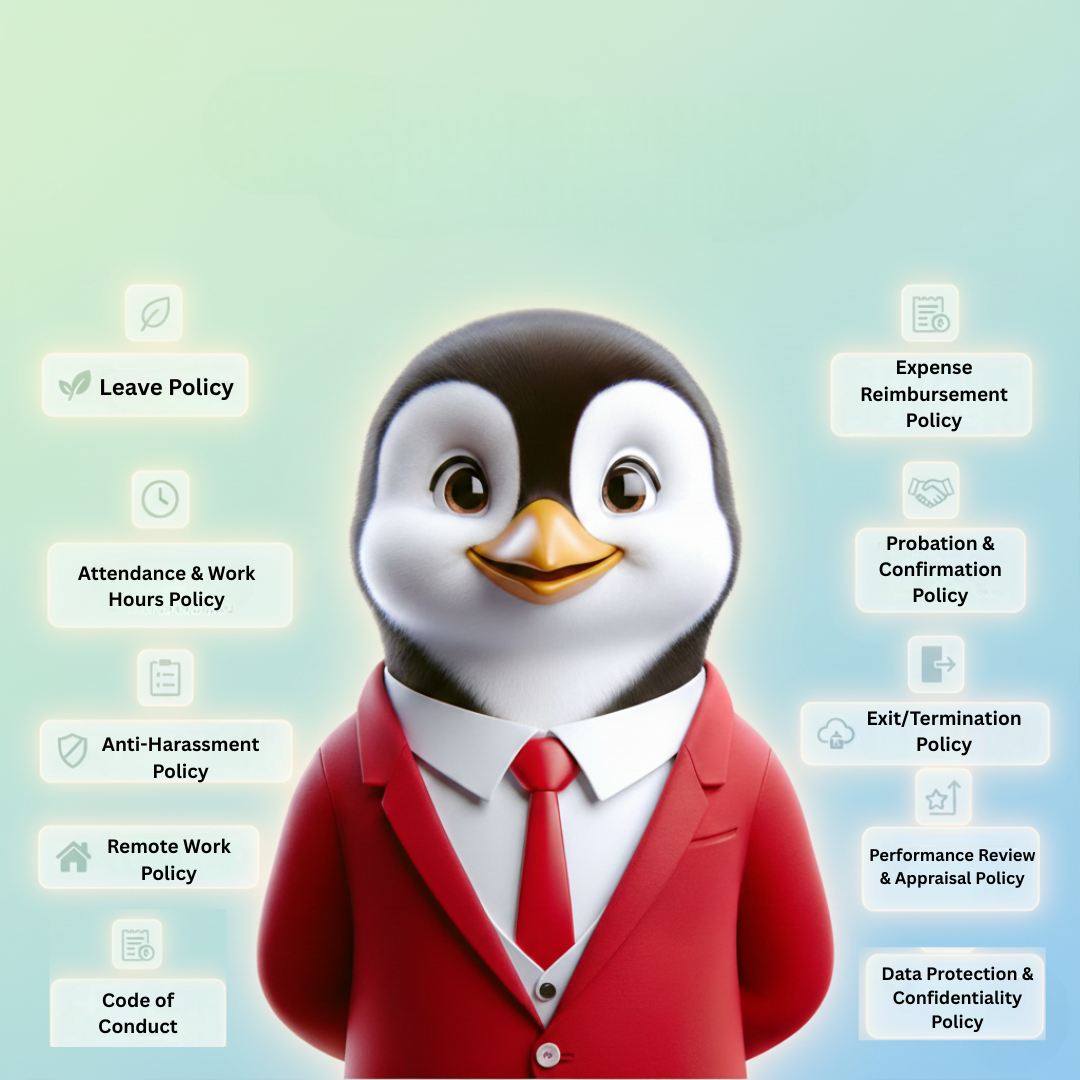
The Top 10 HR Policies Every Startup Needs
Let’s explore the ten policies no startup in 2026 should skip — and how each plays a key role in daily operations.
-
Leave Policy
Employees value rest as much as work. A Leave Policy ensures they understand how much time off they’re entitled to — whether for vacation, illness, or emergencies.
In India, this could include earned leaves and casual leaves under the Shops and Establishments Act. In the US or UK, it defines paid time off and holiday entitlements.
AI advantage: With HR Policy Builder, you can automatically adjust the leave structure to your country’s labor law — no guesswork needed.
-
Attendance & Work Hours Policy
Every startup needs clarity on attendance and working hours, especially with hybrid or remote teams. This policy defines shift timings, attendance recording methods, and expectations around punctuality.
Why it matters: It ensures fairness and productivity without micromanagement.
AI’s role: The tool instantly applies jurisdiction-specific rules like overtime eligibility or flexible hours regulations, depending on location.
-
Code of Conduct
A Code of Conduct sets the cultural tone of your organization. It includes guidelines on professional behavior, workplace ethics, and communication.
Example: In multicultural teams, it prevents misunderstandings and ensures everyone respects shared values.
By defining acceptable and unacceptable behavior early, startups can avoid internal conflicts and build a healthy workplace environment.
-
Anti-Harassment Policy
This is one of the most critical startup HR policies in 2026. Whether a company has 5 or 500 employees, every team must ensure a safe and respectful environment.
Why it’s essential: It communicates zero tolerance toward harassment and ensures compliance with workplace safety laws such as India’s POSH Act or the US EEOC regulations.
AI-generated policies include legally accurate clauses and reporting procedures — ensuring every employee feels protected and heard.
-
Remote Work Policy
Since remote and hybrid work models are here to stay, having a clear Remote Work Policy prevents confusion. It outlines expectations for working hours, data protection, communication, and productivity tracking.
Tip: A good policy should balance flexibility with accountability.
AI assistance: The HR Policy Builder tailors remote work guidelines based on local labor laws and company type.
-
Expense Reimbursement Policy
Startups often overlook this one until reimbursements start piling up. A clear Expense Reimbursement Policy defines what expenses are covered (like travel, meals, and office supplies) and how employees should claim them.
Why it matters: It promotes financial transparency and avoids delays or disputes.
With AI, you can instantly align it to taxation norms and accounting best practices of your country.
-
Probation & Confirmation Policy
Hiring the right people is crucial but so is evaluating them correctly. A Probation Policy outlines how long new employees will be on probation, performance criteria, and confirmation steps.
AI helps by automatically suggesting legal notice periods and fair evaluation standards as per local regulations.
-
Exit or Termination Policy
Even good things come to an end — and exits must be handled professionally. This policy outlines the process for resignation, termination, final settlement, and clearance.
Why it’s vital: It protects both employees and employers during separations, ensuring compliance with local notice and compensation laws.
AI-generated policies include jurisdiction-based clauses for notice, gratuity, and final pay settlements.
-
Data Protection & Confidentiality Policy
In an era of cloud systems and remote access, data protection is no longer just for IT teams. This policy secures sensitive company and employee data.
It defines:
- What data can be shared
- How it should be stored
- Who has access rights
AI advantage: The builder ensures your policy follows GDPR (Europe), PDP (India), or other local data laws automatically.
-
Performance Review & Appraisal Policy
Growth thrives on feedback. This policy defines how employee performance is reviewed, how appraisals are decided, and what timelines apply.
Benefit: It promotes transparency and helps retain top performers.
AI ensures your policy includes measurable KPIs, fair rating systems, and appeal mechanisms.
Why Use AI for Startup HR Policies
Startups often avoid HR documentation thinking it’s complex, expensive, or unnecessary at an early stage. However, AI has turned policy creation into a few simple clicks.
Here’s how AI helps:
- Instant Compliance: AI references current labor laws by country and state.
- Faster Execution: Generate a complete HR handbook in minutes.
- Custom-Tailored: Adjusts automatically to your team size and structure.
- Always Updated: AI keeps policies current with real-time law updates.
Instead of spending days drafting or consulting lawyers, founders can focus on scaling — knowing their HR foundation is solid and compliant.
Conclusion
Startups that build early HR foundations avoid late-stage problems. The right HR policies not only protect your company but also create a transparent, fair, and trusted workplace.
With tools like HR Policy Builder, you no longer need weeks of paperwork or complex legal consultations. In just a few minutes, you can build compliant, location-specific HR policies that evolve with your business.
Startups: Build your 10 essential HR policies today with HR Policy Builder.