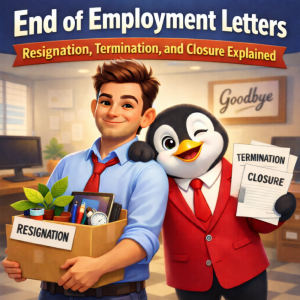
Employee exits are rarely about just resignation dates or notice periods. They are about responsibility, closure, and professional continuity. Yet, many organizations underestimate how much impact the final stage of employment can have.
One document quietly carries that responsibility—the relieving letter.
For employees, it is often the final confirmation they need to move forward confidently. For HR teams, it is a record of compliance, accountability, and process completion. How this letter is issued—and when—can shape long-term perception far beyond the exit itself.
What a Relieving Letter Actually Confirms
At its core, a relieving letter confirms three critical points:
-
The employee’s tenure has formally ended
-
All assigned responsibilities have been handed over
-
No obligations remain between the employee and employer
Unlike informal communication, this document serves as official proof. Many organizations rely on it during background verification, compliance audits, or legal clarification.
That is why accuracy and structure matter far more than most realize.
Why Relieving Letters Matter More Than Ever
Workforce mobility has increased. Employees change roles more frequently. Background checks have become stricter.
In this environment, relieving letters serve as trust documents. They reduce ambiguity and prevent misinterpretation. For HR teams, they also act as protection—confirming that exit protocols were followed correctly.
Handled poorly, they lead to disputes. Handled well, they close loops cleanly.
Relieving Letter vs Experience Letter: A Practical Distinction
Although often issued together, these documents solve different problems.
A relieving letter confirms separation.
An experience letter reflects contribution.
Combining both into one document often creates confusion during verification processes. Mature HR practices keep them separate to maintain clarity and compliance.
Situations Where a Relieving Letter Becomes Critical
While every exit benefits from formal documentation, certain situations make relieving letters essential:
-
Background verification by future employers
-
Visa or immigration documentation
-
Legal or compliance checks
-
Employment gap explanations
In such cases, delayed or unclear letters can directly affect an employee’s next opportunity.
When HR Should Issue a Relieving Letter
Issuance should not be arbitrary. Most organizations follow a defined checklist:
-
Notice period completion
-
Knowledge transfer confirmation
-
Asset return verification
-
Final settlements processed
Once these are completed, delaying the letter adds no value. Instead, it increases follow-ups and dissatisfaction.
Timeliness reflects process maturity.
Standard Relieving Letter Format (HR-Approved)
While wording varies, structure should remain consistent.
1. Official Header and Date
Establishes authenticity and traceability.
2. Employee Identification
Full name, designation, department, and employee ID if applicable.
3. Employment Confirmation
Clear mention of employment duration.
4. Relieving Statement
Explicit mention of the effective relieving date.
5. Authorization
HR or management signature with designation.
This format keeps the letter factual, professional, and defensible.
Sample Relieving Letter (Professional Example)
“This is to confirm that [Employee Name] was employed with [Company Name] as [Designation] from [Start Date] to [End Date]. The employee has completed all responsibilities and formalities and has been relieved from duties effective [Relieving Date]. We wish them success in their future professional endeavors.”
Simple. Clear. Sufficient.
Common HR Pitfalls That Create Problems
Delayed Issuance
Often caused by internal approvals or manual processes.
Incorrect Employment Dates
Even small errors can cause verification failures.
Informal or Emotional Language
This weakens the legal and professional value of the document.
Inconsistent Templates Across Teams
Leads to confusion and credibility issues.
HR Best Practices That Strengthen Offboarding
Standardize Letters Across the Organization
Consistency reduces errors and review cycles.
Build Relieving Letters Into Exit Workflows
They should not be treated as ad-hoc tasks.
Communicate Expectations Clearly
Employees should know when and how they’ll receive the letter.
Maintain Secure Records
Relieving letters are long-term HR records.
How AI Helps HR Teams Manage Relieving Letters at Scale
As organizations grow, manual drafting becomes inefficient and inconsistent.
With the HRTailor.AI HR Letter Generator, HR teams can generate standardized relieving letters quickly while ensuring accuracy and compliance. The tool supports consistent formatting, correct language, and faster turnaround—without removing human approval.
This allows HR professionals to focus on process quality rather than repetitive documentation.
Why Exit Experience Shapes Employer Reputation
Employees may forget onboarding details. However, they remember how exits were handled.
A clear and timely relieving letter communicates respect, professionalism, and closure. It leaves a final impression that often travels further than expected—through referrals, reviews, and networks.
Conclusion
A relieving letter may seem like a simple document, yet it carries legal, professional, and emotional significance. It marks the official close of an employment relationship and often shapes how that experience is remembered.
When HR teams handle this step with clarity, accuracy, and timeliness, exits remain respectful and well-documented. Employees move forward with confidence, and organizations protect their records and reputation.
Strong offboarding is not about formalities alone. It is about responsibility, closure, and leaving the right impression—long after the role has ended.