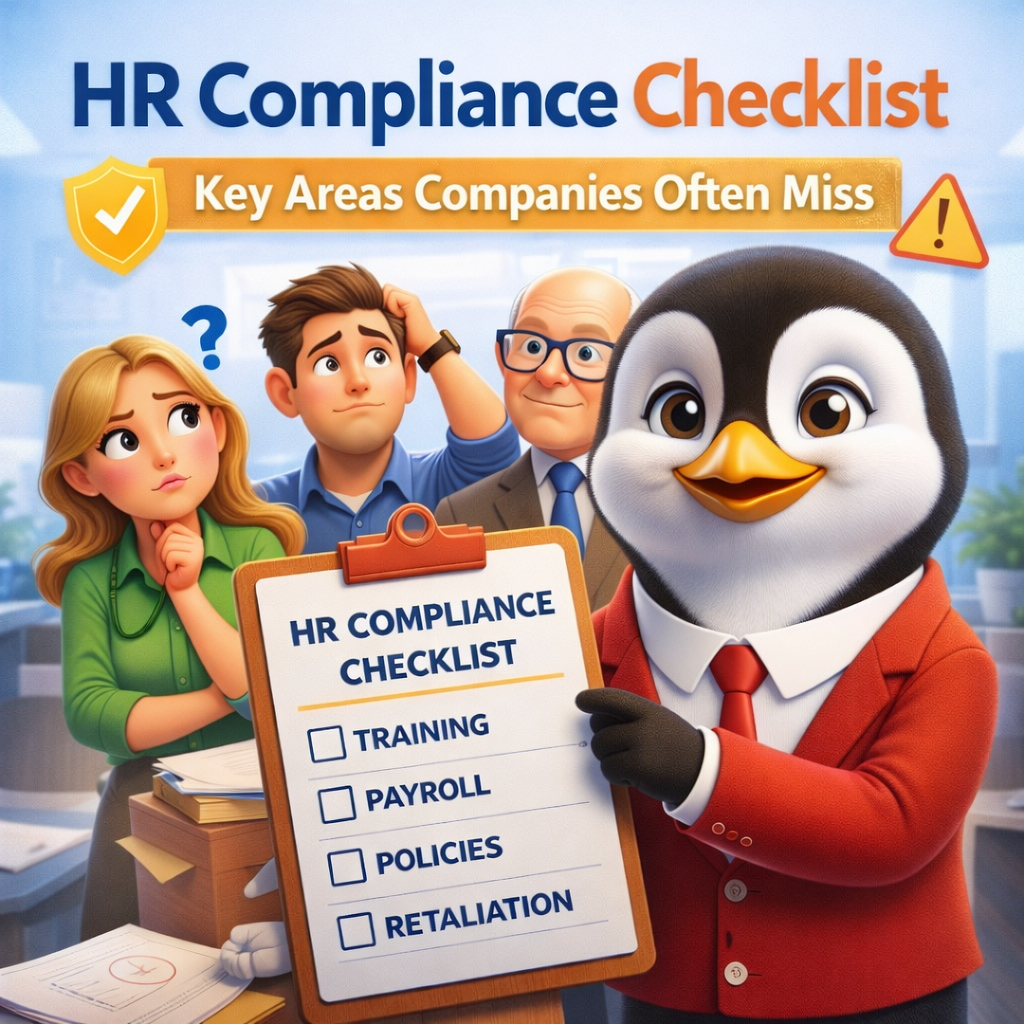
HR Compliance Checklist: Key Areas Companies Often Miss
Nobody wakes up and chooses to “miss compliance.”
It happens in the in-between moments. A manager calls with an urgent issue. A new hire joins early. A policy update gets delayed because payroll week is intense. Then days pass, and the tiny gap becomes a quiet risk sitting in your system.
If you’re in HR, you’ve likely felt that uneasy feeling—when work is moving fast, and you’re not fully sure everything is perfectly documented. You’re not careless. You’re carrying a lot. That’s why a hr compliance checklist can feel like a lifeline, not a task.
Before we go further, let’s make the topic simple.
What HR compliance really means (in plain language)
HR compliance means your company follows required employment rules and also keeps HR practices consistent. It includes policies, employee records, payroll-linked timelines, and proof that processes are being followed fairly.
And “proof” matters more than people think. During audits, inspections, or disputes, intentions don’t help much. Clear documents do.
So, instead of listing every possible rule on earth, this blog focuses on what companies most often miss—and how to close those gaps calmly.
The 7 blind spots that create most compliance gaps
1) Policy updates that never reach the ground
A policy can be “updated” and still be ineffective.
Why? Because teams keep using old versions. Managers interpret the rule differently. Employees never acknowledge the latest document. Over time, HR ends up enforcing a policy that only exists in one folder.
What to tighten:
-
Keep one current version and archive older ones clearly
-
Collect acknowledgements and store them where you can retrieve them fast
-
Ensure manager guidance matches what the policy actually says
This is the same drift many teams notice during an HR audit checklist review, especially when growth adds more departments and more opinions.
2) Offer letters and role changes that don’t match the employee reality
A clean employee file should tell one clear story. Yet many companies have gaps like:
-
missing role change letters
-
salary revisions communicated verbally but not documented
-
mismatched job titles across systems
It’s not only a compliance risk. It’s also an employee trust issue. When employees feel their record is unclear, they feel unprotected.
What to tighten:
-
Standardize templates and approval steps
-
Ensure every role change has a letter trail
-
Store the “latest” letter in one obvious place
A hr compliance checklist becomes powerful here because it catches inconsistencies before they become uncomfortable conversations.
3) Attendance, leave, and payroll that don’t “agree”
This is one of the most common misses, and it rarely looks dramatic until it’s questioned.
If attendance data and leave approvals don’t match payroll deductions, you create confusion. Confusion becomes complaints. Complaints become scrutiny.
What to tighten:
-
Reconcile attendance → leave → payroll monthly
-
Document exceptions (late approvals, manual adjustments)
-
Keep approval trails for changes
Even when your payroll is accurate, missing proof can still create risk. That’s why evidence hygiene matters, not just outcomes.
4) Statutory timelines treated like “we’ll do it later”
Deadlines don’t care that the month was chaotic.
Contribution and filing processes often have strict windows. When companies rely on memory or informal reminders, one busy week can create a gap without anyone noticing.
What to tighten:
-
Maintain a calendar of key due dates
-
Assign ownership, not just reminders
-
Keep payment/submission proof stored with the month it belongs to
If you’ve ever related to the idea that manual compliance tracking becomes hard as companies grow, this is one of the reasons. More people equals more deadlines, and the room for error shrinks.
5) POSH mechanism exists “on paper,” not in practice
This one is sensitive, and it deserves care.
Many workplaces must have a working internal complaint mechanism for sexual harassment prevention. Companies often miss the practical side:
-
committee not properly constituted or updated
-
employees unsure how to report
-
training/awareness not refreshed
-
documentation incomplete during resolution
What to tighten:
-
Confirm committee structure and documentation are current
-
Ensure reporting channels are visible and trusted
-
Keep records confidential, organized, and accessible to authorized reviewers only
When this is handled well, people feel safe. When it’s weak, silence grows—and silence is never a good sign.
6) Contractors and vendors treated as “not HR’s problem”
As companies scale, contractors increase. Then risk expands quietly.
Even if contractors are not on your payroll, workplace standards still reflect on your organization. Missing documentation, unclear supervision boundaries, and scattered agreements can create compliance exposure.
What to tighten:
-
Track active vendors and onsite contractors
-
Store contracts and key compliance proofs together
-
Align onboarding rules for contractors (access, conduct, safety)
This is often overlooked until someone asks, “Who owns this process?” The answer shouldn’t be silence.
7) No audit trail—so everything becomes a scramble
This is the big one.
A company can do the work and still fail an audit experience if proof is scattered across emails, drives, and chat threads.
What to tighten:
-
One source of truth for policy versions and employee letters
-
Consistent naming and month-wise storage for proofs
-
Approval trails visible and retrievable
-
A simple “10-minute retrieval test” (can you find key proof fast?)
If you only fix one thing, fix this. It instantly reduces panic.
And yes, a hr compliance checklist is the easiest way to keep audit-trail habits alive without exhausting your team.
A simple weekly habit that prevents most misses
You don’t need a giant compliance project to get control back.
Try this weekly mini-routine:
-
Pick 3 employee files at random and check for completeness
-
Review one policy or template for version correctness
-
Validate one payroll-linked proof trail (attendance → approvals → outcome)
-
Log one improvement you’ll standardize next month
It’s small. Yet it keeps gaps from growing quietly.
That’s also where modern tools start to matter, especially if you’re already thinking about how AI is changing the way companies approach compliance management. Once the structure is clear, automation becomes meaningful.
Conclusion: Bring consistency back—without adding more stress
If HR compliance feels heavy, it’s usually because the system is asking humans to remember what a process should handle.
That’s why we built HRTailor.AI—an AI-based HR tool designed to support HR professionals and employers in creating HR policies and HR letters for employees, enabling smooth and structured organisational functioning.
For this topic specifically, our Compliance Checklist Generator helps you build a reliable hr compliance checklist that keeps policies, people, and proof aligned as your team grows. And when you sign up, you get 10,000 free credits, so you can start creating structure immediately—without waiting for the “perfect time.”
You shouldn’t have to carry compliance stress alone. A better system makes HR feel human again.

Frequently Asked Questions
A light monthly review plus a quarterly check works well, with a deeper annual audit for full confidence.
Yes. Smaller teams often benefit more because checklists reduce dependence on memory and last-minute chasing.
You can, but it’s easier when one structured checklist connects them.
Job Contract Agreement Explained With Key Clauses and Examples
Job Contract Agreement Explained With Key Clauses and Examples Introduction...
Read More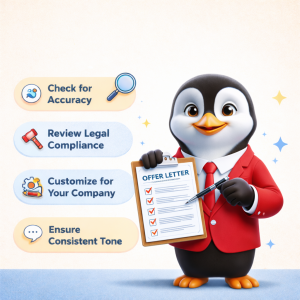
What HR Teams Should Check Before Using a Sample Offer Letter
What HR Teams Should Check Before Using a Sample Offer...
Read More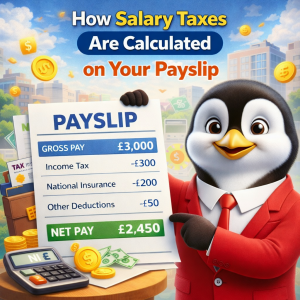
How Salary Taxes Are Calculated on Your Payslip
Your pay slip can look like a mini...
Read More
End of Employment Letters: Resignation, Termination, and Closure Explained
End of Employment Letters: Resignation, Termination, and Closure Explained Introduction...
Read More