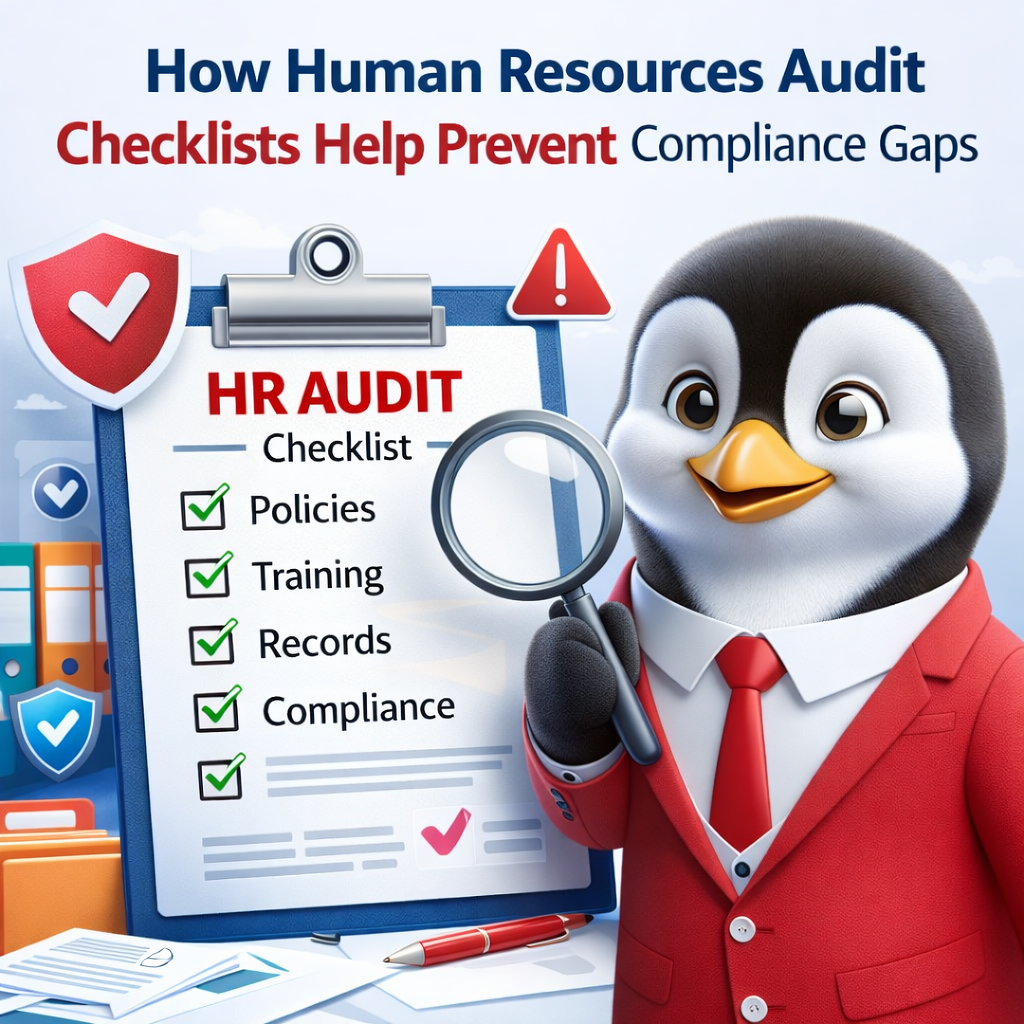
How Human Resources Audit Checklists Help Prevent Compliance Gaps
There’s a specific kind of stress HR knows too well.
It’s not loud. It doesn’t announce itself. It sits quietly behind your day while you’re onboarding new hires, answering leave questions, calming managers, and drafting letters that need to be “done yesterday.” Then a message arrives—an audit, an inspection, a leadership review—and your mind jumps straight to the same fear: What if something small slipped through?
That’s why a human resources audit checklist matters more than most people realise. It’s not just a document. It’s the steady hand that keeps your work from turning into last-minute panic.
Before we go deeper, let’s make the topic simple.
A compliance gap is usually a small crack that grows
A compliance gap is the space between what your organisation should do and what actually happened—or what you can prove happened.
Sometimes it looks like a missing acknowledgement. Sometimes it’s an outdated policy still being used. At other times, payroll data doesn’t match attendance records. None of these start as disasters. However, once you’re under scrutiny, these “small” things suddenly feel enormous.
In India, the compliance environment is also getting more structured and digital. The Unified Shram Suvidha Portal is designed as a single point of contact for inspection reporting and return submission, and it assigns a Labour Identification Number (LIN) to establishments for data integration across enforcement agencies.
So when your internal records are scattered, external expectations can feel even harder to meet.
Why good HR teams still end up with gaps
It’s not because HR doesn’t care. Most gaps come from pace and fragmentation.
-
Teams expand, so managers interpret rules differently.
-
Policies get updated, yet older versions keep circulating.
-
Documents live in emails, drives, desktops, and chat threads.
-
Deadlines keep coming, even when your capacity doesn’t.
As a result, the organisation becomes inconsistent without meaning to. And inconsistency is exactly what audits expose.
If you’ve ever related to Why Manual Compliance Tracking Becomes Hard as Companies Grow, you already know the pattern: growth makes memory-based systems fragile.
The checklist isn’t the audit. It’s the prevention plan.
Here’s a different way to see it: an audit checklist is not a “thing you do when someone asks.” It’s a routine that quietly prevents gaps from forming.
A good checklist does three jobs at once:
-
It spots drift early (before it becomes a problem).
-
It creates repeatability (so HR doesn’t reinvent the wheel).
-
It protects people (because consistent processes feel fair).
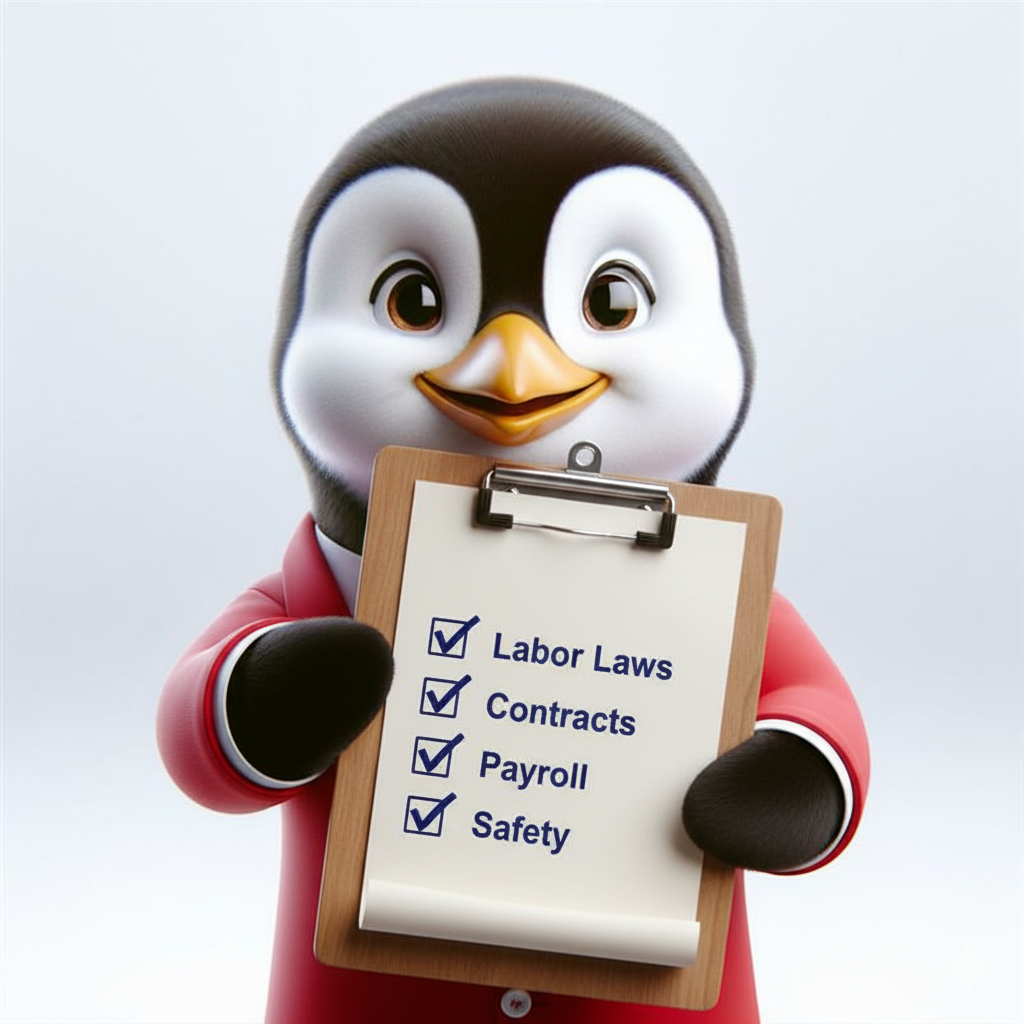
That’s also why a human resources audit checklist works best when it’s tied to real HR workflows, not generic templates.
What HR teams usually review to catch gaps early
Instead of listing everything in one heavy block, let’s break it into “moments” HR can check without burning out.
Moment 1: “Can this employee file tell a clean story?”
Pick one employee at random. Now ask:
-
Do we have the right joining documents and letters?
-
Are role changes and salary revisions documented clearly?
-
Are acknowledgements stored and retrievable?
-
If an HR teammate opened this file, would it make sense?
If the file feels like a puzzle, that’s your signal. Fixing a few records now saves days later.
Moment 2: “Do our policies match how we actually operate?”
Policies should not be museum pieces. They should guide daily behaviour.
Review whether your key policies are:
-
current and readable
-
aligned with what managers enforce
-
acknowledged by employees
-
version-controlled (one current, older archived)
This connects naturally to themes from Human Resources Compliance Checklist: Keeping Policies, People, and Processes Aligned, because compliance is really alignment in disguise.
Moment 3: “Is our proof ready, not just our intention?”
Audits are rarely about what you meant to do. They’re about what you can show.
That means HR should be able to pull:
-
approvals and dates
-
correct document versions
-
evidence of submissions or actions
-
a clear audit trail without scrambling
This gets more important as government portals evolve. For example, EPFO announced a revamped ECR that applies from wage month September 2025 onwards, with system-based validations to prevent incorrect submissions.
When validations increase, messy data becomes a bigger risk.
Moment 4: “Are statutory timelines treated like non-negotiables?”
Even when payroll is perfect, timelines can still slip quietly.
For ESIC, employer contribution guidance notes payment is due within 15 days of the last day of the calendar month in which contributions fall due.
So if your team is relying on informal reminders, one busy week can create a compliance gap without anyone noticing.
Moment 5: “Do we have a working complaint mechanism, not just a policy?”
This is sensitive, and it’s deeply human.
Many workplaces must have an Internal Complaints Committee (IC) under POSH requirements. Government documents outline that employers should constitute the committee by written order, and they describe what that structure should look like.
A checklist helps HR confirm the mechanism exists, functions, and is documented—because safety should never depend on chance.
The real power move: run mini-audits before the world forces you to
One reason audits feel scary is timing. They arrive when you’re already busy.
Instead, create a rhythm that makes audits boring (in the best way):
-
Monthly: sample employee files + key compliance dates + document version checks
-
Quarterly: policy review + manager alignment + template consistency
-
Yearly: deep review across departments + proof retrieval test
When you do this, compliance gaps don’t grow in silence. They get caught while they’re still small.
That’s why a human resources audit checklist isn’t “extra work.” It’s the work that prevents rework.
If you’re also thinking about scale and modern workflows, the ideas in How AI Is Changing the Way Companies Approach Compliance Management fit well here—because checklists become far easier to maintain when the workflow is structured.
Conclusion
HR doesn’t need more pressure. HR needs more support.
A checklist won’t remove responsibility, but it will remove the chaos that makes responsibility feel unbearable. It gives you a clear path, steady proof, and fewer late-night “what did we miss?” spirals.
That’s exactly where HRTailor.AI helps. HRTailor.AI is an AI-based HR tool designed to support HR professionals and employers in creating HR policies and HR letters for employees, enabling smooth and structured organisational functioning. And for this specific need, our Compliance Checklist Generator helps you build a human resources audit checklist that is practical, repeatable, and tailored to your workflow—not generic.
When you sign up, you also get 10,000 free credits, so you can start building structure right away, without hesitation.