Most employee exits appear simple—until the paperwork begins.
The decision has already been made. The conversation is over. Yet the moment an end of employment letter is prepared, the exit suddenly becomes official. What is written at this stage determines how the separation will be understood weeks, months, or even years later.
For HR teams, this letter is not about emotion or explanation. It is about recording the outcome correctly—without creating questions that should never arise.
The real decision HR makes before writing anything
Before choosing words, HR teams answer a more important question.
How should this exit be documented?
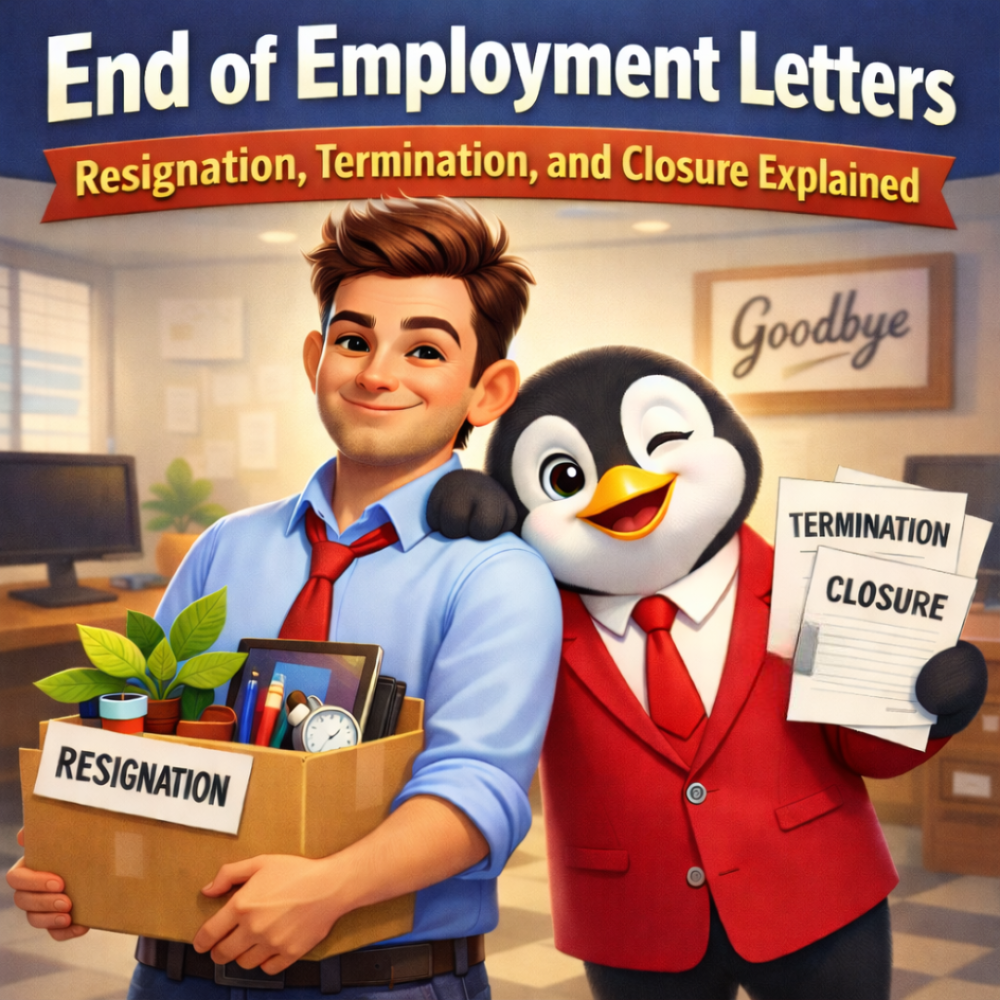
Resignation, termination, and administrative closure may all result in the same outcome—employment ends—but the documentation logic behind each is very different. Treating them the same often leads to avoidable risk.
That distinction shapes everything that follows.
When resignation leads the process
Voluntary exits are initiated by the employee, which makes the documentation straightforward—but not casual.
A resignation-based end of employment letter confirms facts:
Nothing more is required. Adding commentary or interpretation only complicates what should remain clear.
This is where experienced HR teams keep the letter deliberately restrained.
When termination requires controlled language
Termination exits carry higher visibility and greater sensitivity.
A job termination letter does not explain decisions—it records them. The language is factual, direct, and carefully limited. Dates, authority, and compliance take priority over tone.
Too much detail invites debate. Too little creates confusion. The balance is intentional and often reviewed closely before release.
Many HR teams rely on structured drafting tools, such as the HRTailor.AI HR letter generator, to ensure termination letters follow approved formats while still allowing final human review.
Closures that are procedural, not personal
Some exits have nothing to do with performance or conduct.
Contract expiry, restructuring, or role elimination require documentation that focuses on closure logistics rather than causes. These letters emphasize timelines, settlements, and next steps.
When handled well, they feel administrative. When handled poorly, they feel abrupt.
The difference lies in clarity, not length.
What HR verifies before issuing the letter
Strong HR teams rarely rush this step.
Before any end of employment letter is issued, four elements are confirmed:
-
Employment status on record
-
Approved last working day
-
Exit category alignment
-
Clearance and settlement readiness
If even one of these is uncertain, the letter waits. That pause often prevents future disputes.
Why exit letters are written for unseen readers
This is where many teams underestimate impact.
End of employment letters often resurface later—during background verification, legal review, audits, or future hiring checks. The person reading it may have no context about the original exit.
That reality changes how experienced HR professionals write these letters. Each line must stand on its own
Consistency as a risk-management tool
Consistency is not about uniformity. It is about defensibility.
When exit letters vary widely in structure or language, questions arise. Consistent frameworks, however, signal that exits follow a defined process—regardless of circumstance.
This is why many organizations standardize exit documentation while allowing limited customization.
Where most mistakes actually happen
Surprisingly, errors rarely come from poor writing.
They usually happen because:
-
The wrong template is reused
-
Old clauses remain unchanged
-
Dates are entered manually
-
Approvals are skipped under time pressure
Process gaps, not intent, cause most issues.
Using structured workflows—or tools like the HRTailor.AI HR letter generator—helps reduce these risks while keeping control firmly with HR teams.
The question that defines a strong exit letter
Before issuing the letter, experienced HR professionals ask one quiet question:
If this document is reviewed months later by someone outside the organization, will it still be clear?
That single question often determines whether a letter is ready.
Final Thoughts
End of employment letters do not exist to explain decisions. They exist to preserve them.
When HR teams approach these letters with discipline, restraint, and consistency, exits remain clean—even when circumstances are complex. The goal is not to say more, but to say exactly what is needed, no more and no less.
Because in HR, the final document often speaks the longest.