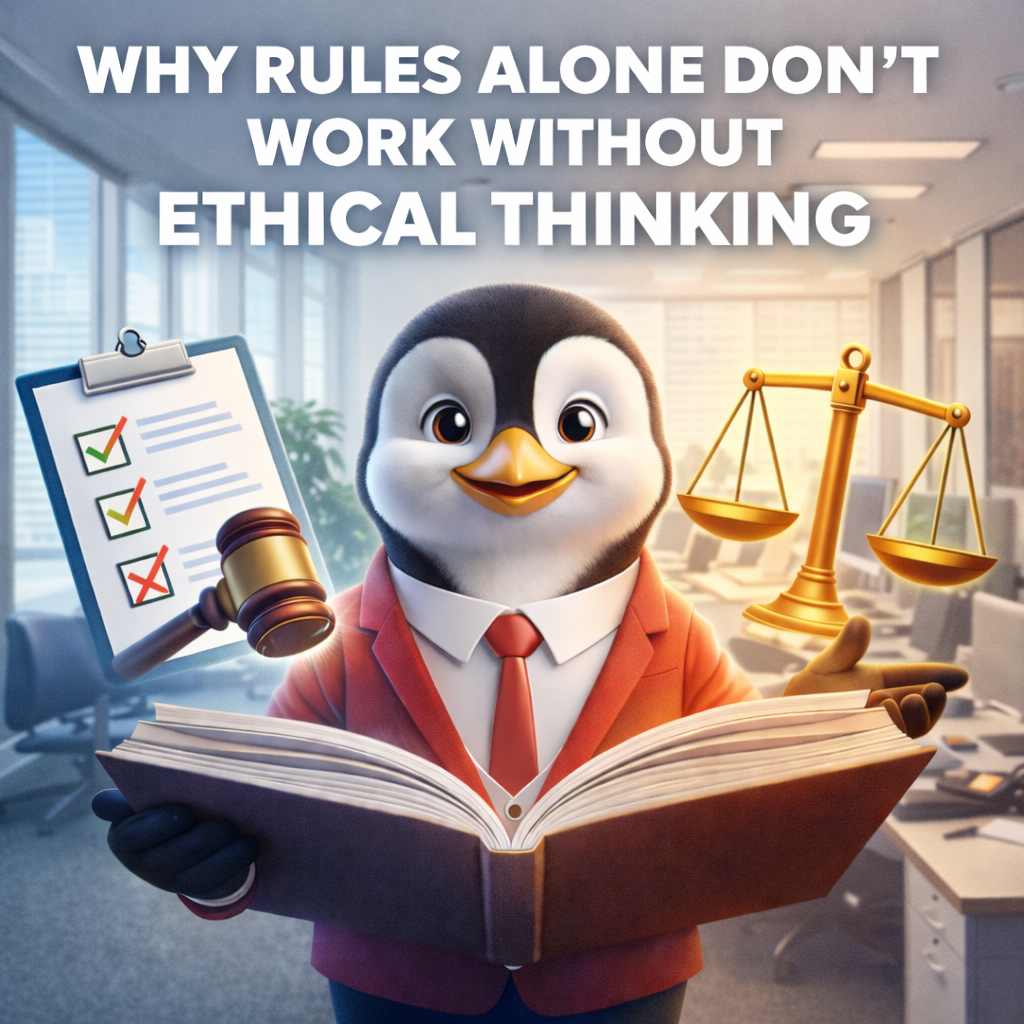
Why Rules Alone Don’t Work Without Ethical Thinking
Every organisation has rules. They are written, approved, circulated, and often acknowledged with a signature. Yet despite all this, problems still occur. People bend rules. Grey areas appear. Trust weakens. This is not because rules are useless, but because rules alone are never enough.
Rules tell people what to do. Ethical thinking explains why it matters.
Understanding this difference is essential for any organisation that wants stability, trust, and long-term growth.
Understanding the Difference Between Rules and Ethics
Rules are structured instructions. They define boundaries and outline consequences. Ethics, however, guide judgement when situations are unclear or when rules do not cover every scenario.
Most workplace challenges do not happen in black-and-white situations. They happen in moments of pressure, urgency, or personal conflict. In those moments, people rely less on rulebooks and more on values.
This is where the ethics of code becomes important. It helps employees make the right decision even when no one is watching or when the rulebook feels silent.
Governments and labour authorities expect organisations to act in good faith, not just follow procedures. Ethical conduct is often a legal expectation, even when not explicitly written as a rule.
Why Rules Alone Often Fail in Real Situations
Rules cannot predict every scenario. They cannot account for human emotion, cultural differences, or complex workplace relationships. When employees feel pressured to “just follow the rule” without understanding its intent, they may comply outwardly while disengaging inwardly.
Over time, this creates a culture of avoidance rather than accountability.
On the other hand, when ethical thinking is encouraged, employees feel responsible for outcomes, not just compliance. They ask better questions, act with care & consider impact, not only instruction.
This shift makes policies stronger, not weaker.
Ethical Thinking and Workplace Trust
Trust is built when employees believe decisions are made fairly. Ethical thinking supports this belief by ensuring consistency in spirit, not just in wording. When employees see leaders applying rules with integrity, confidence grows.
A workplace guided by ethical values encourages openness. Employees feel safer raising concerns. Managers respond with understanding rather than defensiveness. This environment reduces conflict before it escalates.
The ethics of code plays a quiet but powerful role here. It bridges the gap between written rules and lived experience.
How HR Policies Support Ethical Behaviour
HR policies create structure. They define acceptable behaviour, outline processes, and set expectations. However, policies are most effective when they are written with ethical intent, not just legal necessity.
Clear HR policies help maintain discipline while protecting dignity. They ensure that actions are guided by fairness rather than personal bias. When policies are aligned with ethical thinking, they become tools for guidance rather than control.
Labour frameworks across countries expect employers to provide safe, respectful, and fair workplaces. HR policies translate these expectations into practical guidance for everyday work.
The Role of HR Letters in Reinforcing Ethics
HR letters are moments where policy meets reality. Appointment letters establish trust from the start. Confirmation letters recognise growth. Warning letters address concerns while protecting fairness.
When these letters are consistent and ethically grounded, employees understand that decisions are not arbitrary. They see that behaviour, not hierarchy, drives outcomes.
This consistency strengthens professional relationships and reinforces ethical standards without confrontation.
Why Compliance Needs Ethical Support
Compliance is often seen as a checklist. However, true compliance depends on intent as much as documentation. Organisations may technically follow rules while still creating unhealthy environments.
Ethical thinking ensures compliance is meaningful. It encourages organisations to ask whether a policy protects people, not just the organisation. This approach reduces risk and strengthens credibility.
The ethics of code supports this balance by guiding judgement where rules alone fall short.
The Challenge of Manual Policy Creation
Creating HR policies and letters manually is time-consuming. It increases the risk of outdated language, inconsistency, and oversight. As organisations grow across regions, this challenge multiplies.
Errors in policy or communication can lead to confusion, disputes, or legal exposure. More importantly, they can damage trust. Employees notice when documents feel rushed or unclear.
This is why many HR teams struggle to maintain ethical consistency alongside operational demands.
Using Technology to Support Ethical Consistency
Modern HR teams benefit from tools that reduce manual effort while maintaining accuracy. AI-based HR platforms help organisations create structured HR policies and HR letters using simple inputs.
These tools allow documents to be tailored industry-wise, state-wise, and country-specific. This ensures relevance, compliance, and clarity without repetitive drafting.
By reducing administrative burden, HR teams can focus on fostering ethical culture rather than correcting preventable errors.
Bringing Rules and Ethics Together
Rules provide structure. Ethics provide direction. When both work together, organisations become resilient. Employees understand expectations while feeling respected. Managers enforce standards without fear of inconsistency.
A workplace guided by ethical thinking does not rely on punishment to maintain order. Instead, it builds responsibility, trust, and shared purpose.
The ethics of code reminds organisations that doing the right thing should never depend solely on written rules.
Conclusion
Strong organisations are not built on rules alone. They are built on values that guide decisions when rules are unclear. Ethical thinking ensures that policies protect people, not just processes.
When HR policies are clear and HR communication is consistent, workplaces become fairer and more stable. When supported by the right tools, HR teams can focus on people rather than paperwork.
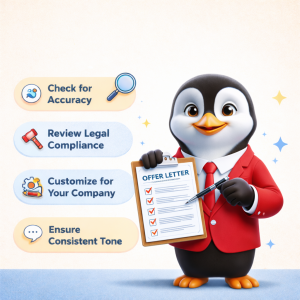
At HRTailor.AI, we help HR professionals and employers create HR Policies and HR Letters quickly and accurately using AI. With basic inputs, users can generate industry-specific, state-wise, and country-compliant documents that support ethical, structured workplaces. As a welcome benefit, signing up gives you 10,000 free credits to get started.
Because ethical workplaces begin with clarity and clarity should never be complicated.