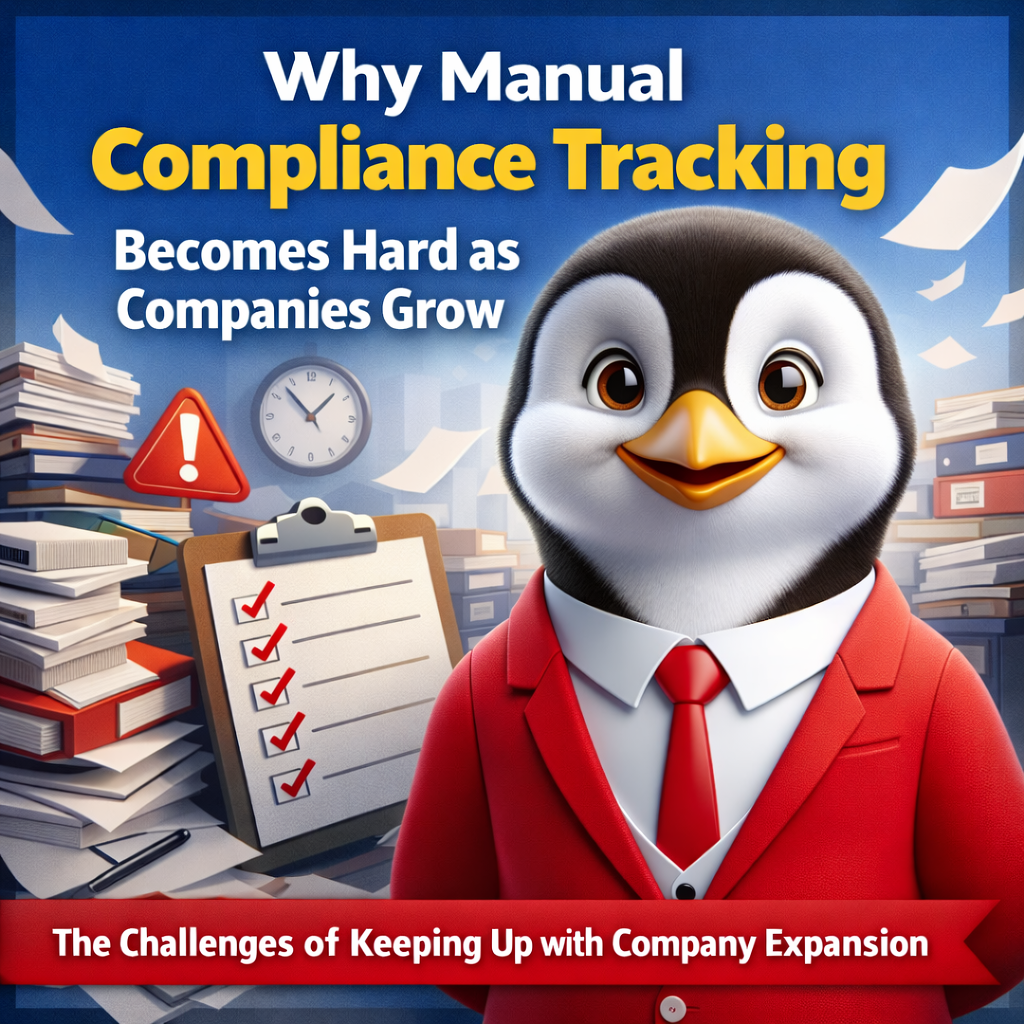
Why Manual Compliance Tracking Becomes Hard as Companies Grow
You probably remember how it felt when your company was small — maybe five, ten, or twenty people. Compliance used to be manageable. A few spreadsheets, a couple of reminders on your calendar, and everything seemed in place. You felt in control. But as your organisation grew, that sense of control slowly slipped away.
It’s not that the work suddenly became easier to ignore. Rather, the legal environment stretched in complexity — more labour laws to follow, more documents to store, more deadlines to meet. And suddenly, the compliance task that once felt like a light breeze became a storm you struggled to navigate.
That First Sense of Overwhelm
At first, you tell yourself: “It’s just more data.” Another file here, another record there. But overtime, the weight piles up. Spreadsheet after spreadsheet becomes another layer of anxiety. You start to worry: Did we miss a deadline? Did someone forget to update this record? Manual compliance tracking feels like sprinting with weights tied to your legs.
It’s not just busywork — it’s personal. You care about your team. You don’t want a compliance slip to hurt someone’s livelihood & want a workplace that’s safe, fair, and structured. But when you’re buried under paperwork and reminders, it feels like compliance becomes less about people… and more about firefighting.
Rules Multiply. Mistakes Multiply Faster.
When a business grows, it operates in more offices, maybe even different states or countries. With each location comes a unique set of local labour rules. The number of forms to track explodes. One missed update can lead to penalties or legal risk. That isn’t just data — that’s real consequences.
At this stage, manual compliance tracking reveals its biggest flaw: it depends on humans, and humans get overwhelmed. Errors creep in. Deadlines slip. Versions of documents float around in emails. Every new hire feels like a fresh worry: “Did I record this right?” That nervousness never goes away.
The Emotional Toll on HR
You didn’t sign up for HR because you loved filing papers. Most HR professionals entered the field because they care — about people, culture, fairness, and helping others grow. But manual compliance systems take that passion and slowly drain it.
You spend days chasing signatures, updating spreadsheets, and cross-checking lists. You miss meaningful conversations with your team because you’re buried in documentation & lose sleep wondering if something — somewhere — slipped through the cracks.
This isn’t just “work stress.” It’s a sense of responsibility. And living with that constant worry affects how much joy HR bring into their work.
When Growth Outpaces Your Tools
There comes a moment when your manual methods just can’t keep up. More employees means more deadlines. More deadlines mean more alerts. and more alerts mean more frantic checking and double-checking. And instead of focusing on people — culture building, conflict resolution, strategic policy development — you’re stuck with compliance checklists and chasing down missing fields.
Human memory and sticky notes can’t scale. No matter how diligent you are, the sheer volume overwhelms every manual system you once trusted.
The Shift We All Long For — Without Losing Heart
That’s where technology becomes life-changing. Not to replace your care or your expertise — but to support it. With the right tools, the routine tasks that drained your energy can become background processes that happen automatically. Tasks no one loves — reminders, updates, checklists, version control, deadline notifications — suddenly don’t rest on your shoulders alone.
As companies scale, automated compliance software becomes more than a luxury. It becomes a lifeline that protects your people, your reputation, and the emotional well-being of your HR team.
When your compliance radar is automated, you regain space to do what matters: support your team, shape culture, and lead with confidence.
How Growth Demands Structure, Not Stress
What felt easy with ten employees becomes dangerously complex with one hundred. Growth demands structure — systems that can capture every rule, track every deadline, and guide every action. Manual efforts lack that structure. They falter where consistency and traceability matter most.
Imagine never having to wonder whether you filed the right form. Or missing a key legal update because it got buried in your inbox. That peace of mind isn’t a pipe dream. It comes from aligning human dedication with intelligent systems that sharpen — not dull — your purpose, especially when supported by automated compliance software.
A Better Future for HR
This isn’t about replacing the human touch. It’s about empowering it. Machines handle repetitive checks, constant tracking, and record-keeping at scale. You bring insight, empathy, and strategic direction. Together, you do more than compliance — you build workplaces that are thriving, fair, and resilient.
Conclusion: A Lighter Burden, A Clearer Path
If manual compliance tracking feels like dragging a ball and chain, you’re not alone. It is hard — especially as companies grow. But there’s good news: you don’t have to do it all alone.
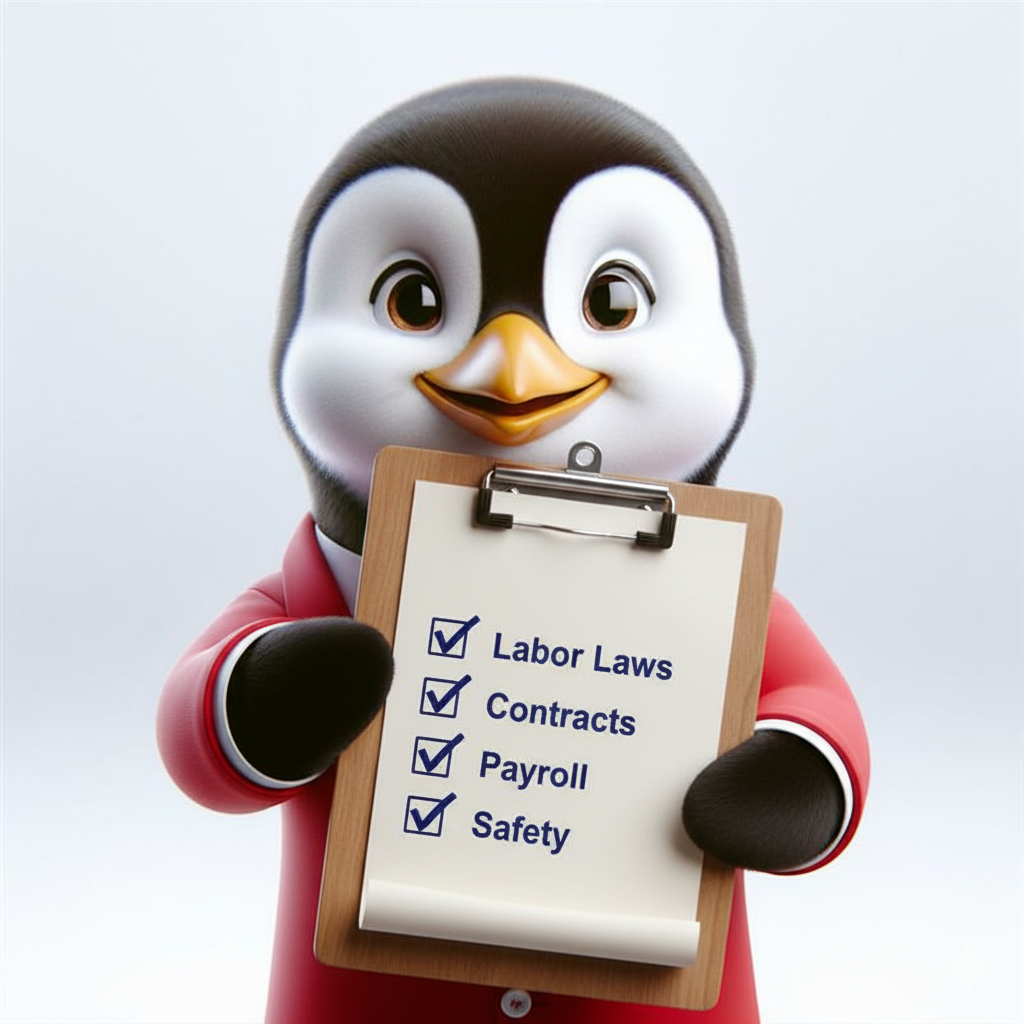
At HRTailor.AI, we understand that HR isn’t just about rules and checklists. It’s about people. That’s why our Compliance Checklist Generator — part of our AI-based HR tool — helps HR professionals and employers create structured, accurate compliance checklists effortlessly using automated compliance software.
With our solution, you get clarity, consistency, and confidence. And for a limited time, when you sign up, you’ll receive 10,000 free credits to start building your compliance workflows without worry.
Let technology handle the repetitive. You handle the meaningful.