Code of Conduct Explained: What It Means in the Workplace
Every workplace has expectations, even when they are not written down. People sense them in meetings, emails, and everyday conversations. They notice how managers react to mistakes, how teams handle conflict, and how respect shows up—or doesn’t. A code of conduct brings these unspoken expectations into clear focus.
Rather than acting as a list of restrictions, it serves as guidance. It helps people understand how to behave, communicate, and make decisions at work. Most importantly, it creates a shared understanding that supports trust and fairness as organisations grow.
Before exploring why it matters so deeply, it helps to understand what it actually means.
Understanding the Meaning Behind a Code of Conduct
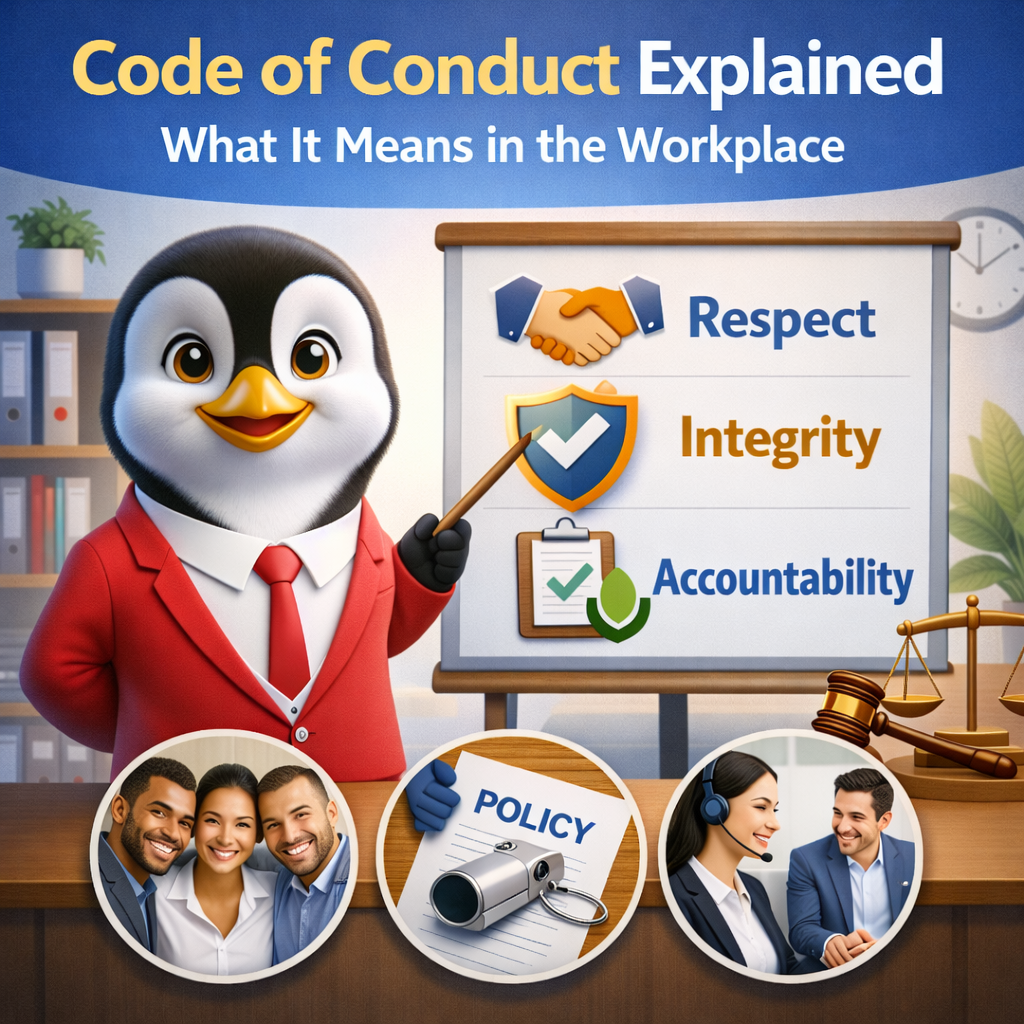
At its core, a code of conduct explains acceptable behaviour in the workplace. It sets standards for professionalism, ethics, and respect. Employees rely on it to understand boundaries, while employers use it to maintain consistency.
The code and conduct meaning goes beyond rules. It reflects organisational values in action. It answers practical questions employees face every day, especially in situations where personal judgement matters.
Labour expectations across regions require employers to promote safe, respectful, and non-discriminatory workplaces. A well-written code of conduct helps translate those expectations into daily behaviour.
Why Behavioural Clarity Matters at Work
Unclear behaviour standards create confusion. Employees hesitate before speaking up. Managers struggle to address issues confidently. Over time, this uncertainty weakens trust and morale.
Clear conduct guidelines remove that uncertainty. They allow people to act with confidence rather than fear. When everyone understands what professionalism looks like, the workplace feels safer and more predictable.
This clarity becomes especially important as teams grow and diversify. Personal assumptions no longer work. Shared standards do.
How a Code of Conduct Shapes Workplace Culture
Culture forms through repeated actions. How feedback is delivered, disagreements are resolved & power is exercised. A code of conduct influences all of these moments.
When employees see leaders follow the same standards expected of them, trust strengthens. When consequences remain consistent, fairness feels real. Over time, these experiences shape how people describe their workplace to others.
The code of conduct acts as a cultural anchor. It keeps values visible, even during growth or change.
The Connection Between Conduct and HR Policies
HR policies provide structure. A code of conduct gives them direction. Together, they create a stable framework for behaviour and decision-making.
Clear HR policies support discipline, clarity, and a healthy work environment. The code of conduct ensures those policies are applied ethically and consistently. This alignment reduces conflict and supports transparency.
Many organisations face challenges when policies exist but behaviour standards remain vague. Aligning both closes that gap.
HR Letters as Reinforcements of Conduct Standards
HR letters bring policies and conduct expectations into real situations. Appointment letters set expectations early. Confirmation letters reinforce trust. Warning letters address concerns while protecting dignity.
When HR letters reflect the code of conduct, employees understand decisions more clearly. They see structure instead of personal bias. This clarity strengthens professional relationships on both sides.
Consistency across policies and letters plays a key role in organisational stability.
Why Compliance Alone Is Not Enough
Compliance ensures organisations meet legal obligations. However, compliance without clarity often feels mechanical. Employees may follow rules while feeling disconnected.
A code of conduct adds purpose to compliance. It explains why behaviour matters, not just what is required. This understanding encourages accountability rather than surface-level obedience.
The code and conduct meaning becomes especially important during sensitive situations where empathy and judgement matter.
Challenges of Creating Conduct Documents Manually
Many organisations still draft conduct documents manually. This process takes time and increases the risk of outdated language or inconsistency. As companies expand across regions, complexity grows.
Manual drafting can miss industry-specific or location-based requirements. It can also result in documents that feel generic rather than meaningful.
These gaps often show up during conflicts, when clarity matters most.
Using Technology to Support Clarity and Consistency
Modern HR teams benefit from tools that simplify documentation without sacrificing accuracy. AI-based HR platforms allow teams to create HR policies and HR letters using basic inputs.
These tools support industry-wise, state-wise, and country-specific documentation. As a result, organisations maintain relevance and compliance while saving time.
This approach allows HR professionals to focus on people, not paperwork.
Why Employees Connect With Clear Conduct Standards
Employees want to know where they stand. Clear conduct standards remove guesswork. They support emotional safety by setting predictable boundaries.
When organisations communicate expectations openly, employees feel respected. They trust the system more. They stay engaged longer.
The code of conduct plays a quiet but powerful role in shaping this experience.
Conclusion
A strong workplace does not rely on assumptions. It relies on clarity. A code of conduct explains how values show up in daily work, guiding behaviour with fairness and consistency.
When HR policies and HR letters align with conduct standards, organisations build trust, compliance, and stability. When supported by the right tools, HR teams manage this complexity with confidence.
At HRTailor.AI, we help HR professionals and employers create HR Policies and HR Letters quickly and accurately using AI. With simple inputs, users can generate industry-specific, state-wise, and country-compliant documents that support structured and respectful workplaces. Signing up gives you 10,000 free credits to get started.
Because clarity at work should feel human, not complicated.