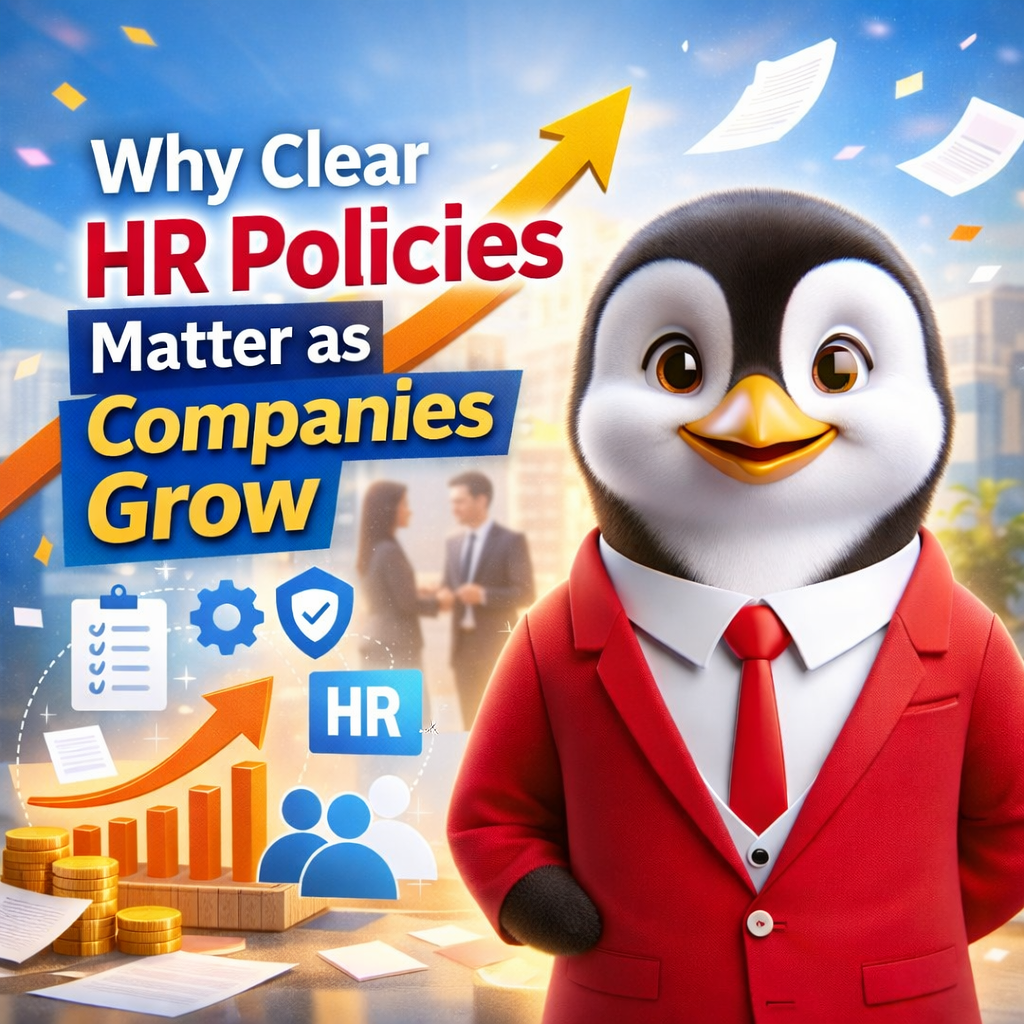
Why Clear HR Policies Matter as Companies Grow
Every company begins with energy, ambition, and a shared sense of purpose. In the early days, conversations are informal. Decisions happen quickly. Everyone knows everyone. However, as teams expand and roles multiply, clarity slowly becomes harder to maintain.
Growth brings opportunity, yet it also brings complexity. New employees arrive with different expectations. Managers interpret rules differently. Small misunderstandings turn into larger issues. This is where clear HR policies begin to matter—not as restrictions, but as anchors.
Understanding this shift is essential before any organisation can grow sustainably.
What HR Policies Really Mean in a Growing Organisation
At a basic level, HR policies define how an organisation works with its people. They explain what is expected, what is allowed, and how decisions are made. More importantly, they create a shared understanding across teams that may no longer sit in the same room.
A clear hr policy ensures that employees are treated fairly, regardless of who manages them or where they work. It supports discipline without harshness and clarity without confusion. As companies grow, this consistency becomes critical to maintaining trust.
Labour regulations across countries also expect employers to define working conditions, grievance processes, and disciplinary standards clearly. HR policies translate those expectations into everyday workplace practice.
Why Informal Systems Stop Working as Teams Expand
What works for ten employees rarely works for a hundred. Informal conversations cannot replace documented processes forever. As organisations grow, relying on verbal instructions increases risk and uncertainty.
Employees begin asking important questions:
Without documented guidance, answers vary. This variation creates frustration and, over time, disengagement. Clear policies remove guesswork. They allow employees to focus on work instead of worrying about fairness.
This is why human resource management policies are not optional during growth—they are foundational.
The Emotional Impact of Clarity at Work
Clarity creates calm. When employees know where they stand, anxiety reduces. They feel safer making decisions and raising concerns. This emotional stability directly affects productivity and retention.
On the other hand, unclear policies often lead to silent stress. Employees hesitate before acting. Managers feel unsure about enforcing rules. Over time, this hesitation erodes confidence on both sides.
Clear HR policies support emotional well-being by setting predictable boundaries. They allow people to work with confidence instead of caution.
The Role of HR Letters in Reinforcing Trust
Policies explain the framework, but HR letters bring that framework into real situations. Appointment letters clarify terms from day one. Confirmation letters reinforce progress. Warning letters address concerns while protecting fairness.
When HR letters align with policies, communication feels transparent and professional. Employees understand that decisions are based on structure, not personal bias. This alignment becomes increasingly important as organisations scale.
Together, policies and letters form a system that supports trust even when difficult conversations are necessary.
Compliance and Consistency During Growth
As companies grow across regions or industries, compliance becomes more complex. Employment laws vary by location. Industry standards differ. Without structured policies, organisations risk inconsistency and non-compliance.
Well-drafted hr policy documents help organisations meet legal obligations while maintaining internal consistency. They ensure that decisions are defensible, documented, and fair.
Consistency also protects leadership teams. When rules are clear, managers can act confidently without fear of unintended consequences.
Why Manual Policy Creation Slows Growing Teams
Despite their importance, HR policies and letters are often created manually. This approach consumes time and increases the chance of errors. Updates may be missed. Language may become outdated. Regional requirements may be overlooked.
For growing companies, this manual burden pulls HR teams away from strategic work. Instead of focusing on people and culture, they get stuck revising documents repeatedly.
As complexity increases, this approach becomes unsustainable.
Using Smarter Tools to Support HR Growth
Modern organisations need systems that scale with them. AI-based HR tools now allow policies and letters to be generated using simple inputs. These tools ensure accuracy while saving valuable time.
Documents can be created industry-wise, state-wise, and country-specific, ensuring relevance as organisations expand. This flexibility supports growth without sacrificing compliance or clarity.
For HR teams, this means fewer errors, faster execution, and more time to focus on people.
Bringing It All Together
Growth changes everything. Teams expand. Roles evolve. Expectations shift. Through all this change, clear HR policies provide stability. They protect fairness, support compliance, and create emotional security at work.
When employees understand the rules, trust grows naturally. When communication is consistent, workplaces feel professional and respectful. And when systems support HR teams, organisations scale with confidence.
At HRTailor.AI, we help HR professionals and employers simplify the creation of HR policies and HR letters through an AI-based platform. With basic inputs, users can generate structured, compliant documents tailored by industry, state, and country—supporting smooth and organised growth without the strain of manual drafting.
Because growing companies deserve clarity, not complexity.