Introduction
Organizations no longer rely on instinct alone to manage people. As workplaces grow more complex, decisions around hiring, performance, retention, and workforce planning need stronger foundations. This is where hr metrics and analytics quietly reshape how HR teams contribute to business success.
Rather than reacting to problems after they appear, HR leaders now use data to anticipate challenges, validate decisions, and align people strategies with business priorities. When used correctly, analytics does not replace human judgment. Instead, it strengthens it.
Understanding the Role of Data in Modern HR
HR decisions affect productivity, morale, costs, and long-term growth. Yet, for years, many people decisions were based on experience alone. While experience still matters, it becomes far more powerful when supported by reliable data.
HR metrics convert everyday workforce activity into measurable insights. Analytics then connects those insights to patterns, risks, and opportunities. Together, they allow HR teams to move from operational support to strategic influence.
As a result, leadership conversations shift from opinions to evidence.
Why HR Metrics Matter More Than Ever
Workforces are more distributed, diverse, and dynamic than before. Because of this, relying on assumptions can create blind spots. HR metrics help organizations stay grounded in reality.
They provide visibility into:
When these signals are identified early, corrective action becomes easier and less disruptive.
Turning HR Data into Actionable Insights
Collecting data alone does not improve decisions. Value emerges only when metrics are interpreted in context.
For example, a spike in turnover may seem alarming at first. However, when paired with engagement scores, workload data, and manager feedback, the cause becomes clearer. Analytics connects these dots, allowing HR teams to act with confidence.
This structured approach ensures that decisions are not driven by isolated numbers but by meaningful patterns.
Supporting Workforce Planning with Analytics
Strategic workforce planning depends on understanding future needs, not just current capacity. HR analytics supports this by identifying skill gaps, succession risks, and hiring trends.
By analyzing historical data, HR teams can forecast:
-
Which roles will need reinforcement
-
Where training investments matter most
-
How workforce composition should evolve
Consequently, planning becomes proactive rather than reactive.
Improving Hiring Decisions Through Data
Recruitment is one of the costliest HR functions. Analytics helps reduce guesswork by evaluating what truly predicts success.
Metrics such as time-to-fill, quality-of-hire, and retention rates offer insights into which hiring channels and assessment methods perform best. Over time, this data improves hiring accuracy while reducing unnecessary costs.
When recruitment decisions are backed by analytics, consistency improves across teams.
Linking Performance Data to Business Outcomes
Performance conversations often focus on individual output. However, analytics allows HR to view performance through a broader lens.
By connecting performance data with outcomes like revenue growth, customer satisfaction, or project delivery, HR leaders demonstrate how people strategies support business goals. This alignment strengthens HR’s credibility at the leadership table.
At this stage, performance discussions shift from evaluation to improvement.
Enhancing Employee Experience with Insightful Metrics
Employee experience is shaped by multiple factors—workload, leadership, growth opportunities, and recognition. HR analytics helps measure these elements systematically.
Engagement surveys, feedback trends, and development data together reveal what employees value most. As a result, HR initiatives become more relevant and targeted.
When employees see actions driven by real feedback, trust increases naturally.
Risk Management and Compliance Through Analytics
Compliance failures and workforce risks often surface late, when correction is expensive. Analytics helps reduce this risk by highlighting irregularities early.
Patterns related to absenteeism, overtime, or policy deviations signal where attention is required. Instead of reacting to incidents, HR teams address root causes in advance.
This predictive capability adds long-term stability to HR operations.
The Strategic Value of HR Dashboards
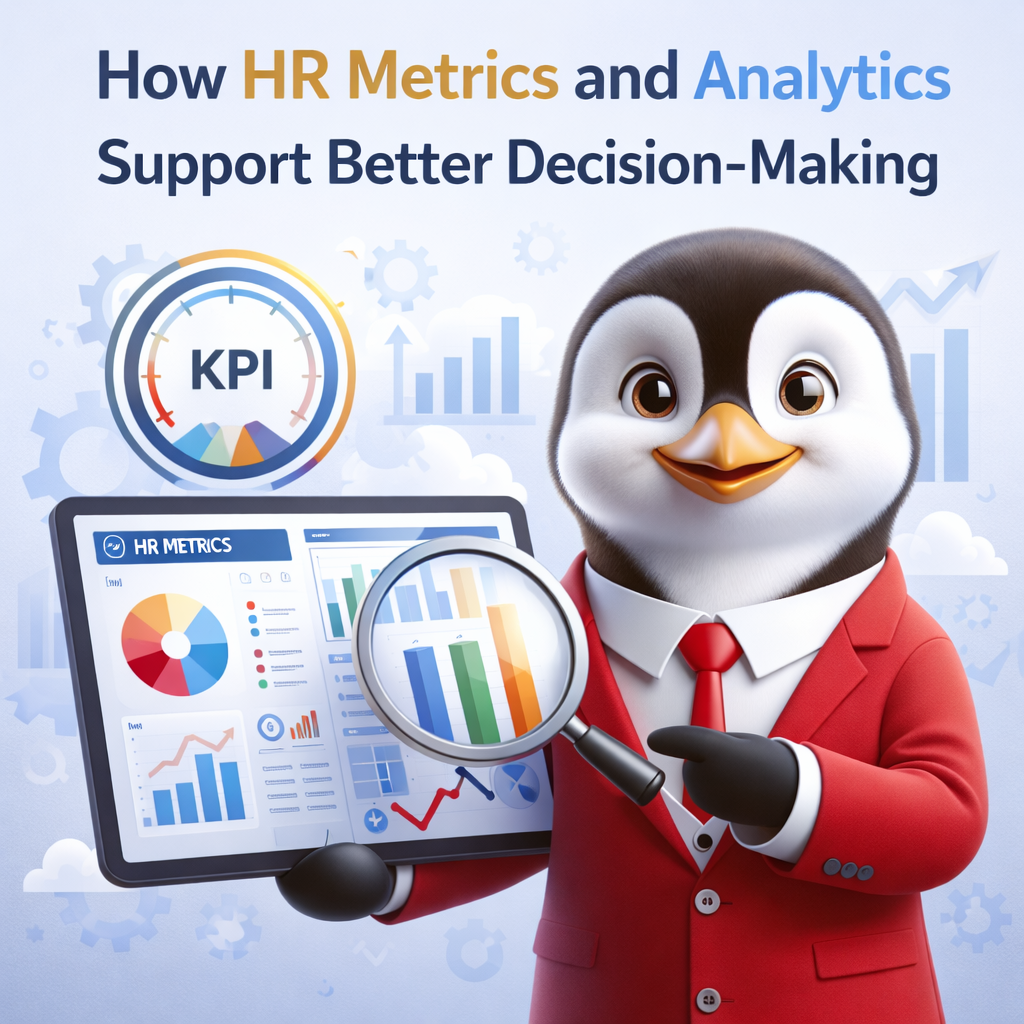
Dashboards transform complex data into visual clarity. For leaders, this accessibility matters.
When key metrics are presented clearly, discussions become faster and more focused. Trends are easier to identify, and decisions are grounded in shared understanding. Over time, this consistency improves alignment across departments.
Some HR teams simplify this process using platforms like HRTailor.AI, where workforce insights, performance inputs, and people data are easier to organize and interpret without technical complexity.
Aligning HR Analytics with Business Intelligence
HR data becomes even more powerful when connected to broader organizational metrics. This is where business intelligence kpi frameworks support integrated decision-making.
By aligning workforce metrics with financial and operational indicators, leadership gains a complete view of performance drivers. HR no longer operates in isolation; instead, it contributes directly to business intelligence discussions.
This integration ensures that people decisions support measurable business outcomes.
Using Analytics to Improve Goal and Role Clarity
Analytics also helps refine how goals and responsibilities are defined. By reviewing performance trends and role outputs, HR teams can identify unclear expectations or unrealistic workloads.
Some organizations support this clarity using structured tools such as a KRA/KPI Builder, which helps translate analytics insights into well-defined roles and performance benchmarks.
This step ensures that data leads to clarity, not confusion.
Building a Data-Driven HR Culture
Adopting analytics is not just a technical change. It requires a mindset shift.
HR teams must feel comfortable questioning assumptions and validating ideas through data. Leaders must trust insights rather than intuition alone. Gradually, this culture reduces bias and improves fairness in decision-making.
Over time, analytics becomes part of everyday HR thinking, not a separate initiative.
Measuring What Truly Matters
Not every metric deserves equal attention. The most effective HR teams focus on indicators that reflect real outcomes rather than surface-level activity.
When hr metrics and analytics are selected carefully, they highlight progress, signal risks, and guide meaningful action. This disciplined approach keeps analytics practical and relevant.
Ultimately, the goal is not more data but better decisions.
Conclusion: From Insight to Impact
HR analytics empowers organizations to see clearly, act confidently, and plan intelligently. By transforming workforce data into insights, HR leaders support decisions that benefit both employees and the business.
When data, judgment, and strategy work together, HR evolves into a true decision-making partner.