Introduction
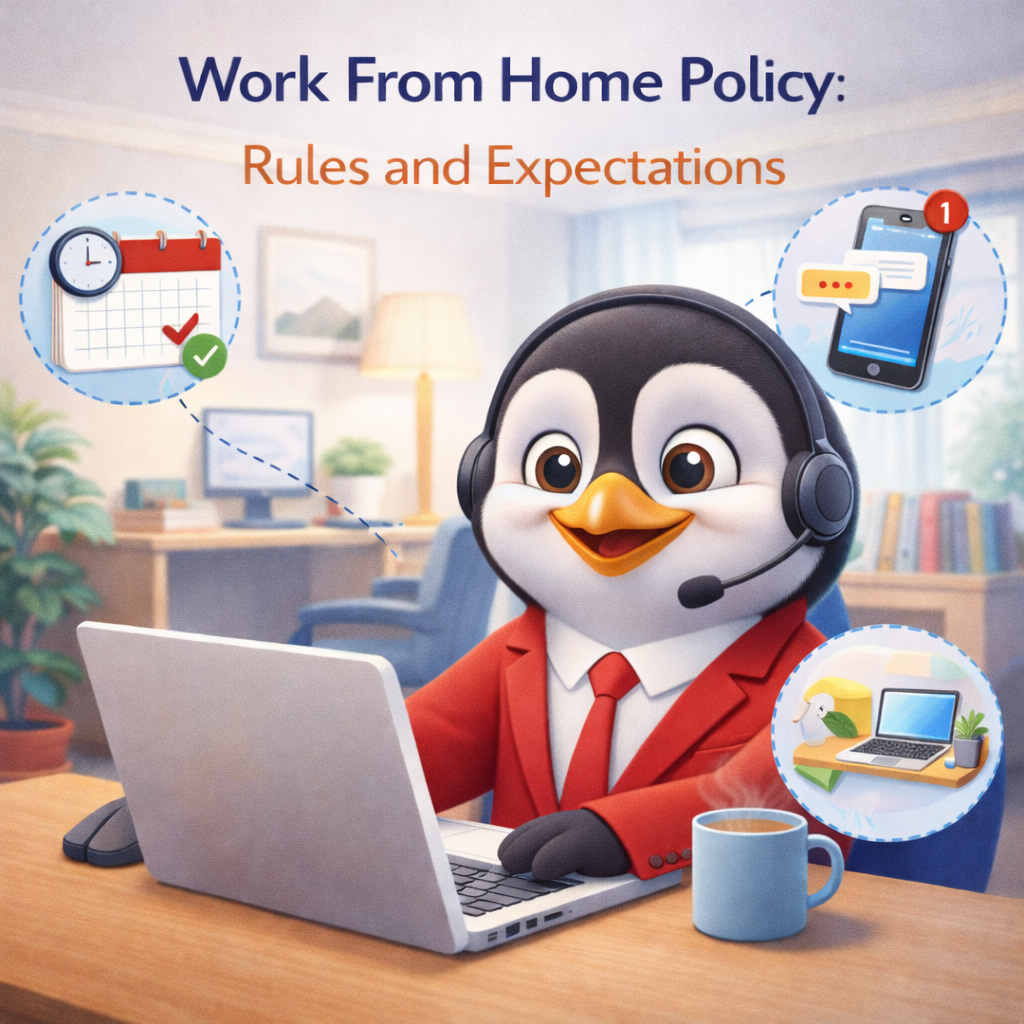
Remote work has shifted from being a temporary arrangement to a long-term working model for many organisations. While flexibility has increased, so have questions around accountability, availability, and performance. This is where a clearly defined work from home policy becomes essential for employers and HR teams.
Without written expectations, remote work can slowly blur boundaries—between work hours and personal time, productivity and presence, autonomy and oversight. A well-documented policy creates structure without removing flexibility, helping organisations maintain consistency even when teams are geographically dispersed.
Why Remote Work Needs Clear Rules
Work-from-home arrangements rely heavily on trust. However, trust alone is not a policy. Employers need clear guidelines that define how work should be managed outside the traditional office environment.
Clear rules help organisations:
-
Set fair expectations across teams
-
Avoid inconsistent managerial decisions
-
Maintain productivity standards
-
Reduce employee confusion and disputes
A structured work from home policy ensures that flexibility does not turn into uncertainty.
Defining Eligibility for Remote Work
Not every role can operate remotely, and not every employee may qualify for long-term work-from-home arrangements. HR teams must clearly define eligibility to avoid assumptions.
Eligibility criteria often consider:
When eligibility rules are documented clearly, approvals become objective rather than discretionary.
Work Hours, Availability, and Communication
One of the most common challenges in remote setups is availability. Employees may assume flexibility means unrestricted schedules, while managers may expect constant responsiveness.
Policies should clarify:
This alignment protects employees from burnout while ensuring business continuity.
Performance and Deliverables in a Remote Setup
Remote work shifts the focus from visibility to outcomes. Employers should define how performance will be measured when employees work from home.
This may include:
A strong work from home policy emphasises accountability without micromanagement, which is crucial for long-term success.
Data Security and Confidentiality Responsibilities
Remote work increases exposure to data risks. Employees often access company systems from home networks or personal devices, making security guidelines critical.
HR policies should address:
-
Use of company-approved devices
-
Secure network practices
-
Handling of confidential documents
-
Reporting security incidents
Clear security expectations protect both the organisation and the employee.
Equipment, Expenses, and Support
Another grey area in remote work is responsibility for infrastructure. Employers must clarify what support is provided and what remains the employee’s responsibility.
Policies may specify:
-
Laptop or device provisions
-
Internet or utility reimbursements
-
Maintenance responsibilities
-
IT support access
Clarity in this area reduces dissatisfaction and operational delays.
Leave, Attendance, and Policy Compliance
Remote work does not eliminate the need for attendance tracking or leave procedures. HR teams should ensure existing rules remain applicable.
Policies should confirm:
-
Leave application processes
-
Attendance tracking methods
-
Compliance with company conduct rules
This reinforces fairness between remote and on-site employees.
Why Policy Structure Matters for HR
As remote work policies evolve, manual drafting often leads to inconsistencies across departments. To maintain uniform language and legal alignment, many HR teams rely on structured drafting platforms like the HRTailor.AI policy builder, which helps standardise policy documents while allowing customisation based on organisational needs.
This approach supports scalability without compromising clarity.
Conclusion
Remote work succeeds when expectations are transparent and consistently applied. A thoughtfully designed work from home policy helps organisations balance flexibility with accountability, ensuring that employees remain productive, protected, and aligned with business goals—regardless of where they work from.