Introduction
Every workplace eventually faces separation. Sometimes it is planned and mutual. However, other times it happens suddenly and feels uncomfortable. What often turns these exits into disputes is not the decision itself, but unclear processes for handling the exit. When expectations remain unclear, emotions rise, misunderstandings grow, and trust breaks down quickly.
That is why employee exit policy rules become one of the most powerful tools an organisation can use. They protect employers, guide HR teams, and give employees certainty during a moment that already feels uncertain. Before exploring disputes and prevention, it helps to understand the foundation.
Understanding Employee Separation Beyond Paperwork
Employee separation is not just the final working day or a settlement calculation. Instead, it is a process that begins the moment someone resigns, an employer terminates employment, or a contract ends. For HR teams and employers, this process must balance compliance, consistency, and humanity.
When people leave a company, they remember how the organisation treated them more than why they left. A respectful, transparent exit keeps doors open. In contrast, a confusing or delayed process often leads to resentment, complaints, or legal action. Clear employee exit policy rules act like guardrails because they explain what happens next, who is responsible, and how teams will meet timelines.
Where HR Disputes Usually Begin
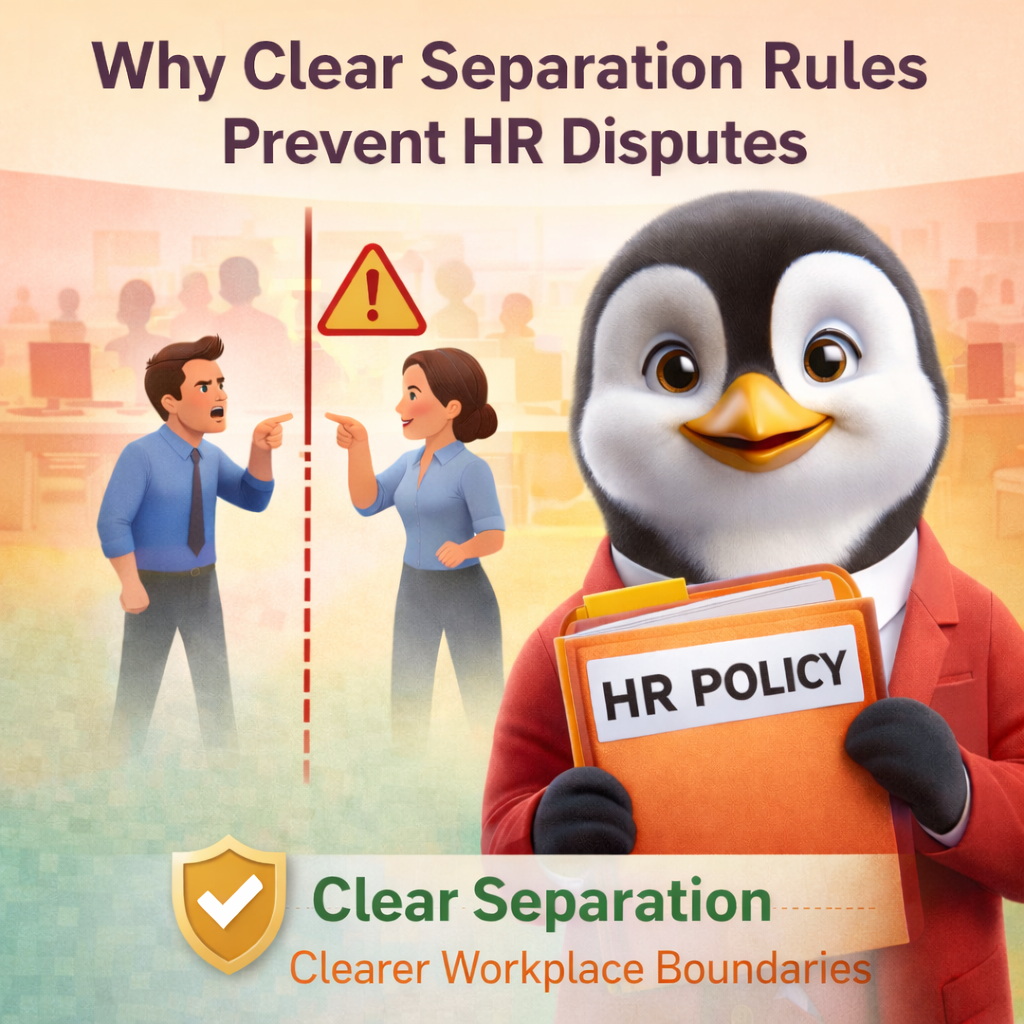
Most HR disputes related to exits do not start with bad intentions. Instead, they begin with silence, assumptions, or inconsistency.
Common triggers include:
-
Final settlements delayed without explanation
-
Confusion over notice periods or buyouts
-
Disputes around unused leave or deductions
-
Missing documentation or unsigned letters
-
Verbal commitments that never appear in writing
From an employer’s perspective, these issues feel operational. Yet, from an employee’s perspective, they feel personal. As a result, disputes grow in that gap. Well-documented exit rules reduce this gap significantly.
Why Clear Rules Change the Entire Exit Experience
Clarity reduces fear, and structure reduces doubt.
When organisations clearly document and share exit rules:
-
HR teams follow a standard checklist instead of reacting case by case
-
Managers know exactly what they can and cannot promise
-
Employees understand timelines for pay, documents, and closure
Consequently, consistency prevents escalation. A strong employee exit policy rules framework reinforces fairness, even when emotions run high. Additionally, it protects the organisation during audits, inspections, or legal reviews because it shows teams handle exits systematically rather than arbitrarily.
The Role of Documentation in Preventing Conflict
Many people see documentation as “extra work,” yet it often provides the strongest defence against disputes.
A complete exit process typically includes:
-
Resignation or termination acknowledgement
-
Notice period confirmation
-
Asset handover records
-
Final settlement calculations
-
Full and final settlement confirmation
-
Experience or relieving letters
Each document proves transparency. More importantly, it reassures employees that no one is hiding or delaying anything. HR letters play a critical role here. Appointment letters set expectations at the start, and exit-related letters close the loop professionally. Together, they create continuity across the employee lifecycle.
Compliance: The Quiet Risk Many Employers Miss
Labour laws differ across states and countries. Notice period requirements, settlement timelines, and statutory payments vary widely. Therefore, employers managing remote or multi-location teams often face compliance gaps.
A well-structured exit policy ensures that:
-
HR teams follow location-specific labour rules
-
Employers meet statutory timelines for final payments
-
Organisations can defend terminations if challenged
Non-compliance does not always lead to lawsuits, but it often triggers complaints, notices, and reputational damage. For that reason, clear employee exit policy rules help organisations stay compliant without constant firefighting.
Common Employer Mistakes That Lead to Disputes
Even experienced organisations can fall into common traps:
-
Policies exist, but teams do not share them with employees
-
Managers bypass HR during exits
-
Teams process settlements manually, which increases errors
-
Organisations fail to update policies after legal changes
These gaps weaken trust. Over time, they create patterns that employees notice and discuss. Ultimately, consistency is what strengthens credibility.
Conclusion
Employee exits do not have to end in disputes. Most conflicts arise when expectations are unclear and communication breaks down. Therefore, clear, well-documented employee exit policy rules create fairness, consistency, and trust at a time when all three matter most.
For employers and HR teams, the real win is not just avoiding complaints, but building a reputation for professionalism even during difficult moments. That reputation remains long after the employee leaves. Creating, updating, and applying HR policies manually can be time-consuming and risky because a single error can undo years of goodwill.
Platforms like HRTailor.AI support this effort by helping organisations create structured, compliant HR policies and letters without complexity, so every exit is handled with clarity and confidence.