How do you tell an employee they need more time without damaging trust or morale? This is one of the most delicate conversations HR professionals face.
A probation extension is not about failure. However, if communicated poorly, it can feel personal, unclear, or even unfair. Therefore, the way you communicate matters just as much as the decision itself.
This blog explains how to communicate probation extensions professionally, what HR teams should watch out for, and how AI-powered tools can simplify drafting accurate, employee-friendly HR letters.
Why This Topic Matters Today
Probation assessments have become more complex in modern workplaces. Moreover, hybrid work, evolving job roles, and frequent skill transitions often delay clear performance evaluation. As a result, probation extensions are becoming more common across industries.
However, many organizations still rely on outdated templates or ad-hoc emails. This creates compliance risks, employee confusion, and reputational impact. Therefore, structured and professional communication is no longer optional, it is essential.
What It Means in Simple Terms
A probation extension means formally giving an employee additional time to meet performance expectations. It is not a termination notice. Instead, it is a documented opportunity for improvement.
For example, an employee may meet cultural expectations but need more time to achieve role-specific targets. In such cases, clarity and tone are crucial.
Who Is It Relevant For?
This applies to a wide range of organizations, including:
-
Startups building HR foundations
-
SMEs formalizing people processes
-
Enterprises managing large probation cohorts
Key stakeholders include HR teams, reporting managers, founders, and compliance heads. Clear communication aligns everyone and avoids misunderstandings.
Key Challenges Businesses Commonly Face
Communicating extensions is rarely straightforward.
- Operational challenges
Managers may delay feedback or use inconsistent language.
- Compliance risks
In contrast, informal communication can lead to disputes later.
- Efficiency issues
Meanwhile, manually drafting letters consumes time and increases errors.
Without structure, even well-meaning communication can create friction.
How Businesses Can Address These Challenges
Strategic Approach:
Start by aligning HR and managers on performance gaps. Next, define clear expectations for the extended period.
Then, communicate respectfully and transparently. Finally, document the decision formally and store it securely.
This step-by-step approach ensures clarity and professionalism at every stage.
Role of Expert Support, Tools, and Services
This is where AI-driven HR platforms make a meaningful difference.
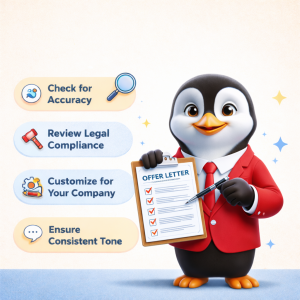
Instead of starting from scratch, HR teams can use intelligent tools to draft structured, compliant, and empathetic letters in minutes. These tools ensure consistent tone, correct terminology, and policy alignment.
Benefits of Getting It Right
When probation extensions are communicated well, organizations see tangible benefits:
-
Clear compliance documentation
-
Reduced employee anxiety and confusion
-
Time savings for HR teams
-
Improved trust between employees and management
-
Higher chances of performance improvement
Professional communication strengthens both culture and credibility.
Common Mistakes to Avoid
Many issues arise from avoidable missteps.
Some organizations communicate extensions verbally but forget formal letters. Others use overly harsh or vague language.
On the other hand, delays in communication often frustrate employees. These mistakes usually stem from lack of clarity, time pressure, or inconsistent templates.
Fortunately, these risks are easy to prevent with the right tools and processes.
Best Practices to Follow
Adopting best practices ensures fairness and consistency.
-
Communicate before the original probation ends
-
Use objective, performance-based language
-
Clearly mention extension duration and review criteria
-
Maintain documentation hygiene for audits
-
Ensure tone is supportive, not punitive
AI-based drafting tools help enforce these practices consistently across the organization, regardless of scale.
Conclusion
Communicating a probation extension is a moment that tests HR professionalism. Handled well, it builds trust and supports performance growth. Handled poorly, it creates doubt and disengagement.
By combining clear processes with AI-powered HR tools, organizations can communicate probation extensions with confidence, consistency, and empathy, while saving time and reducing risk.
HRTailor.AI helps HR professionals generate probation extension communications that are legally sound, employee-friendly, and customized to specific roles, without repetitive manual effort.
Try HRTailor.AI to create HR letters faster with fewer edits.