Introduction
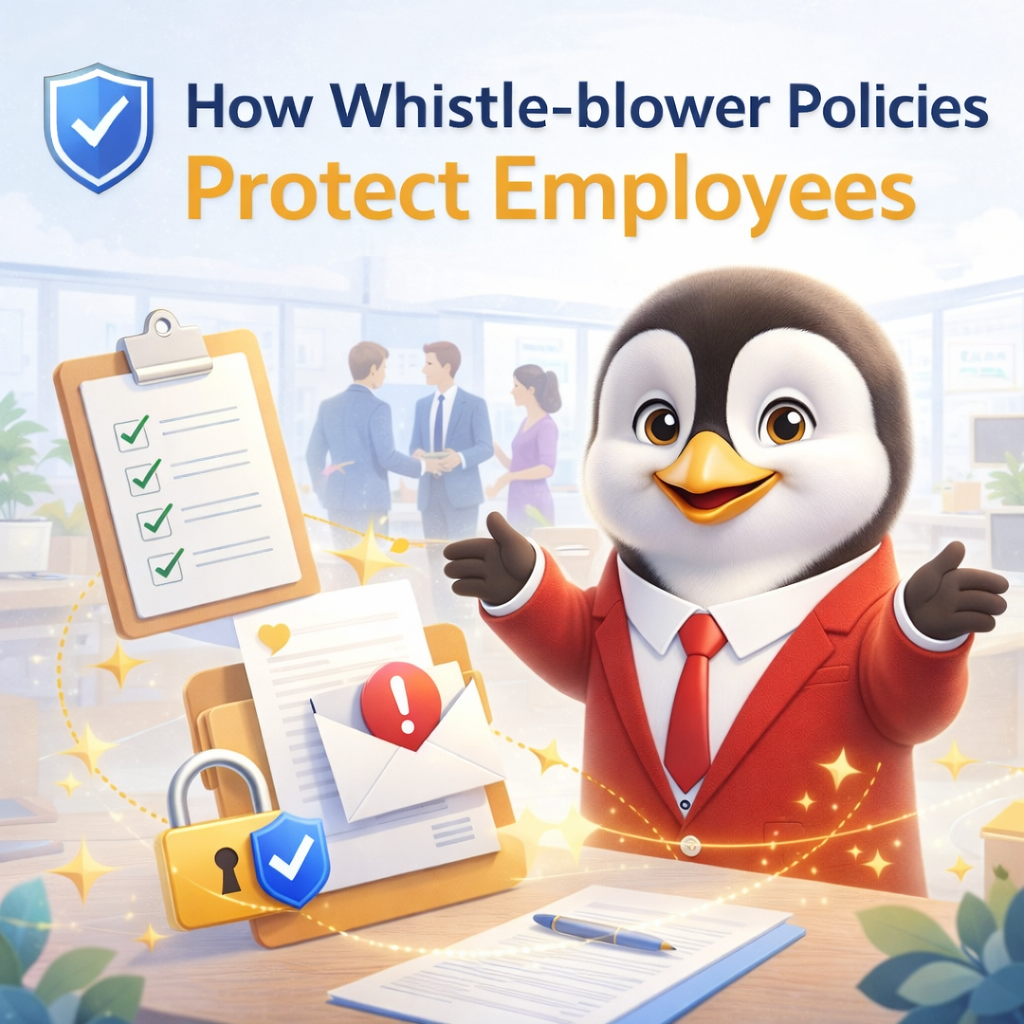
Most employees don’t wake up wanting to report someone. Instead, they wake up wanting to do their job, feel safe, and go home without carrying stress all day. Yet, employees sometimes notice things that don’t feel right—financial shortcuts, unsafe practices, harassment, or data misuse. So, the real question is not whether wrongdoing exists, but whether employees feel protected enough to speak up when it does. That is why a whistleblower protection policy becomes one of the strongest shields an organisation can offer.
First, Let’s Get the Concept Right
A whistle-blower policy does not encourage complaints. Rather, it gives employees a safe and defined path to report serious concerns without risking their career, dignity, or peace of mind.
From an employee’s point of view, protection means:
-
The organisation keeps their identity confidential
-
The organisation does not threaten their job
-
The organisation takes their voice seriously
From an employer’s point of view, protection means:
-
The organisation identifies risks early
-
The organisation reduces legal exposure
-
The organisation strengthens internal trust
When both sides align on these expectations, ethical reporting becomes possible.
Why Employees Stay Silent Without Protection
Silence usually comes from fear, not apathy. Employees worry that peers will isolate them, managers will target them, or leaders will quietly push them out. Even high-performing employees hesitate when policies feel vague or enforcement feels selective.
Government labour frameworks across regions emphasise non-retaliation and fair investigation as employer responsibilities. Therefore, when employees see those principles reflected in written policies, confidence grows steadily. A whistleblower protection policy sends a clear message: the organisation understands the human cost of speaking up.
How Protection Actually Works in Practice
Protection is not just a promise. Instead, it works as a system.
Effective policies clearly explain:
-
What issues qualify for whistle-blowing
-
How employees can submit reports
-
Who investigates the complaint
-
What safeguards prevent retaliation
-
What actions follow confirmed misconduct
Because of this structure, employees feel less panic and HR teams face less confusion. Moreover, the organisation handles reports professionally rather than emotionally. Without this clarity, even genuine concerns can spiral into conflict.
The Employer’s Role: Calm, Consistent, and Fair
For employers, response matters more than receipt. After someone submits a report, every step counts. For example, delayed action increases anxiety, careless comments break trust, and weak documentation damages the organisation’s defence during disputes.
Authorities expect employers to act with fairness, confidentiality, and consistency. As a result, that expectation must show up not only in policies, but also in daily HR actions. This is where policies and HR letters support each other.
Why HR Letters Matter More Than People Think
HR letters can reinforce protection at every stage. For instance, appointment letters can set ethical expectations early. Likewise, warning letters can address retaliation attempts. In addition, investigation closure letters can confirm outcomes without exposing identities.
These documents do more than communicate decisions. They also create a trail of accountability. When policies are backed by well-drafted HR letters, protection becomes visible and enforceable instead of theoretical.
Addressing the Fear of Misuse
Many employers worry that people will abuse whistle-blowing systems. However, misuse grows fastest in poorly defined systems. Clear eligibility criteria, defined investigation steps, and proportionate consequences reduce false reporting.
Moreover, employees are less likely to misuse a process when it feels structured and serious. A strong whistleblower protection policy protects employees while also protecting employers from chaos and inconsistency.
Compliance Is the Floor, Trust Is the Goal
Legal compliance focuses on safeguarding reporters and preventing retaliation. Still, trust grows through tone, training, and follow-through. Employees watch how leaders react when someone raises a concern. They notice whether investigations feel rushed or respectful. They also remember whether outcomes feel consistent and fair. In short, employees feel protection when the organisation lives the policy, not just signs it.
Why Drafting These Policies Is Harder Than It Looks
These policies must balance sensitivity with clarity. In addition, laws differ across states and countries. Policy language must protect employees while avoiding ambiguity for employers. Manual drafting and updates take time and create risk, because one vague line can undo months of good intent. That is why many HR teams choose structured ways to create accurate and compliant documents without rewriting everything from scratch.
Conclusion
Protection is not about policies alone. It is about reassurance. When employees know they can speak without fear, workplaces become safer, stronger, and more transparent. A well-designed whistleblower protection policy protects voices that might otherwise stay silent and helps employers address problems early.
For HR teams, creating these policies and supporting HR letters manually can feel exhausting and error-prone. Tools like HRTailor.AI help by enabling HR professionals and employers to generate compliant HR policies and HR letters using simple inputs, customised by industry, state, and country. As a result, organisations can support ethical reporting with more clarity and less complexity.
Protection, when done right, benefits everyone.