Introduction
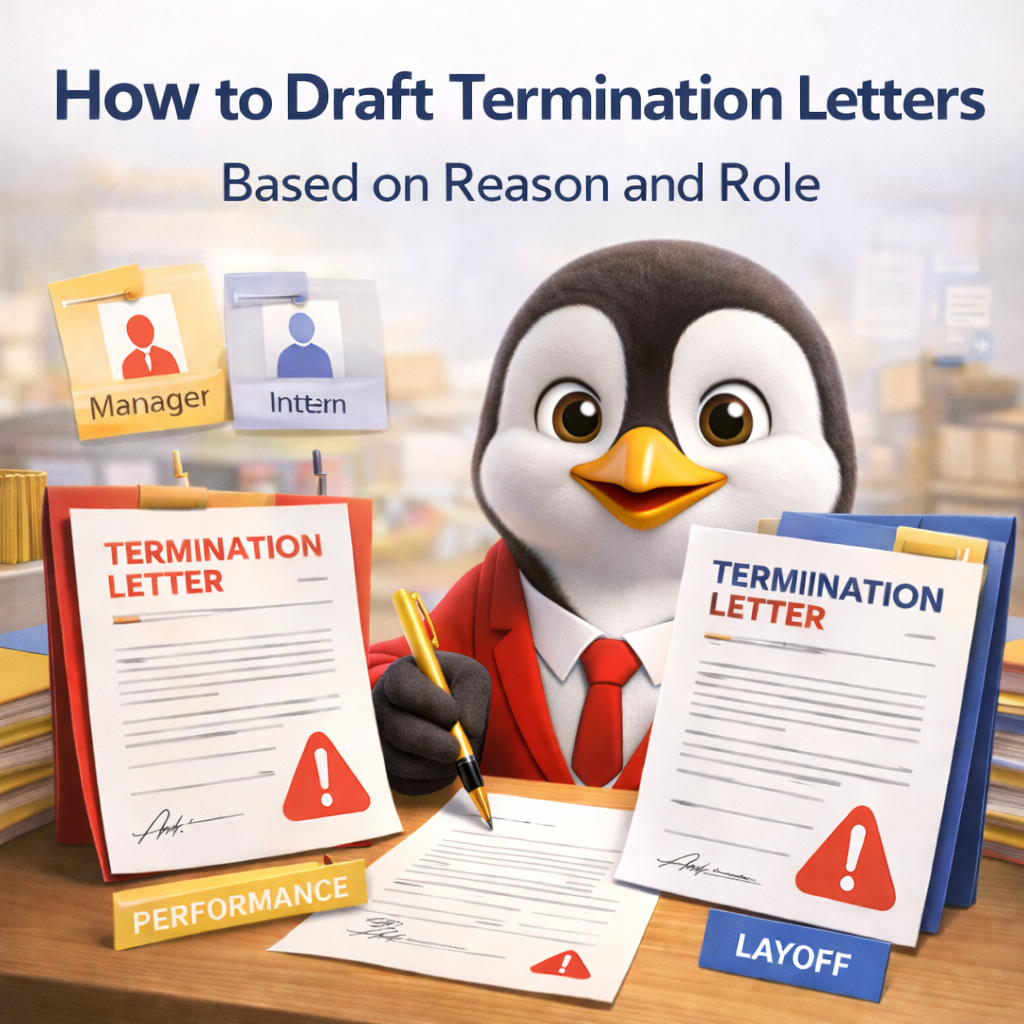
No two employee exits are ever the same. A termination driven by performance concerns looks very different from one caused by misconduct, redundancy, or role closure. Yet many organisations still rely on generic templates that fail to reflect these differences.
For employers and HR teams, this is where drafting precision matters. The employee termination letter format should adapt to why the employment is ending and which role is involved—because context shapes clarity, compliance, and credibility.
Why One-Size-Fits-All Termination Letters Create Risk
Generic termination letters often feel convenient, but they can expose organisations to unnecessary challenges. When the reason for separation is unclear or poorly framed, misunderstandings follow.
From an HR standpoint, improper drafting can:
-
Create confusion about the cause of termination
-
Weaken the employer’s legal position
-
Trigger disputes over notice, dues, or fairness
-
Damage trust among remaining employees
Customisation is not about length—it’s about relevance.
Drafting Based on the Reason for Termination
The foundation of any termination letter lies in why the decision was made. Each reason requires a different tone, level of detail, and legal care.
Performance-Related Termination
When termination is due to performance, the letter should:
-
Reference documented feedback or reviews
-
Avoid emotional or judgmental language
-
Focus on unmet expectations rather than intent
Clarity here protects the employer from claims of sudden or unfair dismissal.
Misconduct or Policy Violation
For misconduct-related exits:
-
Facts must be stated clearly
-
Policy references should be accurate
-
Language must remain neutral and professional
This is where the employee termination letter format must align tightly with internal disciplinary records.
Redundancy or Role Elimination
In restructuring scenarios, letters should:
-
Clearly state that the role—not the individual—is affected
-
Outline redundancy benefits or statutory payments
-
Maintain a respectful and empathetic tone
Poor wording in such cases can unintentionally imply fault.
Why Role Matters in Termination Letter Drafting
Beyond the reason, the employee’s role significantly influences how termination should be communicated.
Senior leaders, client-facing employees, and operational staff carry different levels of responsibility, access, and exposure. HR must factor this into the letter.
For example:
-
Senior roles may require confidentiality reminders or handover clauses
-
Client-facing roles may involve customer transition instructions
-
Technical roles may require specific access revocation details
An effective employee termination letter format reflects these role-based nuances without overcomplicating the message.
What HR Should Always Include—Regardless of Reason
While customisation is essential, certain elements must remain consistent across all termination letters.
These include:
-
Effective termination date
-
Reference to contractual or policy provisions
-
Notice period or pay in lieu details
-
Final settlement and benefits information
-
Instructions for return of company property
Consistency here ensures fairness and audit readiness.
Language, Tone, and Legal Care
Termination letters are often reviewed long after they are issued. This makes tone just as important as content.
HR teams should:
-
Stick to factual statements
-
Avoid assumptions or personal commentary
-
Keep language neutral and professional
-
Exclude internal deliberations or opinions
A carefully structured employee termination letter format reduces emotional escalation while preserving legal clarity.
Supporting HR Teams With the Right Tools
Drafting termination letters repeatedly—across departments, roles, and situations—can strain HR bandwidth. Consistency becomes harder as organisations grow.
Many employers now rely on structured drafting tools like the HRTailor.AI Letter Builder to create role- and reason-specific termination letters while maintaining compliance and tone standards across the organisation.
Such tools help HR teams focus on decision-making rather than document formatting.
Common Drafting Mistakes Employers Should Avoid
Even experienced HR professionals can unintentionally weaken a termination letter.
Common pitfalls include:
-
Using vague reasons for termination
-
Over-explaining decisions
-
Including unnecessary internal references
-
Applying inconsistent language across cases
Avoiding these mistakes protects both the organisation and its leadership.
Documentation and Record Alignment
Once issued, termination letters must align with internal records. Discrepancies between letters, payroll, and HR systems can create complications later.
Best practices include:
-
Recording delivery and acknowledgment
-
Matching termination dates with payroll actions
-
Securing access to documents
A clean process reinforces employer credibility.
Final Thoughts
Termination letters are not just exit documents—they are formal reflections of an organisation’s decision-making maturity. When drafted thoughtfully, they protect the business while maintaining professional dignity.
By adapting content based on reason and role, employers ensure that every separation is handled with clarity, fairness, and care. A well-prepared employee termination letter format does more than end employment—it closes the chapter responsibly.