Introduction
Every job has a beginning. Every job also has an ending. What most people remember, however, is not how employment started—but how it ended.
When an employee leaves an organisation, the last impression is shaped by one critical step: settlement of dues. This is where many companies go wrong. They rush the process, delay payments, or communicate poorly. The result is confusion, frustration, and sometimes legal trouble. A properly drafted full and final settlement letter prevents all of that. Before getting into formats and timelines, let’s understand the concept clearly.
What Does Full and Final Settlement Mean?
When employment ends, there are financial obligations on both sides. The employee may be owed salary, leave encashment, or bonuses. At the same time, the employer may need to recover notice pay, advances, or asset costs.
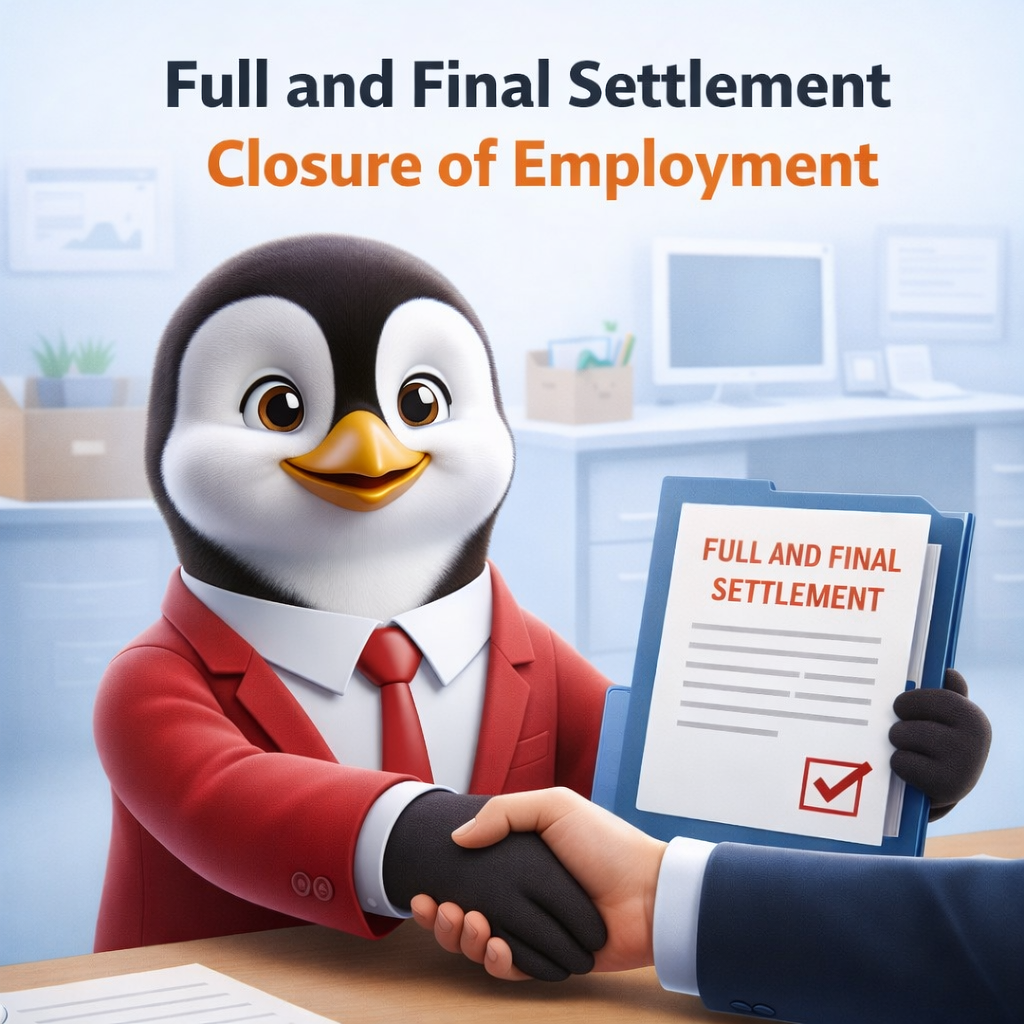
Full and final settlement is the process of calculating and clearing all these amounts. The settlement letter confirms that this process is complete and that no further dues remain. In simple terms, it is the official closure of the employment relationship.
Why This Letter Matters More Than People Think
Many organisations treat exit paperwork as a formality. That is a mistake. A full and final settlement letter serves three critical purposes. First, it gives financial clarity to the employee. Second, it protects the employer from future disputes. Third, it ensures compliance with labour laws that require timely payment of dues.
From an emotional perspective, this letter also shows respect. Employees may leave for many reasons, but everyone wants to leave with dignity.
What Should Be Clearly Mentioned
Clarity is the backbone of a good settlement letter. Nothing should be assumed or vaguely written.
The letter should clearly mention:
-
Employee name, designation, and last working day
-
Salary payable up to the last working date
-
Leave encashment, if applicable
-
Bonus or incentive payments, if any
-
Statutory deductions such as tax or provident fund
-
Recoveries like notice pay or advances
-
Final payable amount and mode of payment
When employees understand exactly how the amount was calculated, disputes reduce drastically.
Legal and Compliance Considerations
Government labour guidelines require employers to settle dues within a reasonable time after separation. While timelines may vary based on jurisdiction, unnecessary delays can lead to complaints or penalties.
Different states and countries also have different rules regarding leave encashment, gratuity, and wage settlement. Ignoring these variations is risky. This is why settlement letters must align with company policies and applicable labour laws at the same time.
Common Mistakes That Create Problems
Many HR teams unintentionally create issues during exits. Some rely on outdated templates that no longer reflect legal changes. Others fail to customise letters based on employee category or location. Delays caused by internal approvals are also common.
Another major issue is poor communication. When employees do not receive clear updates, trust breaks quickly. A well-structured full and final settlement letter eliminates most of these risks upfront.
The Emotional Side of a Clean Exit
Exits are sensitive moments. Even when separations are planned, emotions run high. When employees receive timely settlements and clear documentation, they feel valued—even while leaving. That feeling stays with them and shapes how they talk about the company in the future.
A smooth exit also reassures existing employees. It shows that the organisation handles transitions professionally and fairly. In many ways, exits are a reflection of workplace culture.
Why Manual Processes Often Fail
Preparing settlement letters manually is time-consuming. It also increases the chance of calculation errors and inconsistent wording.
HR teams often manage multiple exits across locations, each with different rules. Without a structured system, maintaining accuracy becomes difficult. This is where smart HR tools make a real difference.
Closing Employment the Right Way
A full and final settlement letter is not just a financial document. It is a statement of professionalism, fairness, and compliance. When written clearly and issued on time, it closes employment without friction. When handled poorly, it creates avoidable stress and long-term damage.
Platforms like HRTailor.AI quietly simplify this process by helping HR professionals generate accurate HR letters and HR Policies using basic inputs, customised by industry, state, and country. The goal is not speed alone—but consistency, compliance, and peace of mind.
Sometimes, doing things right at the end matters the most.