Introduction
An experience letter is more than a formal document—it quietly reflects how organised, fair, and professional an employer truly is. While most companies issue experience letters as part of exit formalities, many overlook an important reality: not every role or tenure should be treated the same way.
Employees contribute differently based on their responsibilities, seniority, and length of service. When these differences are acknowledged thoughtfully in experience letters, the document becomes clearer, more credible, and far more useful to the recipient. For HR teams and employers, this clarity also reduces follow-up queries, verification requests, and misunderstandings later on.
This is where a well-structured approach to drafting experience letters makes all the difference.
Why One Standard Experience Letter Doesn’t Always Work
Using a single template for every employee might seem efficient, but it often creates gaps. A fresher’s contribution looks very different from that of a department head. Similarly, a short-term contract role cannot be described the same way as a five-year association.
When employers rely on a rigid format, important role-specific details may be missed. Over time, this can dilute the value of the document and raise questions about authenticity—especially during background checks or senior-level hiring.
A well-crafted employee experience letter should reflect the employee’s actual journey, not just their dates of employment.
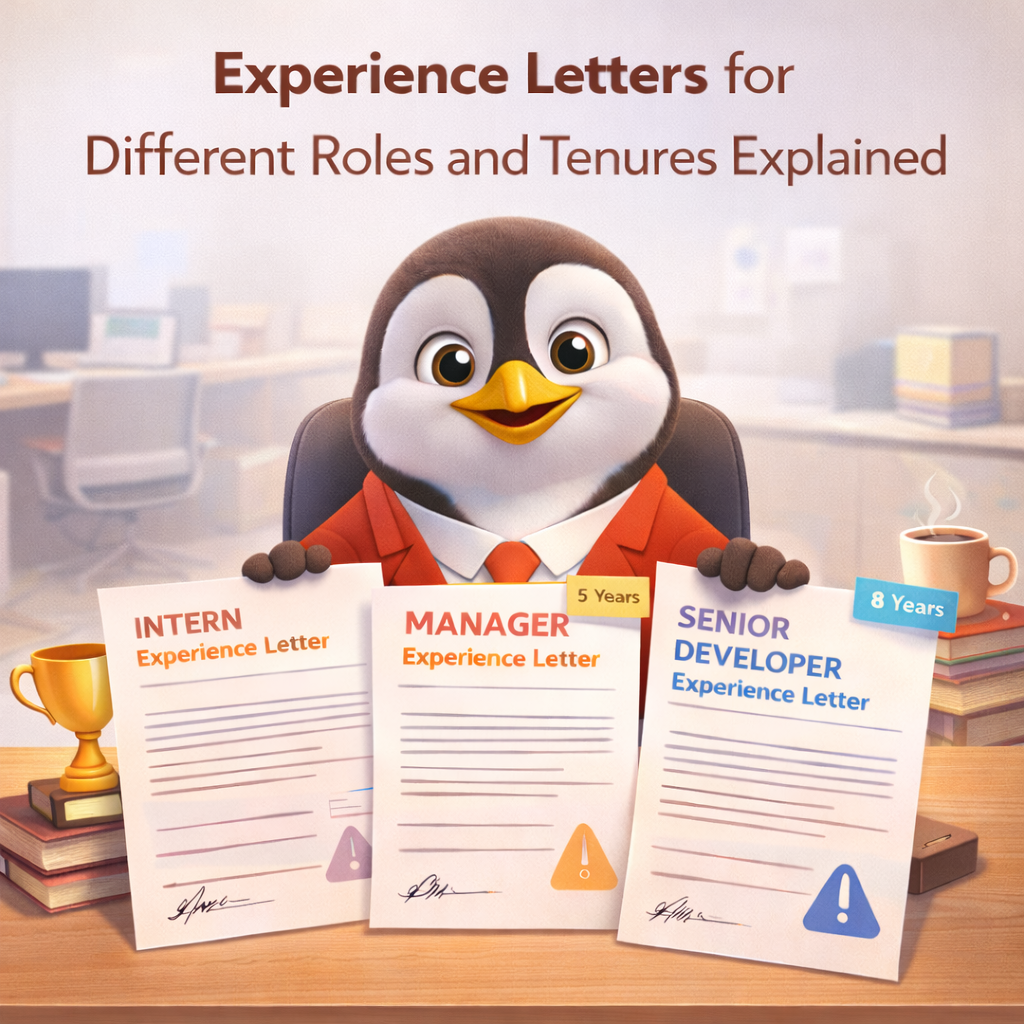
Experience Letters Based on Job Roles
Different roles demand different levels of detail and emphasis. Here’s how employers can approach them thoughtfully:
1. Entry-Level and Junior Roles
For junior positions, clarity is key. Experience letters should focus on:
-
Job title and department
-
Core responsibilities handled
-
Exposure to tools, systems, or processes
-
Confirmation of conduct and professionalism
At this stage, employers should avoid exaggerated claims while still recognising learning and contribution.
2. Mid-Level Professionals
Employees at this level often handle ownership-driven responsibilities. Their experience letters can include:
A balanced employee experience letter at this stage helps future employers understand both capability and consistency.
3. Senior and Leadership Roles
For leadership positions, the letter should be more descriptive and precise. It may highlight:
-
Strategic responsibilities
-
Team leadership or decision-making authority
-
Impact on business outcomes
-
Reporting structure
This level of detail builds trust and prevents ambiguity during leadership hiring evaluations.
How Employment Tenure Influences Experience Letters
Tenure plays an equally important role in shaping how experience letters are framed.
Short-Term Tenure (Less Than One Year)
Short tenures should be handled carefully and neutrally. The focus should remain on:
-
Role held
-
Duration of employment
-
Nature of work assigned
Avoid assumptions or unnecessary explanations. A factual tone protects both employer and employee.
Medium Tenure (1–3 Years)
For employees with moderate tenure, letters can reflect:
This is often the most scrutinised category, making accuracy essential.
Long-Term Tenure (3+ Years)
Long associations deserve recognition. Employers may include:
A thoughtfully written employee experience letter for long-serving employees reflects well on the organisation’s culture and retention practices.
Why HR Accuracy Matters More Than Ever
Experience letters are frequently used for:
Even small inconsistencies—such as mismatched titles or vague responsibilities—can lead to delays or repeated verification requests. This is why many HR teams now rely on structured drafting systems instead of manual edits for every role and tenure.
To maintain consistency without losing role-specific accuracy, some employers prefer using digital letter-building platforms like the HRTailor.AI letter builder, which helps HR teams customise documents while keeping language professional and compliant.
Common Mistakes Employers Should Avoid
Even experienced HR teams can slip into avoidable errors, such as:
-
Using overly generic language for specialised roles
-
Mentioning performance opinions instead of verified facts
-
Ignoring tenure context
-
Copy-pasting past letters without role checks
Each of these can reduce the credibility of an employee experience letter and increase clarification requests later.
Best Practices for Role- and Tenure-Based Experience Letters
To ensure consistency and clarity:
-
Always verify role titles and employment dates
-
Align responsibilities with official job descriptions
-
Keep tone neutral and professional
-
Avoid unnecessary praise or negative commentary
-
Use structured tools when scaling documentation
These practices protect the organisation while ensuring employees receive accurate documentation.
Conclusion
Experience letters are often the last formal communication between an employer and employee, but their impact lasts much longer. When roles and tenures are reflected clearly and thoughtfully, the document becomes a reliable professional record rather than a routine formality. For employers and HR teams, adopting a structured yet flexible approach ensures experience letters remain accurate, credible, and aligned with modern workforce expectations.