Introduction
For many employees, an experience letter becomes one of the most important documents they carry forward in their careers. It influences future hiring decisions, salary discussions, and even background verification outcomes. For employers, however, this letter carries a different weight—it represents accuracy, credibility, and professional responsibility.
From an HR standpoint, issuing an experience letter is not just a courtesy. It is a formal record of employment history. This is why the experience letter format must be handled with care, clarity, and consistency.
Why Experience Letters Matter More Than Employers Think
Experience letters often travel further than employers expect. They are reviewed by recruiters, HR teams, and compliance officers across organisations and industries.
A poorly drafted letter can:
-
Create confusion about an employee’s role or tenure
-
Raise questions during background verification
-
Reflect poorly on the employer’s HR standards
On the other hand, a well-structured experience letter reinforces trust—both in the employee and in the organisation that issued it.
What an Experience Letter Is (and What It Is Not)
One common misconception is that an experience letter is the same as a recommendation letter. It is not.
An experience letter is:
-
A factual confirmation of employment
-
A summary of role, tenure, and responsibilities
-
A neutral, professional document
It is not meant to:
This distinction is critical for HR teams to maintain neutrality and legal safety.
Core Details Every Experience Letter Must Include
Accuracy is the foundation of a strong experience letter. Missing or incorrect details can create long-term issues.
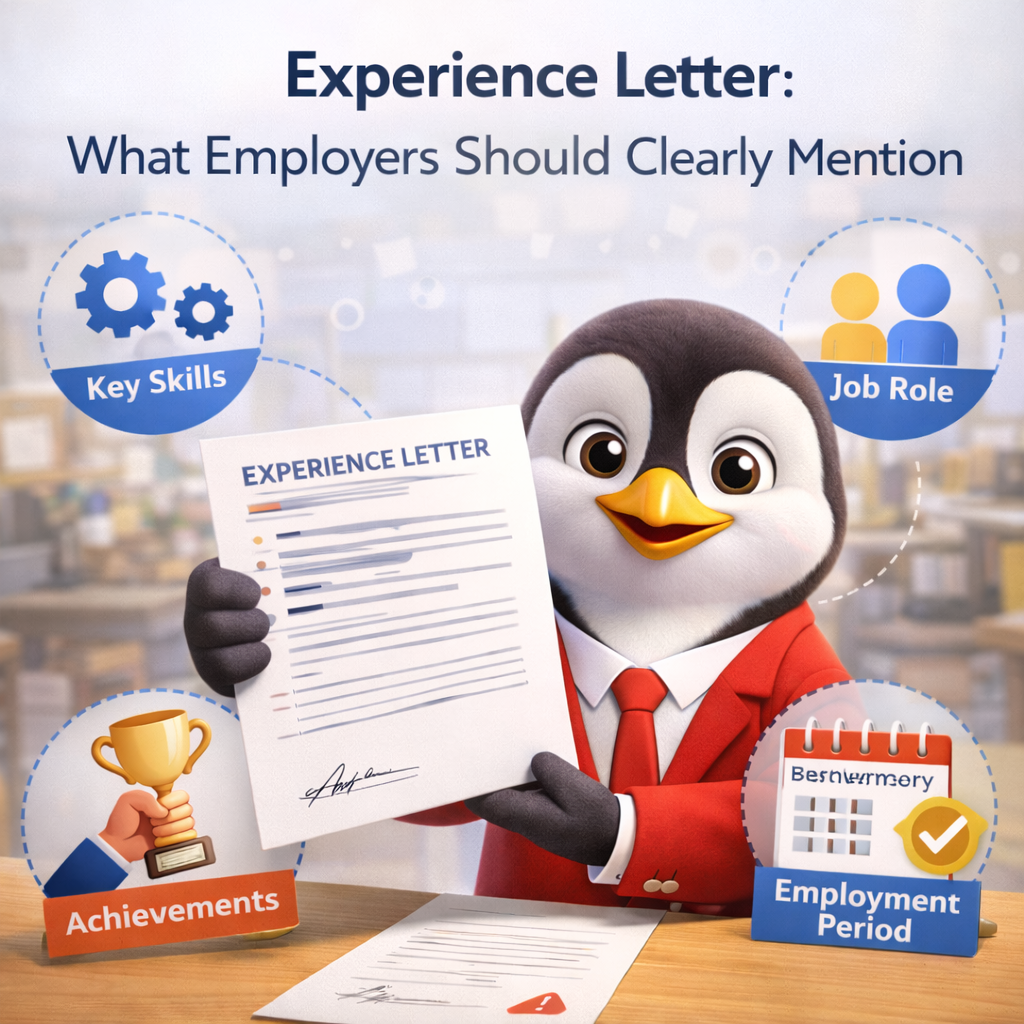
At a minimum, employers should clearly mention:
These elements ensure the letter serves its primary purpose—verifying employment without ambiguity.
Role Clarity: Avoiding Vague Job Descriptions
One of the most frequent mistakes HR teams make is using generic role descriptions. While brevity matters, clarity matters more.
Instead of broad phrases, the letter should reflect:
-
The employee’s actual scope of work
-
Seniority level or reporting nature, where relevant
-
Any role transitions during employment
A clear experience letter format helps future employers understand the individual’s professional exposure without misinterpretation.
Handling Multiple Roles or Promotions
When an employee has grown within the organisation, the experience letter should reflect that progression.
HR should consider:
-
Mentioning key role changes
-
Indicating revised titles with timelines
-
Avoiding unnecessary detail while maintaining accuracy
This not only benefits the employee but also demonstrates transparent HR practices.
Language, Tone, and Professional Neutrality
Experience letters should always maintain a neutral and professional tone. Even if an employee exited under challenging circumstances, the letter must remain factual.
Best practices include:
-
Avoiding adjectives that imply judgement
-
Sticking to verifiable information
-
Keeping the language simple and formal
A well-balanced experience letter format protects the organisation while remaining fair to the employee.
Dates, Consistency, and Verification Readiness
Experience letters are frequently cross-checked during background verification. Inconsistencies between HR records, payroll data, and the letter itself can raise red flags.
HR teams should ensure:
-
Dates align with official records
-
Designations match appointment or promotion letters
-
Letter issuance date is clearly mentioned
Accuracy here saves time, follow-ups, and potential disputes later.
Supporting HR Teams With Structured Drafting
As organisations grow, HR teams often issue dozens—or hundreds—of experience letters. Maintaining consistency across teams and locations can become challenging.
Many employers streamline this process using tools like the HRTailor.AI Letter Builder, which helps HR teams draft standardised yet role-accurate experience letters while reducing manual effort and formatting errors.
The goal is not automation alone—but consistency with control.
What Employers Should Avoid Including
Just as important as what to include is what to leave out.
Experience letters should not mention:
-
Reasons for resignation or termination
-
Performance issues or disciplinary history
-
Salary details
-
Internal feedback or opinions
Excluding such details keeps the document clean, professional, and purpose driven.
Issuance Timing and Record Management
Experience letters are typically issued after an employee’s final working day. HR should ensure timely issuance to avoid dissatisfaction or follow-up requests.
Best practices include:
-
Issuing the letter after exit formalities
-
Keeping a signed copy for records
-
Using official letterhead or authorised digital format
A properly stored experience letter format becomes a reliable reference for future verification requests.
Final Thoughts
Experience letters may appear simple, but their impact is lasting. For employers, they represent professionalism, accuracy, and respect for employment history. For HR teams, they are a reflection of process discipline.
When drafted thoughtfully and consistently, an experience letter strengthens both the employee’s career journey and the organisation’s reputation. A clear and accurate experience letter format ensures that this final document closes the employment chapter with credibility and care.