Introduction
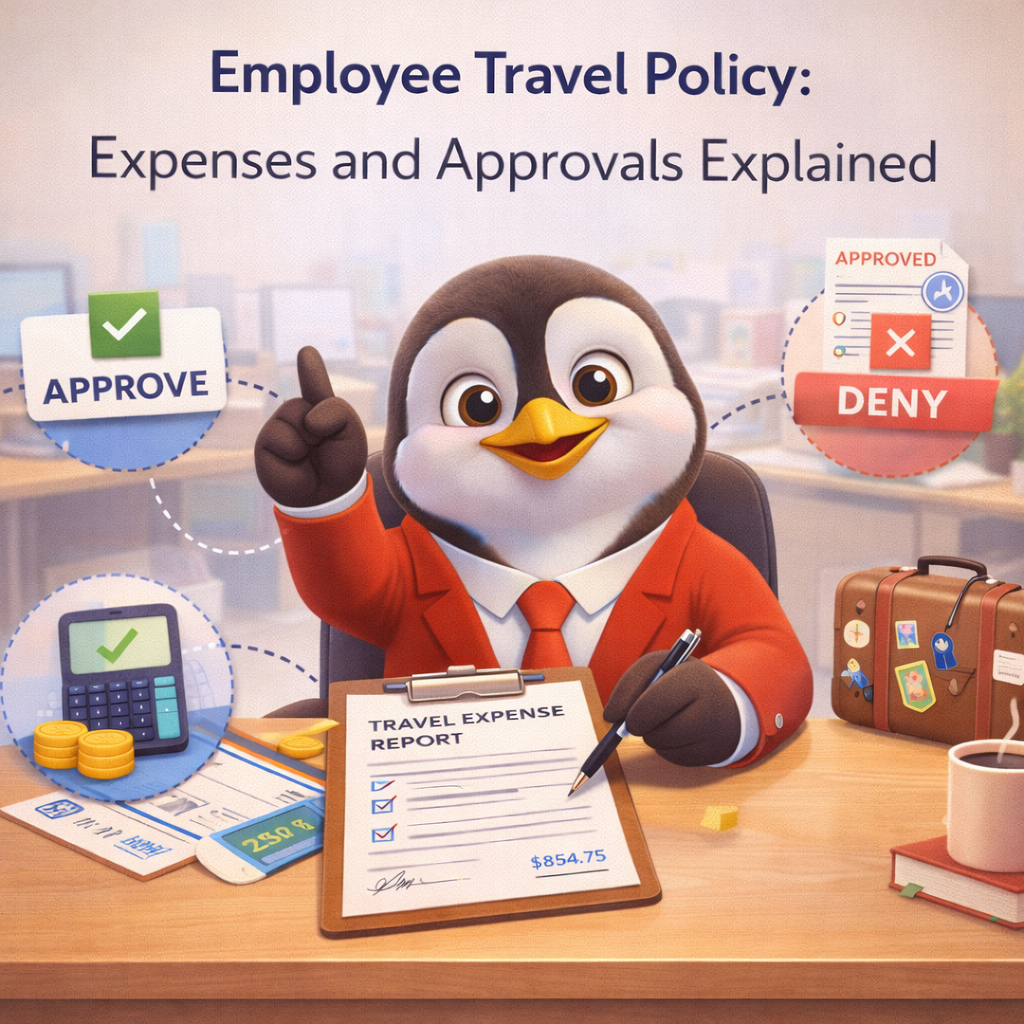
Business travel may look simple on the surface, but for employers and HR teams, it often brings complex questions. Who approves travel? What expenses are reimbursable? How are exceptions handled? Without clarity, even routine travel can lead to confusion, disputes, and unexpected costs. This is why a clearly defined employee travel policy becomes a practical necessity rather than a formality.
When expectations are documented upfront, employees travel with confidence, managers approve faster, and finance teams process claims without friction. More importantly, organisations stay aligned, compliant, and cost aware.
Why Companies Need Clear Travel Rules
Travel decisions directly impact budgets, productivity, and employee trust. Without defined rules, approvals may appear inconsistent, expense claims may escalate, and accountability may weaken over time.
A structured employee travel policy ensures that travel is:
-
Purpose-driven, not assumption-based
-
Approved at the right levels
-
Aligned with business priorities
-
Transparent for employees and managers alike
From short client visits to multi-day business trips, clarity protects both the organisation and the traveler.
Defining Travel Eligibility and Purpose
One of the first areas HR should define is who qualifies for business travel and why. Not every role requires travel, and not every trip adds business value.
Policies should clearly outline:
-
Eligible roles or departments
-
Valid business purposes
-
Domestic vs international travel conditions
-
Frequency or travel caps, if applicable
This prevents unnecessary travel requests and keeps approvals objective rather than discretionary.
Approval Workflow: Who Signs Off and When
Unclear approval chains often cause delays and frustration. A well-written policy establishes:
-
Who initiates the travel request
-
Who approves it (reporting manager, department head, or finance)
-
When approvals must be completed
Clear workflows help HR reduce back-and-forth communication and ensure accountability. When approvals are structured, travel planning becomes predictable and measurable.
Expense Coverage: What the Company Pays For
Expense reimbursement is where most disagreements arise. Employers must clearly define what qualifies as a reimbursable expense.
Common categories include:
-
Transportation (flights, trains, taxis)
-
Accommodation
-
Daily meals or per diem limits
-
Client-related expenses
Equally important is defining what is not reimbursed. A transparent employee travel policy prevents misunderstandings and protects the company from unplanned costs.
Expense Limits and Cost Controls
Cost control does not mean cost-cutting at the employee’s expense. Instead, it sets reasonable boundaries.
Employers may specify:
These controls ensure fairness across teams while maintaining financial discipline.
Claim Submission and Documentation
Delayed or incomplete expense submissions often burden HR and finance teams. A clear process helps avoid this.
Policies should mention:
When expectations are clear, claims are processed faster and disputes are minimised.
Handling Exceptions and Emergencies
Not all travel goes as planned. Flight cancellations, medical emergencies, or client-driven changes require flexibility.
HR policies should outline:
-
Who to inform during emergencies
-
How exceptions are approved
-
Documentation required post-travel
This ensures employees feel supported without compromising compliance.
Why Documentation Accuracy Matters
Travel policies are frequently reviewed during audits, internal reviews, and cost assessments. Inconsistent wording or missing clauses can create exposure.
To maintain consistency while saving HR time, many teams rely on structured documentation tools such as the HRTailor.AI policy builder, which helps standardise policy language while allowing customisation based on organisational needs.
Common Mistakes Employers Should Avoid
Even well-intentioned policies can fail if:
-
Approval authority is unclear
-
Expense categories are vaguely defined
-
Submission timelines are unrealistic
-
Exceptions are handled informally
Each of these gaps weakens policy enforcement and employee trust.
Conclusion
A travel policy is not about restriction—it is about clarity, fairness, and financial responsibility. When organisations design travel rules thoughtfully, employees travel with confidence and managers approve with certainty. A clearly structured employee travel policy ensures smoother operations, controlled costs, and consistent decision-making across the organisation.