Introduction
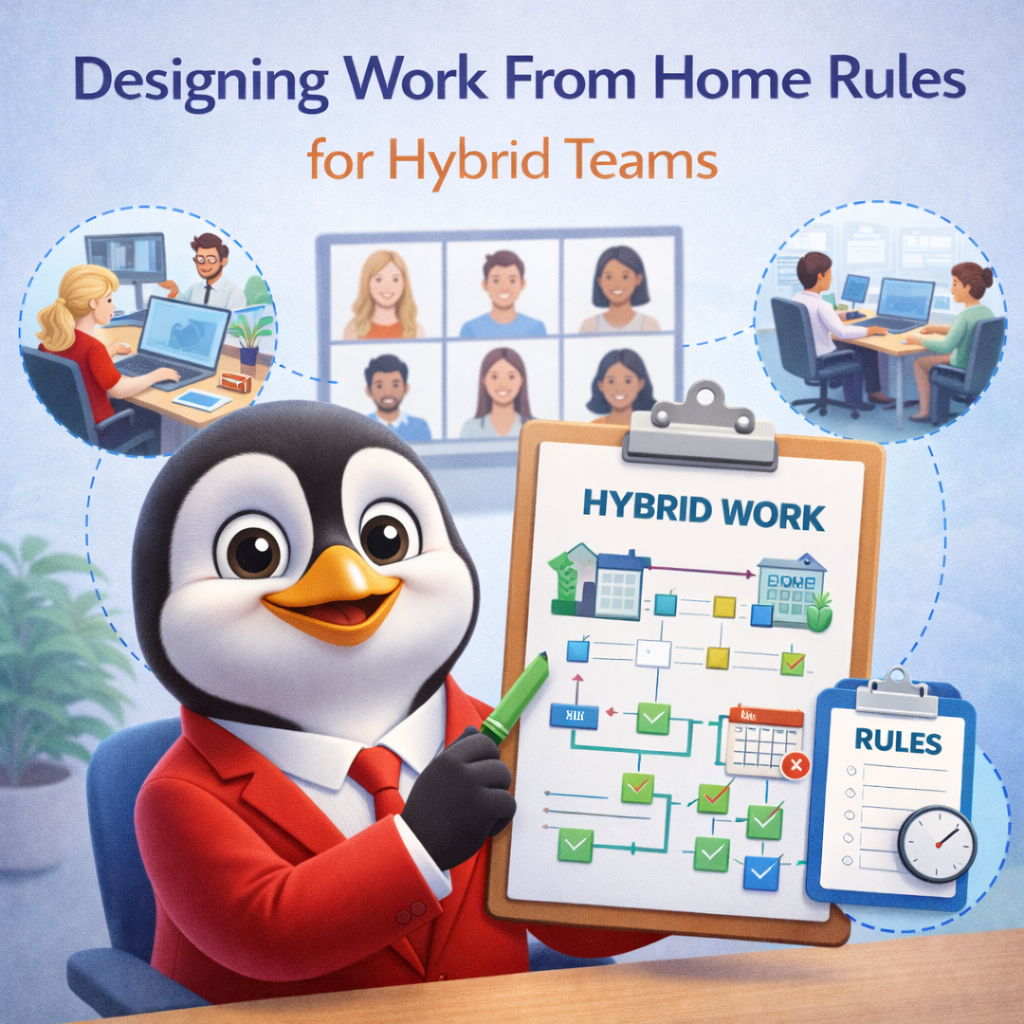
Hybrid work has changed how organisations operate, collaborate, and measure productivity. Employees now move between office and remote setups, often within the same week. While this flexibility offers clear benefits, it also introduces new challenges for employers and HR teams. Without defined boundaries, hybrid work can lead to confusion, uneven expectations, and policy gaps.
This is why thoughtfully designed remote work policy guidelines are critical for hybrid teams. They help employers maintain consistency while allowing teams to benefit from flexibility—without compromising accountability or performance.
Why Hybrid Teams Need Separate Policy Thinking
Hybrid work is not simply a mix of office and remote work—it is a distinct model with its own demands. Applying traditional office rules or full remote policies to hybrid teams often creates friction.
Hybrid-specific policies help organisations:
-
Avoid unequal treatment between remote and in-office employees
-
Prevent misalignment in work schedules
-
Ensure collaboration remains structured
-
Maintain fairness in performance evaluation
Clear remote work policy guidelines allow HR teams to support flexibility while preserving operational discipline.
Defining Hybrid Work Eligibility
Not all roles or departments may be suitable for hybrid arrangements. HR teams must clearly define who qualifies and under what conditions.
Eligibility criteria may include:
-
Nature of job responsibilities
-
Dependency on physical infrastructure
-
Client-facing or operational needs
-
Past performance and reliability
Clear eligibility rules remove ambiguity and help managers make objective decisions rather than case-by-case exceptions.
Office Presence and Remote Day Structure
One of the most common hybrid challenges is confusion around office attendance. Without clarity, teams may struggle to coordinate meetings, collaboration, and supervision.
Policies should specify:
-
Minimum in-office days per week
-
Team-based or role-based attendance requirements
-
Advance notice for schedule changes
Well-documented remote work policy guidelines ensure predictability while still offering flexibility to employees.
Collaboration and Communication Expectations
Hybrid work demands stronger communication discipline. When some employees are in the office and others are remote, gaps can quickly emerge.
Policies should clearly outline:
-
Preferred communication tools
-
Meeting participation expectations
-
Documentation and knowledge-sharing standards
These rules ensure that remote employees remain equally informed and engaged, reducing the risk of information silos.
Performance Measurement in Hybrid Setups
Visibility should not replace productivity. Hybrid work requires outcome-based performance evaluation rather than presence-based monitoring.
HR policies may define:
-
Deliverable-based assessments
-
Review cycles and reporting formats
-
Accountability for deadlines
A strong hybrid framework supported by remote work policy guidelines helps managers focus on results while maintaining fairness across work modes.
Data Security Across Work Locations
Hybrid teams often access company systems from multiple environments. This increases exposure to data risks if not managed properly.
Policies should address:
Clear security expectations protect organisational data regardless of where work is performed.
Equipment, Support, and Responsibility
Hybrid arrangements often raise questions around infrastructure. HR teams must clarify what support is provided at home versus the office.
Policies may define:
This clarity avoids misunderstandings and ensures employees are equipped to work effectively in both environments.
Why Consistent Policy Drafting Matters
Hybrid work policies tend to evolve as organisations experiment with flexibility. Manually updating documents can lead to inconsistencies across teams and locations. Many HR teams streamline this process using structured drafting platforms like the HRTailor.AI policy builder, which helps maintain consistency while allowing customisation based on hybrid work requirements.
This ensures policies remain aligned, current, and easy to implement.
Conclusion
Hybrid work succeeds when flexibility is backed by clarity. Clearly defined remote work policy guidelines help organisations balance autonomy with accountability, ensuring teams remain aligned regardless of where work happens. When expectations are documented thoughtfully, hybrid teams operate smoothly, confidently, and productively—without constant clarification or conflict.