Introduction
Every organisation today runs on data. From client records and financial reports to internal strategies and employee information, data flows through multiple hands every day. The real question is not whether employees will access sensitive information—but whether they clearly understand how that information must be handled.
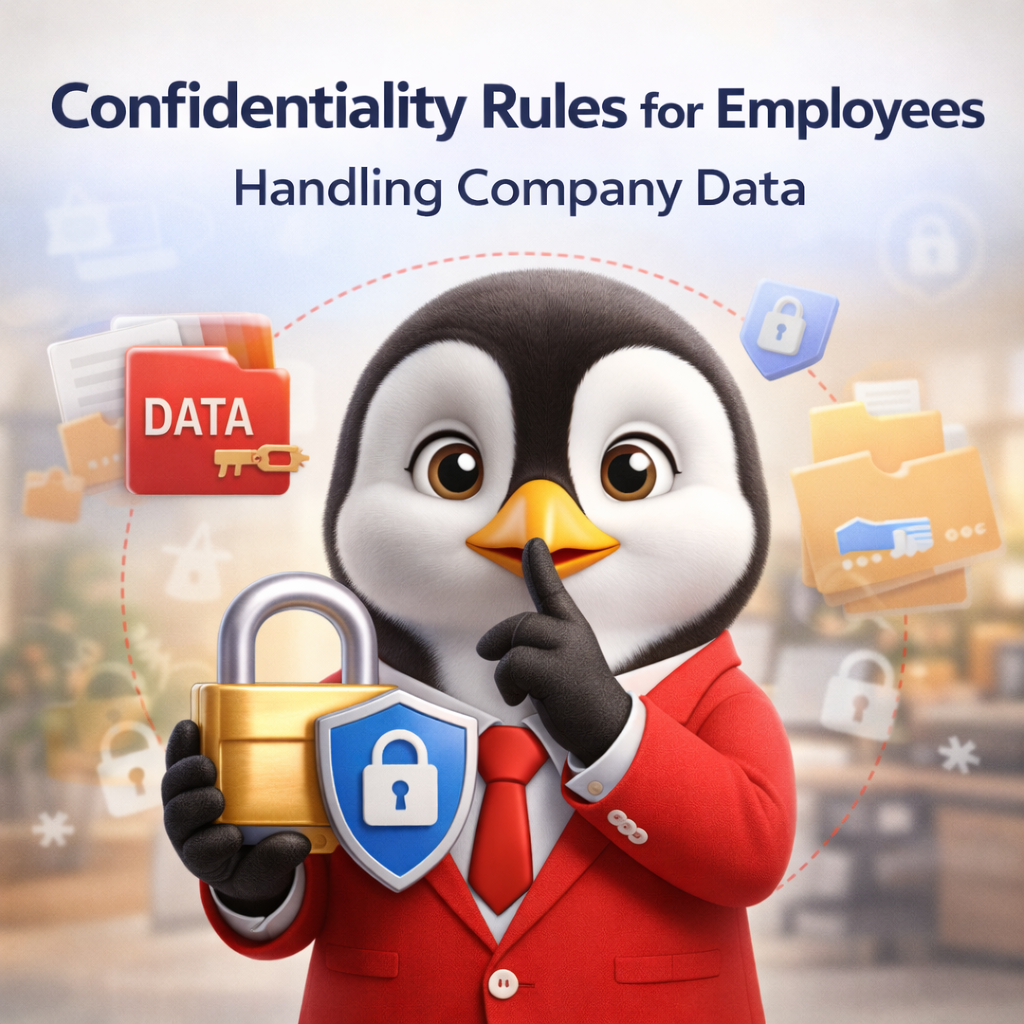
This is where confidentiality rules for employees become critical. For employers and HR leaders, these rules are not about control. They are about clarity, accountability, and long-term protection of the business.
And when these rules are vague—or worse, undocumented—the risk quietly grows.
Why Data Confidentiality Can No Longer Be Assumed
In earlier workplaces, confidentiality was often implied. Today, that assumption no longer works.
Employees access company data across devices, cloud platforms, shared drives, and third-party tools. Remote work, vendor collaboration, and digital storage have expanded access points—but also increased exposure.
Without defined confidentiality rules:
-
Sensitive data may be shared casually
-
Employees may not recognise risk situations
-
Employers may struggle to prove accountability
Clear rules shift confidentiality from an assumption into a shared responsibility.
What “Company Data” Really Includes
One of the biggest gaps HR teams faces is definition. Employees often associate confidentiality only with client data. In reality, company data is much broader.
It typically includes:
-
Client and customer information
-
Financial records and pricing details
-
Internal reports, forecasts, and strategy documents
-
Employee personal and payroll data
-
Login credentials, access codes, and system information
-
Product designs, workflows, and proprietary methods
When employees understand what qualifies as confidential, compliance becomes practical—not theoretical.
Defining Access: Not Everyone Needs Everything
A strong policy does not treat all roles the same. Instead, it sets access expectations based on responsibility.
For employers, this means:
-
Defining who can access which data
-
Limiting access to “need-to-know” levels
-
Making employees accountable for data under their control
When confidentiality rules for employees align with job roles, they feel logical rather than restrictive—and violations reduce significantly.
Everyday Situations Where Confidentiality Is Tested
Most data breaches do not happen through malicious intent. They happen during routine work.
Common risk moments include:
-
Sharing files via personal email or messaging apps
-
Discussing work details in public or shared spaces
-
Using unsecured Wi-Fi networks
-
Storing company files on personal devices
-
Forwarding information to vendors without approval
Good confidentiality rules address these everyday scenarios directly, not just extreme cases.
Employee Responsibility Goes Beyond “Do Not Share”
Effective rules explain how employees are expected to behave, not just what they must avoid.
From an HR perspective, this includes:
-
Using only approved tools and systems
-
Following data storage and deletion protocols
-
Reporting suspected data exposure immediately
-
Protecting passwords and access credentials
-
Exercising caution when working remotely
Clarity reduces confusion—and confusion is often the root of policy breaches.
Confidentiality During and After Employment
One area often overlooked is continuity. Confidentiality does not end when employment does.
Employers should clearly define:
-
Ongoing obligations after resignation or termination
-
Restrictions on using company data in future roles
-
Return or deletion of confidential materials
This protects the organisation while setting transparent expectations for exiting employees.
Training: The Difference Between Policy and Practice
A written policy alone does not change behaviour. Awareness does.
HR teams that actively educate employees on confidentiality rules see better compliance and fewer incidents. This does not require complex training—just consistent communication and real examples.
Many organisations now use structured policy tools, such as the HRTailor.AI Policy Builder, to create clear, role-aligned confidentiality frameworks that are easy for employees to understand and for HR teams to manage.
The easier a policy is to read, the more likely it is to be followed.
Handling Violations Fairly and Consistently
Mistakes can happen. What matters is how they are addressed.
Confidentiality rules should clearly outline:
-
What qualifies as a violation
-
The investigation process
-
Disciplinary consequences
-
Escalation for serious breaches
Consistency protects both the company and employees. It ensures fairness while reinforcing the seriousness of data responsibility.
Why Strong Confidentiality Rules Build Trust, Not Fear
Well-written confidentiality rules do more than protect data—they build trust.
They reassure:
-
Clients that their information is safe
-
Employees that expectations are clear
-
Partners that the organisation values integrity
For employers, this trust translates into stronger relationships, fewer disputes, and better compliance outcomes.
Final Thoughts
In a data-driven workplace, confidentiality cannot be informal or implied. It must be defined, communicated, and reinforced.
Clear confidentiality rules for employees protect not just information—but reputation, relationships, and long-term business value. When HR leaders treat confidentiality as a living framework rather than a static document, it becomes a strength instead of a risk.
And that clarity, once established, quietly supports every part of the organisation.