Introduction
Every organisation runs on people showing up at the right place, at the right time. That sounds simple until you manage both office staff and shift-based teams under the same roof. Suddenly, attendance is no longer just about marking presence. It becomes about fairness, predictability, and trust.
From factory floors and customer support centres to corporate offices, attendance expectations differ. Yet, confusion starts when those differences are not clearly written down. Employees feel treated unequally. Managers struggle to enforce consistency. HR ends up firefighting instead of planning.
This is where clear employee attendance rules quietly do the heavy lifting.
Understanding the Difference Between Shift and Office Attendance
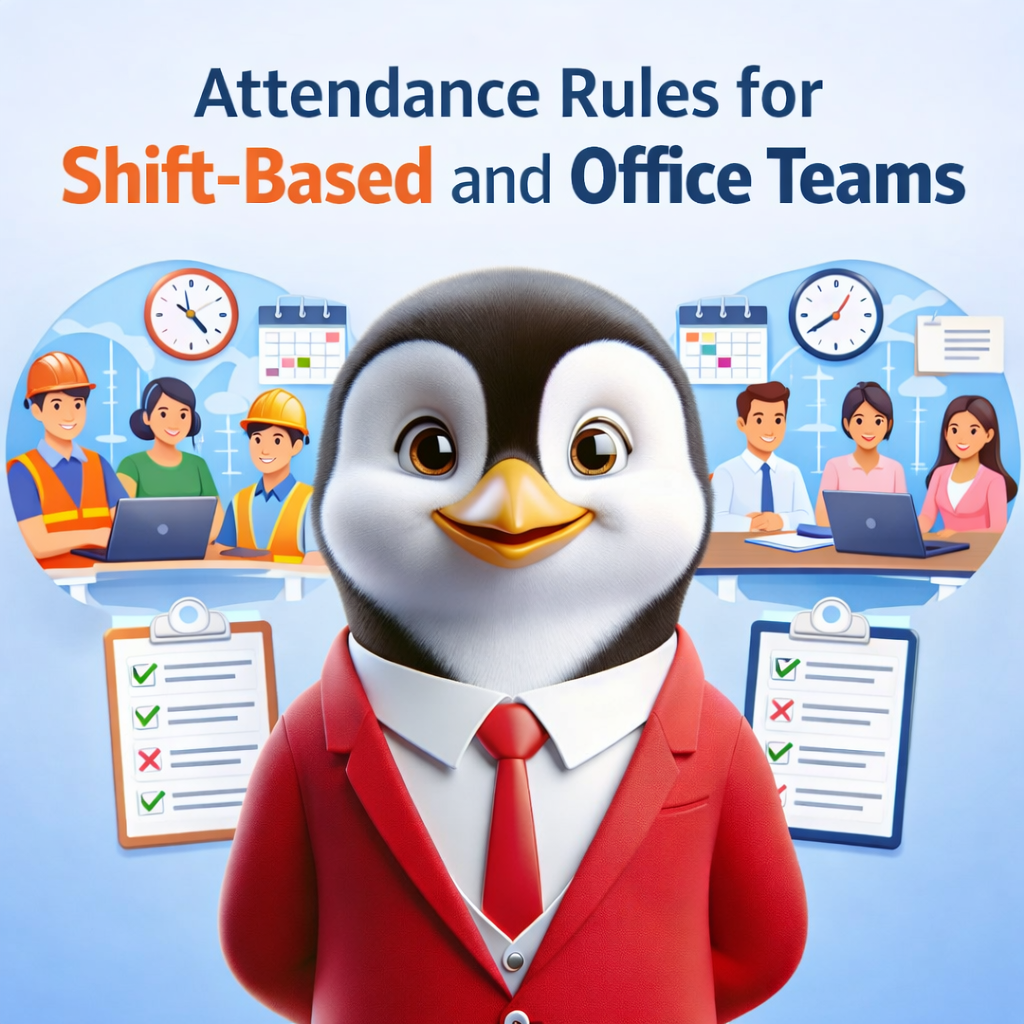
Office teams usually follow fixed hours. Start times are known. Breaks are predictable. Deviations are easy to spot. Shift-based teams, however, operate in rotations. Nights blend into mornings. Weekends feel like weekdays. Attendance becomes more complex by design.
Because of this, applying the same attendance logic to both groups rarely works. Office teams need clarity around flexibility. Shift teams need clarity around rotation schedules, handovers, and overtime. When these realities are acknowledged upfront, attendance stops feeling unfair.
Why Attendance Rules Feel Personal to Employees
Attendance touches daily life. It affects sleep, family time, and income. When someone works a night shift or stays beyond scheduled hours, they want assurance that their effort is recognised. If rules are vague, employees assume the worst. They wonder if their time matters. Employers, on the other hand, worry about misuse, unplanned absences, and payroll accuracy. HR stands between these emotions, expected to keep things calm and compliant. Clear documentation removes assumptions. Everyone knows where they stand.
What Well-Defined Attendance Rules Actually Include
Good attendance rules are not long or complicated. They are precise.
They usually explain:
-
Start and end times for office and shift roles
-
Break durations and handover expectations
-
Overtime eligibility and approval processes
-
Late arrivals, early exits, and absenteeism handling
-
Weekly offs, compensatory offs, and holiday work
When written clearly, employee attendance rules become a shared reference point, not a disciplinary tool pulled out during conflict.
Legal Compliance Is Not Optional for Any Team
Labour laws clearly define maximum working hours, mandatory breaks, overtime pay, and rest days. These rules apply regardless of whether someone works a desk job or a rotating shift.
Government inspections often review attendance records to ensure:
-
No employee is overworked
-
Overtime is compensated correctly
-
Rest periods are respected
-
Weekly offs are provided
Non-compliance can lead to penalties, backdated payments, or legal disputes. Accurate attendance documentation protects the organisation just as much as it protects employees.
Where Most Attendance Conflicts Begin
Conflicts rarely begin with misconduct. They begin with silence. A shift extension approved verbally. An office employee allowed flexible hours without documentation. A manager interpreting rules differently for different teams.
Over time, these small inconsistencies pile up. Employees compare experiences. Trust weakens. HR is then forced to explain decisions that were never clearly recorded. Consistent employee attendance rules reduce these grey areas before they become disputes.
Managing Flexibility Without Losing Control
Modern workplaces demand flexibility. Hybrid work, rotating shifts, and staggered hours are now normal. Still, flexibility works only when boundaries are defined.
Attendance policies should answer:
-
How shifts are assigned or swapped
-
How attendance is tracked remotely
-
What happens during emergencies or unplanned absences
-
How overtime is calculated for shift work
When expectations are clear, flexibility feels empowering instead of chaotic.
The Role of HR Letters in Attendance Discipline
Policies set expectations. HR letters reinforce them. Appointment letters clarify working hours from day one. Warning letters address repeated attendance issues. Confirmation letters reinforce accountability after probation.
Each document builds a transparent employer–employee relationship. When attendance concerns arise, documented communication shows fairness and consistency rather than emotion or bias.
Why Manual Attendance Systems Fail Over Time
Manual registers and spreadsheets may seem manageable initially. As teams grow, errors creep in. Data goes missing. Calculations differ. Disputes increase.
These gaps often surface during audits or payroll reconciliation. Fixing them later is stressful and expensive. A structured system reduces human error and saves HR teams countless hours. That is why many organisations move toward smarter ways of creating and managing attendance policies and letters without rewriting everything manually.
Attendance Rules Are About Respect, Not Surveillance
This matters more than people admit. Employees don’t resist rules. They resist unclear rules. When attendance is tracked transparently and applied equally, it builds confidence. People feel respected, not monitored.
A strong attendance framework quietly tells employees, “Your time matters, and it will be treated fairly.” That message shapes workplace culture more than any poster on the wall.
Conclusion
Managing attendance for both shift-based and office teams is not about enforcing control. It is about setting clear expectations, respecting employee time, and staying compliant. When employee attendance rules are well-drafted, they reduce confusion, prevent disputes, and support a healthy work environment.
HR professionals and employers don’t need complexity. They need clarity, consistency, and reliable documentation.
HRTailor.AI supports modern HR teams by helping them create structured HR policies and HR letters quickly using basic inputs. With industry-wise, state-wise, and country-specific customisation, organisations can ensure relevance, compliance, and smoother operations without unnecessary effort.