Introduction
Workforces today are no longer confined to one city or one state. Teams operate across regions, time zones, and even countries. While this growth is exciting, it also creates a silent challenge. A leave rule that works perfectly in one location may break compliance in another.
This is where many organisations struggle. They want fairness, yet laws differ. They want simplicity, yet regulations are complex. Understanding how to structure leave policies based on location is no longer optional. It is essential for stability, trust, and legal safety. Before getting into structure, it helps to understand why location matters so much.
Why Location Changes Everything
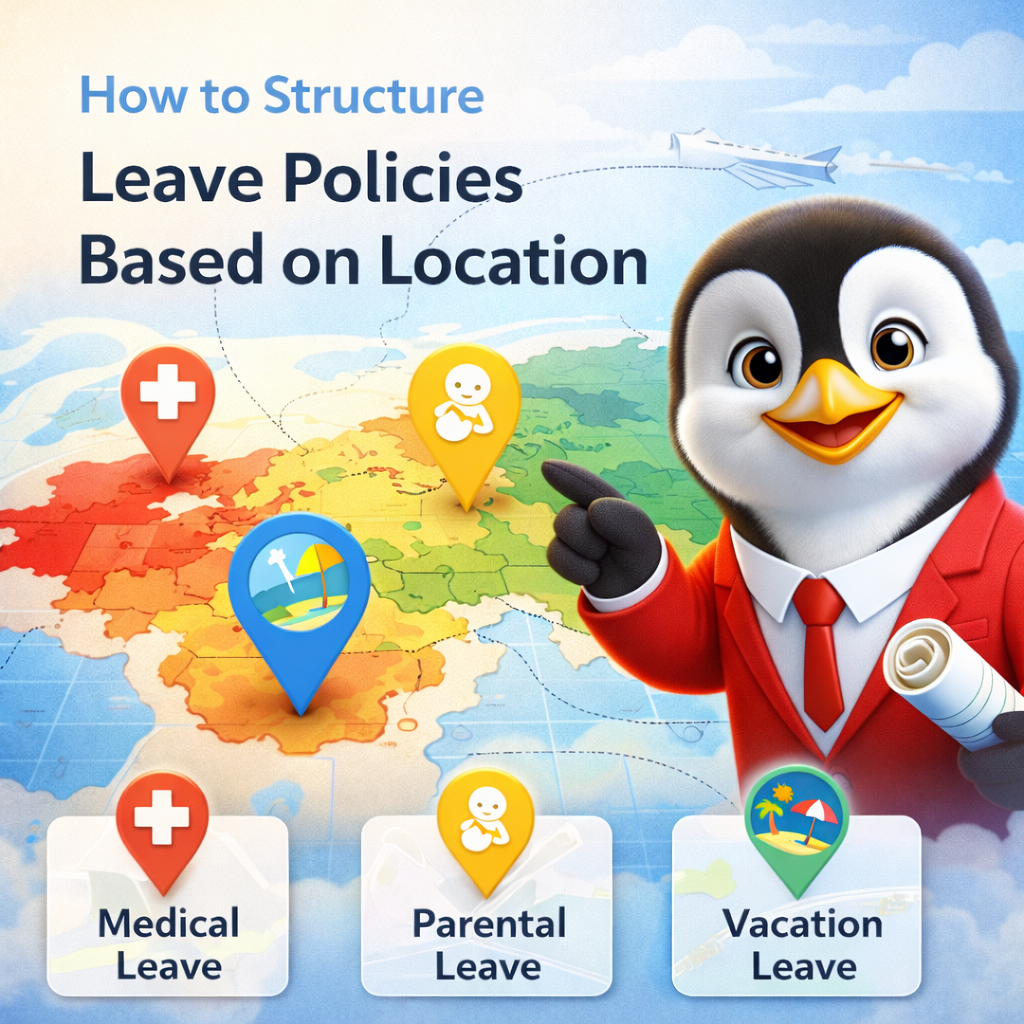
Leave laws are not universal. Government labour departments clearly define minimum leave entitlements based on geography. For example, sick leave limits, maternity benefits, public holidays, and accrual rules vary by state and country.
When companies apply one blanket rule everywhere, problems begin quietly. Employees feel shortchanged. Audits raise red flags. Over time, disputes surface.
A thoughtful company leave policy structure respects local law while keeping internal consistency. That balance is what separates reactive HR from mature HR.
Start With a Central Policy Framework
Every organisation should begin with a core framework. This framework defines values, intent, and common leave categories such as sick leave, earned leave, and holidays.
At this level, language should stay neutral and principle-driven. The goal is clarity, not detail. This core ensures that employees across locations feel part of one organisation, not separate systems. However, this framework alone is not enough.
Add Location-Specific Layers
Once the base is clear, location-specific layers must be added. These layers adapt the framework to local labour laws.
For example:
-
State-specific public holidays
-
Country-specific maternity or parental leave
-
Region-based carry-forward limits
Government guidelines often mandate minimum leave days and record-keeping practices. Ignoring these differences can lead to penalties or forced policy revisions. A strong company leave policy structure allows flexibility without confusion. Employees should be able to see what applies globally and what applies locally.
Keep Language Simple and Transparent
Complex legal wording creates fear, not clarity. Employees should not need a lawyer to understand their leave rights. Short sentences work best. Clear tables help. Defined examples remove doubt. When policies feel human, employees trust them more. This is especially important in multi-location organisations where misunderstandings can spread quickly.
Standardise Processes, Not Entitlements
Here is where many companies get it wrong. They try to standardise leave numbers across locations. That rarely works.
Instead, standardise processes:
Meanwhile, entitlements remain location-based. This approach ensures fairness without violating local laws. A well-designed company leave policy structure separates “how we manage leave” from “how much leave is given.”
Document Everything Clearly
Government authorities often require written documentation during audits or disputes. Verbal rules do not protect organisations.
Every policy should mention:
Documentation also protects managers. When decisions are backed by policy, personal bias is removed from approvals.
Common Mistakes to Avoid
Many companies copy-paste policies from other regions. Others forget to update rules after expanding into new locations. Some rely too heavily on manual edits, increasing the risk of inconsistency. These mistakes usually surface during employee exits, inspections, or conflicts. Fixing them later costs more than building correctly from the start. A scalable company leave policy structure anticipates growth instead of reacting to problems.
Why This Matters Emotionally
Leave policies are not just about days off. They signal respect. When employees see that their local laws and cultural norms are acknowledged, they feel valued. That feeling translates into loyalty, better engagement, and lower attrition. Consistency builds trust. Local relevance builds fairness. Together, they create a healthy workplace.
Bringing It All Together
Structuring leave policies by location is about balance. One vision. Many realities. Clear frameworks. Local respect. HR teams already handle enough complexity. Creating compliant, location-aware policies manually takes time and invites error.
This is where tools like HRTailor.AI quietly help. By generating HR policies and letters based on industry, state, and country inputs, it allows teams to stay compliant without drowning in documentation.