Introduction
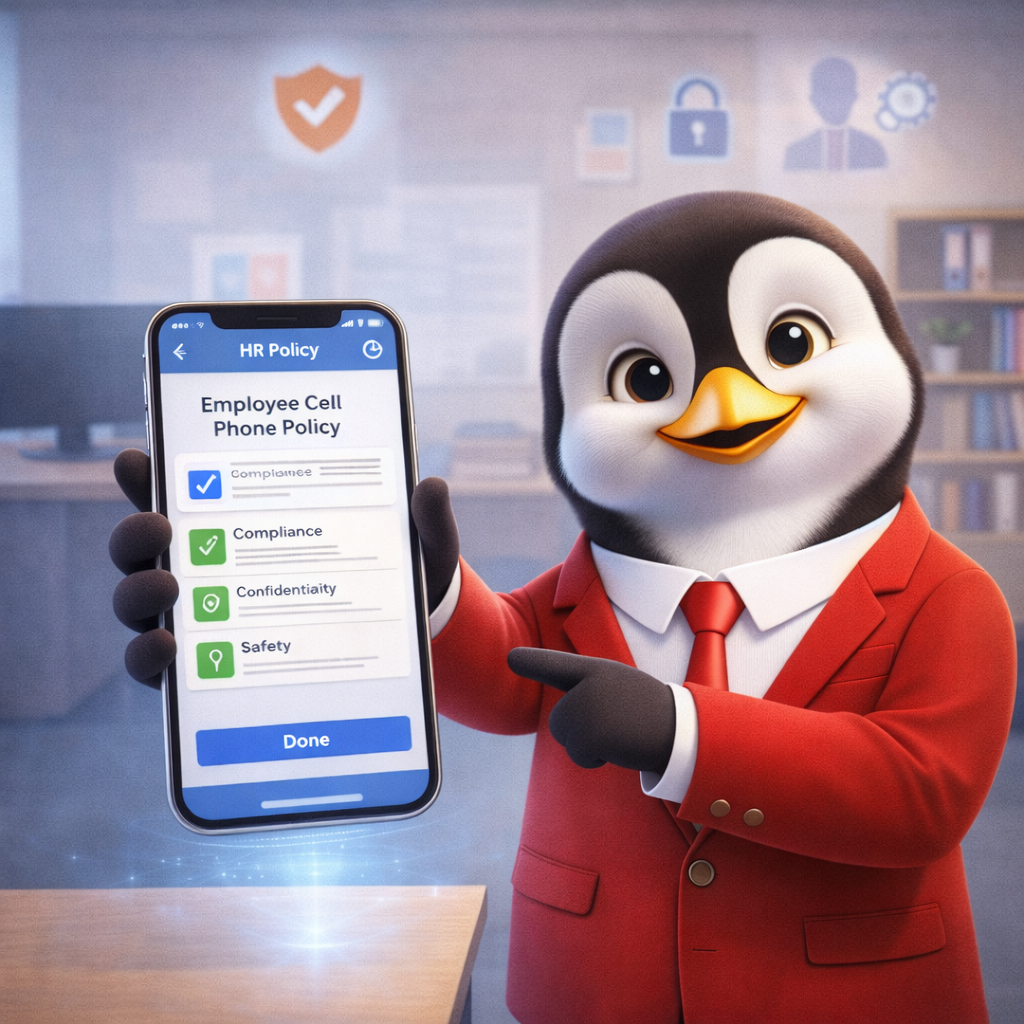
In today’s workplaces, smartphones are essential tools—but they can also be a source of distraction. For HR leaders and employers, the challenge is to create a policy that balances productivity, privacy, and professionalism. This is where a clearly defined employee cell phone policy becomes critical.
A well-crafted policy doesn’t just restrict usage; it provides clarity on expectations, sets boundaries for personal and work-related use, and protects both the organisation and employees. Without such guidance, managers often handle issues inconsistently, leading to misunderstandings, reduced productivity, and potential legal exposure.
Why Employers Need a Cell Phone Policy
A structured policy ensures that:
-
Employees understand acceptable use during work hours
-
Managers apply rules consistently across teams
-
Confidential information is safeguarded
-
Productivity and professional standards are maintained
By defining rules clearly, HR transforms potential distractions into a framework for responsible behaviour, instead of reactive enforcement.
Key Elements HR Must Include in the Policy
1. Purpose and Scope
Begin with the purpose: why the policy exists. For employers, the objective is not surveillance but to maintain productivity while respecting personal privacy. Define:
-
Who the policy applies to (all staff, contractors, or specific teams)
-
Scenarios covered, e.g., personal calls, messaging, and mobile work apps
This clarity helps HR manage expectations and ensure fair application.
2. Usage Guidelines
Define acceptable vs. prohibited use during work hours. Examples:
-
Company-provided devices for work tasks
-
Personal phones for urgent communication
-
Restrictions during meetings or on production floors
Explicit guidelines reduce confusion and prevent misinterpretation.
3. Privacy Considerations
Employees often worry about monitoring. HR should address:
-
The organisation’s approach to personal phone use
-
Situations where access or monitoring may be required (e.g., investigations)
-
Data security standards
Balancing productivity and privacy strengthen trust and legal defensibility.
4. Security and Confidentiality
Smartphones can be a security risk if sensitive company information is exposed. The policy should clarify:
-
Restrictions on sharing confidential data via personal devices
-
Requirements for password protection, encryption, or secure apps
-
Consequences for non-compliance
These rules protect both the organisation and employees.
5. Consequences for Misuse
Rather than punitive measures, focus on structured responses. The policy should explain:
-
Steps for addressing violations
-
Progressive corrective actions
-
Documentation requirements for HR and managers
Consistency in enforcement prevents bias and demonstrates professional governance.
6. Updates and Policy Review
Work environments and technology evolve quickly. HR must define:
-
Frequency of policy review
-
Responsible parties for updates
-
Communication process for employees
Many HR teams streamline this process with tools like the HRTailor.AI Policy Builder, which allows them to draft, update, and maintain cell phone policies efficiently while keeping them compliant and professional.
Implementing the Policy Effectively
A policy is only effective if it’s communicated clearly and applied consistently. HR should:
-
Provide accessible documentation for all employees
-
Train managers on correct enforcement
-
Address questions and feedback promptly
-
Align with broader organisational policies
Proper implementation ensures that the policy supports productivity without creating an atmosphere of mistrust.
Conclusion
An employee cell phone policy is more than a list of rules—it is a tool for balanced governance, safeguarding productivity, privacy, and professionalism. By defining clear expectations and providing structured guidance, HR teams can create a policy that is compliant, fair, and easy to maintain. When policies are clear, organisations protect themselves while empowering employees to use technology responsibly. For more tools and resources to support HR policy creation, check out HRTailor.AI for practical solutions designed for HR professionals and employers.