Introduction
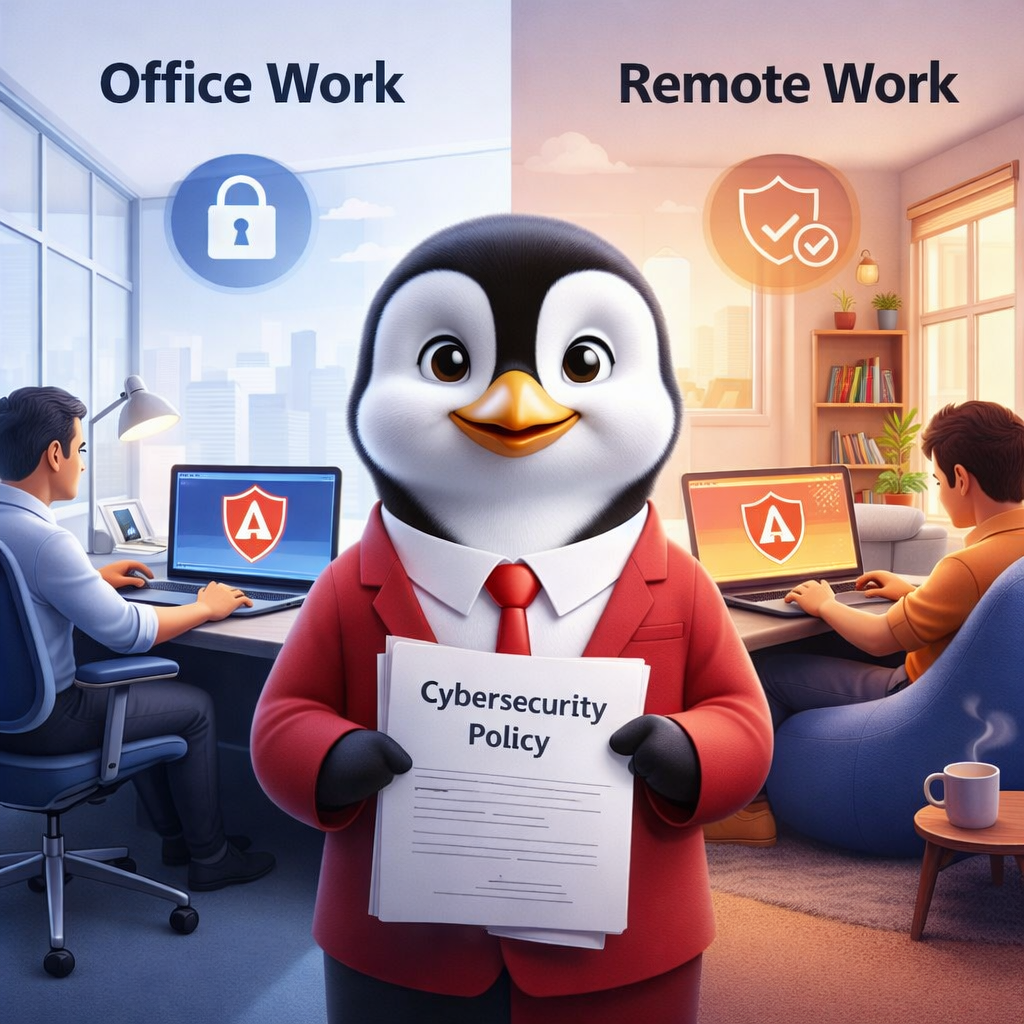
Work no longer happens in one place. Teams now operate across offices, homes, co-working spaces, and sometimes even different countries. While this flexibility has transformed productivity and collaboration, it has also introduced a new challenge—maintaining consistent cybersecurity practices across vastly different work environments.
This is why organisations need clear, practical employee cybersecurity guidelines that apply equally to office-based and remote teams, without slowing down work or creating confusion.
Why One-Size-Fits-All Security No Longer Works
Traditional cybersecurity rules were designed for controlled office environments. However, modern workforces operate across unsecured Wi-Fi networks, personal devices, shared spaces, and cloud-based systems.
Without updated policies:
-
Security standards vary by location
-
Employees make individual judgment calls
-
Risk exposure increases quietly over time
-
Accountability becomes difficult to enforce
Clear employee cybersecurity guidelines bridge this gap by setting unified expectations—regardless of where work happens.
Defining Security Boundaries for Different Work Environments
Remote and office teams face different risks, but they must operate under the same security principles.
Effective policies clearly define:
-
Acceptable work devices and software
-
Secure network usage expectations
-
Rules for accessing company systems offsite
-
Responsibilities when handling data outside office premises
By addressing these differences upfront, organisations reduce misunderstandings and prevent avoidable security lapses.
Access Control in a Distributed Workforce
When teams work from multiple locations, access control becomes more complex. Employees may log in from personal laptops, mobile devices, or shared systems.
Strong policies focus on:
-
Role-based system access
-
Authentication requirements across locations
-
Session timeouts and login monitoring
-
Clear exit protocols when roles change
Well-defined employee cybersecurity guidelines ensure access is intentional, monitored, and aligned with job responsibilities.
Data Handling Across Remote and Office Teams
Data doesn’t stay in one place anymore—it moves across cloud platforms, messaging tools, and shared drives.
To prevent exposure, policies should establish:
-
Rules for downloading and storing company data
-
Guidelines for sharing files internally and externally
-
Expectations for screen privacy in shared spaces
-
Procedures for reporting lost or compromised devices
When data-handling expectations are clear, employees act with confidence instead of caution-driven hesitation.
Consistency Without Micromanagement
One of the biggest concerns employers have been enforcing cybersecurity without making employees feel monitored. Policies should empower—not intimidate.
Best practices include:
-
Focusing on behaviour standards, not surveillance
-
Encouraging early reporting without fear
-
Making guidelines easy to understand and follow
-
Reinforcing trust through clarity
Clear employee cybersecurity guidelines reduce the need for constant oversight because expectations are already understood.
Training for Hybrid Reality
Policies alone are not enough. Employees need context, relevance, and clarity—especially when work environments differ.
Training should:
-
Address real-world remote and office scenarios
-
Be role-specific, not generic
-
Reinforce decision-making, not memorisation
-
Be updated as tools and risks evolve
When training reflects actual work conditions, adoption improves naturally.
Creating Policies That Adapt with Work Models
Hybrid and remote work structures evolve quickly. Static policies struggle to keep up.
This is where tools like the HRTailor.AI Policy Builder add value. They help HR teams create structured, adaptable cybersecurity policies that align with changing work models—without rewriting everything from scratch. This ensures policies remain relevant, clear, and consistent across locations.
Handling Incidents Across Locations
When incidents occur in distributed teams, confusion often delays response. Clear guidance ensures swift, coordinated action.
Policies should define:
-
How incidents are reported remotely
-
Whom to contact across time zones
-
Immediate steps to contain risk
-
Documentation expectations
Preparedness becomes even more critical when teams are not physically together.
Maintaining Accountability Without Borders
Location should never dilute responsibility. Employees need to understand that security expectations travel with them.
Strong policies reinforce that:
-
Security standards apply everywhere
-
Accountability is role-based, not location-based
-
Professional conduct includes digital responsibility
-
Trust is built through consistent behaviour
Clear employee cybersecurity guidelines help organisations maintain integrity across dispersed teams.
Conclusion
As work environments continue to evolve, cybersecurity policies must evolve with them. Clear, practical guidelines ensure that both remote and office teams operate under the same security standards—without friction or confusion. When expectations are unified and adaptable, organisations protect not just data, but trust, productivity, and long-term resilience.