Offer Letter Explained: Key Elements Employers Must Include

Introduction
An offer letter is often the first “official” document a candidate receives from your company. So, it needs to do more than confirm a salary and joining date. It sets expectations, reduces confusion, and builds trust from day one.
For startups and SMEs, the challenge is scale. You may be hiring fast, working across cities or countries, and running lean teams. In that environment, a clear, consistent offer letter plus strong HR policies and standard HR letters can protect your culture and your compliance—without slowing down hiring.
Why the offer letter matters more than you think
An offer letter is a clarity tool. It confirms what was discussed and prevents “but I thought…” moments later. It also signals professionalism—especially when candidates compare multiple offers.
Just as importantly, it creates a documented starting point for the employee–employer relationship. When aligned with internal policies, it reduces onboarding friction and supports consistent decisions later.
Key elements every offer letter should include
A well-structured offer letter should be easy to scan and hard to misinterpret. While the exact format varies by organisation and location, most offer letters should cover:
- Job title and reporting manager
- Work location (including remote/hybrid expectations)
- Start date and working hours
- Compensation structure (fixed pay, variable pay, allowances, benefits)
- Probation or training period, if applicable
- Notice period and separation terms (high level)
- Confidentiality, conflict of interest, and basic conduct expectations
- Any conditions precedent (background checks, documents, approvals)
If your HR team is standardising templates, define a consistent offer letter format for employees so managers don’t improvise critical sections differently each time.
Location and industry nuances you shouldn’t ignore
Offer letters are not “one-size-fits-all.” Terms like probation, notice periods, overtime eligibility, benefits, and statutory disclosures can vary by country—and sometimes by state or province too.
In regulated industries, you may also need extra clauses (for example, compliance acknowledgements, safety requirements, or credential checks). Therefore, keep a central template, but build controlled variants by location and role type.
Offer letter vs appointment letter (and where each fits)
Many organisations use “offer letter” and “appointment letter” interchangeably, while others treat them as separate documents. A practical approach is:
- Offer letter: pre-joining confirmation of proposed terms, conditional where needed
- Appointment letter/contract: formal employment agreement issued on joining or after acceptance (based on local practice)
Whichever route you use, ensure the terms don’t conflict. Consistency across documents matters more than the label.
Why HR policies are the backbone of discipline and culture
Workforces today are diverse. Remote teams, different states, and multiple industries all bring unique compliance needs. What works in one setup may not work in another. Policies must adapt. They should align with local labour expectations, data protection norms, and industry practices. When documents stay relevant, they remain effective. Flexibility, when combined with structure, keeps organisations safe and fair.
Core HR policies that protect clarity and stability
Even small teams benefit from a policy foundation. Common policy areas include:
- Leave and attendance
- Code of conduct and disciplinary process
- Anti-harassment and respectful workplace expectations
- Remote/hybrid work guidelines
- Data protection, confidentiality, and acceptable use
- Performance management and internal communication norms
Additionally, policies act as internal “reference points” when disputes arise. That stability becomes critical as headcount grows.
HR letters build transparency across the employee lifecycle
HR letters document key milestones and decisions. They help both the employer and employee stay aligned, especially when teams change, managers rotate, or employees move across roles.
Common HR letters include:
- Appointment and onboarding letters
- Probation confirmation letters
- Increment/promotion letters
- Warning and disciplinary letters
- Termination, relieving, and experience letters
When these letters are standardised, your organisation communicates consistently—regardless of who drafted the document.
Compliance, consistency, and multi-location reality
Compliance isn’t only about avoiding penalties. It’s also about consistency: applying the same process to similar situations, with allowances for local requirements.
For multi-location teams, the stakes rise. A leave policy that works in one state may need adjustments elsewhere. Similarly, disciplinary processes may require different wording or timelines depending on jurisdiction. So, strong documentation systems are essential for organisational stability.
The manual drafting problem (time, errors, and version chaos)
Creating HR documents manually can be slower than it looks. You start with a template, then copy-paste sections, edit clauses, chase approvals, and fix formatting. Meanwhile, older versions circulate in email threads and shared drives.
This approach creates predictable risks:
- Inconsistent clauses across departments
- Outdated policy language being reused
- Missing location-specific requirements
- Errors in names, dates, compensation figures, or signatory details
Over time, these “small” issues can lead to employee mistrust or preventable disputes.
Mini scenario 1 — Offer letter turnaround delay
A growing startup finalises a candidate for a critical role. The manager expects the offer to go out the same day. However, HR is busy, the compensation breakup needs approvals, and the offer template is stored in an older folder.
Two days pass. The candidate follows up twice. By day three, they accept another offer—mainly because that employer moved faster and looked more organised.
Fast hiring often depends on fast documentation. A repeatable workflow and a consistent offer letter format for employees can reduce avoidable delays.
Mini scenario 2 — Policy update across locations
An SME expands from one city to three locations. They update their leave policy to reflect new operational realities, but the rollout becomes messy.
One team uses the updated document, another uses an older PDF, and a third has a manager-written version. When employees compare notes, it feels unfair—even if the intent was consistent. HR then spends weeks clarifying, correcting, and rebuilding trust.
Policy updates need controlled versions, location-specific variants, and an easy way to regenerate documents without starting from scratch.
A practical way to simplify HR documentation with HRTailor.AI
HRTailor.AI supports HR teams and employers by helping them generate HR policies and HR letters using simple inputs—without juggling scattered templates. It’s designed to create documents industry-wise, state-wise, and country-specific, so your outputs stay relevant as your team grows across locations.
Benefits at a glance:
- Create policies and letters faster with structured inputs
- Improve consistency across departments and hiring managers
- Generate location-relevant documents (industry/state/country-specific)
- Reduce manual errors in names, dates, and standard clauses
Build a more organised, audit-friendly documentation library
Explore HRTailor.AI to streamline your HR policies and HR letters with less manual effort.
Conclusion
Offer letters are more than a hiring formality—they’re the first building block of a transparent employee–employer relationship. When paired with clear HR policies and consistent HR letters, they strengthen discipline, clarity, compliance, and organisational stability.
For startups and SMEs, the goal is simple: move fast without becoming inconsistent. Standard templates, controlled variants, and smart documentation workflows help you do exactly that—especially as you grow across roles and locations. And when your process needs scale, a modern tool can help you keep documentation structured and dependable.


Frequently Asked Questions
At minimum: role details, compensation structure, start date, location/work mode, key terms (probation/notice where applicable), and any conditions like background checks.
- Policies explain rules; HR letters document specific events and decisions (confirmation, warnings, promotions, exits). Together, they create transparency and consistency.
A clear, structured format with standard sections, minimal jargon, and location-appropriate clauses works best—plus a controlled process to generate consistent outputs across teams.
Job Contract Agreement Explained With Key Clauses and Examples
Job Contract Agreement Explained With Key Clauses and Examples Introduction...
Read More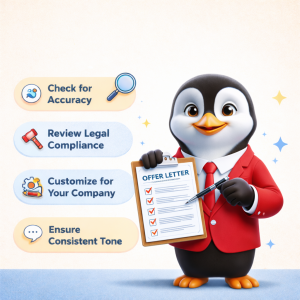
What HR Teams Should Check Before Using a Sample Offer Letter
What HR Teams Should Check Before Using a Sample Offer...
Read More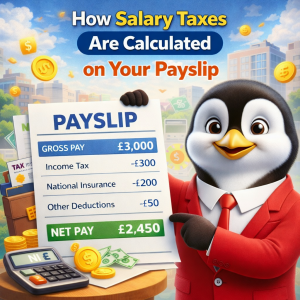
How Salary Taxes Are Calculated on Your Payslip
Your pay slip can look like a mini...
Read More
End of Employment Letters: Resignation, Termination, and Closure Explained
End of Employment Letters: Resignation, Termination, and Closure Explained Introduction...
Read More