How Smart HR Tools Are Making Salary Breakdown Simple, Clear, and Consistent

Introduction
It’s payday. The HR team hits “send” on hundreds of payslips, a collective sigh of relief echoes through the office — until the emails start trickling in.
“Hey, can someone explain why my take-home dropped this month?”
“Is my bonus taxed differently?”
“What’s this ‘professional tax’ thing again?”
For HR, these questions are familiar. For employees, they’re frustrating. Salary breakdowns — the very documents that should inspire trust — often do the opposite. They’re confusing, inconsistent, and packed with numbers that don’t tell a clear story. But lately, that’s changing.
A new generation of smart HR tools powered by AI is quietly transforming how salaries are calculated, explained, and understood. What once took hours of spreadsheet juggling and back-and-forth clarification is now simple, transparent, and remarkably consistent — across teams, locations, and even continents.
The Hidden Struggle Behind Every Payslip
Let’s be honest — salary breakdowns are one of HR’s least glamorous jobs. They’re not just about multiplying numbers. They’re about understanding how taxes, benefits, and compliance rules interact — and those rules don’t stay still. One regulation changes, and suddenly your Excel formulas are outdated. One benefit update, and your net pay sheet is wrong. One payroll error, and the trust you’ve built with your team takes a hit.
Even experienced HR professionals admit that salary breakdowns can feel like walking a tightrope. Too many details to track, too little time to check them twice. And in global teams, the challenge is multiplied. A company paying employees in Singapore, the UK, and the U.S. must navigate three completely different tax structures, deduction rules, and formats. Keeping all of that “consistent” across borders? That’s not humanly easy — it’s exhausting.
What Smart HR Tools Do Differently
The biggest misconception about automation is that it just “makes things faster.”
Smart HR tools do more than that — they make things clearer. Think of them as the quiet assistants working behind the scenes, ensuring every number adds up perfectly — and every employee understands why.
Here’s how they’re simplifying the chaos:
- They Understand Local Rules Instantly
No more Googling “latest tax deduction 2025 Singapore.”
Smart HR tools automatically update regional tax rules and compliance standards, so your salary breakdowns are always in line with the latest laws.
- They Separate the Mess into Meaning
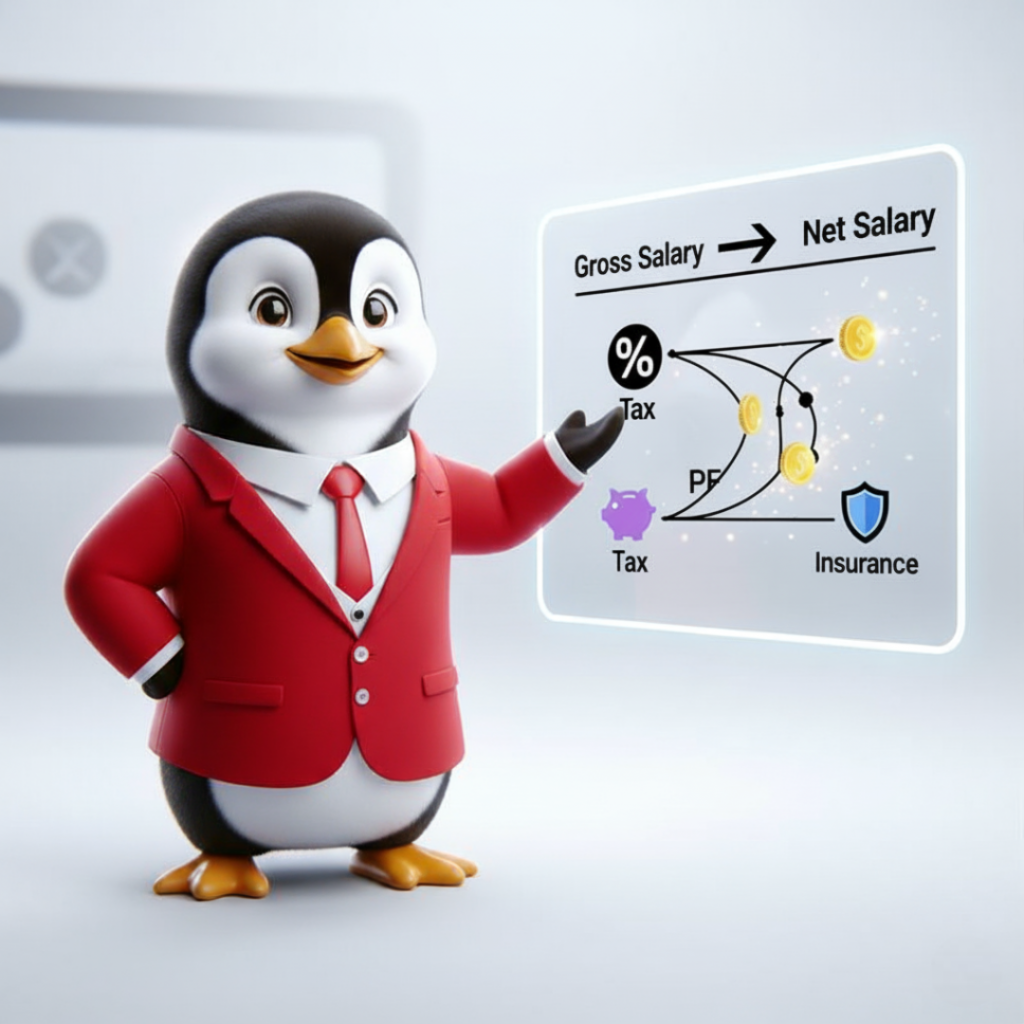
Instead of a confusing wall of numbers, AI-powered systems organize payslips into clean, easy-to-read sections — gross pay, deductions, benefits, and net take-home.
Each section is labeled clearly, so employees know exactly where every dollar or rupee went.
- They Eliminate Guesswork
Inconsistent formulas are one of HR’s biggest nightmares. Smart salary tools standardize the logic behind every calculation — meaning two employees with similar structures get the exact same breakdown, no matter who processed the payroll.
- They Make Explanation Effortless
When an employee asks, “Why did my net pay change?”, HR can show a visual breakdown — color-coded, simplified, and accurate. No spreadsheets, no stress.
Why Consistency Matters More Than Ever
HR isn’t just a function anymore — it’s a trust system. When employees see inconsistent salary breakdowns or can’t make sense of deductions, that trust weakens. And once it does, rebuilding it is tough. A consistent, transparent salary breakdown builds credibility in ways few HR policies can. It tells employees:
- “We know what we’re doing.”
- “We respect your money.”
- “You can trust us with the details that matter.”
Consistency also protects HR from internal chaos. One mistake in one sheet can cascade into compliance errors, delayed payments, or even fines. Smart HR tools stop that before it starts — they ensure every salary is calculated, explained, and stored consistently, every single month.
The Global Shift Toward Simplicity
This isn’t just a local trend — it’s happening worldwide. Global companies are realizing that clarity and simplicity are the new benchmarks of employee experience. In London, New Delhi, or Dubai, workers want the same thing: to understand how their salary is structured and whether it’s fair.
That’s why more HR leaders are integrating AI-based salary calculators into their systems — not because it’s trendy, but because it removes ambiguity. For multinational HRs, these tools also unify formats. Instead of juggling different layouts for different regions, they can generate payslips that look and feel uniform — even if the rules behind them differ. It’s one of those invisible improvements employees don’t always notice consciously, but they feel it. Payroll errors go down. Questions reduce. Trust goes up.
Transparency: The New Employee Benefit
Ask any HR leader what their employees value most, and you’ll hear words like “growth,” “culture,” and “work-life balance.” But there’s one that often gets overlooked: transparency. When you hand over a payslip that’s clean, logical, and easy to interpret, you’re not just showing numbers — you’re showing respect.
And that’s what smart HR tools do best. They bring a human touch to automation, turning what used to be a technical process into a moment of reassurance. It’s no longer about hiding the complexity; it’s about revealing the clarity behind it.
From Hours of Work to Minutes of Confidence
Let’s take a realistic scenario. In a traditional HR setup, calculating one employee’s salary — from gross to deductions to net — might take 20 minutes. Multiply that by 200 employees, and you’re looking at days of manual work.
Now imagine an AI salary tool doing that in seconds, with no errors, updated compliance logic, and export-ready reports. That’s not a futuristic dream — that’s how modern HR departments already operate. By simplifying calculations and standardizing breakdowns, these tools give HR professionals their time back — time they can use for what truly matters: managing people, not numbers.
A Culture Shift Inside HR
This evolution isn’t just about software; it’s a mindset change.
Old-school payroll was reactive — “calculate, fix, explain.”
Smart payroll is proactive — “automate, validate, clarify.”
Instead of scrambling at the end of the month, HR can now focus on analysis, insights, and planning. That shift — from reactive to strategic — is what’s turning modern HR departments into respected decision-making partners inside organizations.
The Bottom Line
Salaries are personal. They’re emotional. They represent effort, ambition, and security. When the numbers that define them feel confusing, employees feel disconnected. But when the process is transparent, accurate, and consistent, employees feel seen, valued, and respected. That’s what smart HR tools are really solving — not just calculations, but communication.
They bridge the gap between complex systems and human understanding, making every payslip a small but powerful moment of clarity. And among the growing ecosystem of AI-driven HR tools, platforms like HRTailor.AI’s salary calculators are leading that change — built to help teams everywhere simplify the complex, eliminate errors, and make payroll something everyone can finally understand.

Frequently Asked Questions
They are mandatory contributions to government-regulated benefits that fund retirement, healthcare, or social security.
They automate calculations and present each component clearly so employees know exactly how their salary is structured.
Yes — they use updated tax rules and standardized logic, removing manual mistakes in spreadsheets.
Job Contract Agreement Explained With Key Clauses and Examples
Job Contract Agreement Explained With Key Clauses and Examples Introduction...
Read More
What HR Teams Should Check Before Using a Sample Offer Letter
What HR Teams Should Check Before Using a Sample Offer...
Read More
How Salary Taxes Are Calculated on Your Payslip
Your pay slip can look like a mini...
Read More
End of Employment Letters: Resignation, Termination, and Closure Explained
End of Employment Letters: Resignation, Termination, and Closure Explained Introduction...
Read More