How to Align KRAs with Company Objectives & Key Results Using AI (2026 Guide)

Introduction
Most organisations set ambitious OKRs at the start of the year. They look strategic on paper—until execution begins. However, the real difficulty shows up when leaders translate those OKRs into clear KRAs for every employee. If alignment breaks, teams lose direction, accountability becomes inconsistent, and performance reviews turn subjective.
As companies move into 2026, this challenge is gaining urgency. In addition, businesses want structured, fair, and data-driven performance systems that scale. That is where AI can help. With an AI-powered KRA/KPI generator, organisations can convert high-level goals into measurable responsibilities that employees can follow with confidence.
In this guide, you’ll see how OKRs and KRAs connect, why gaps appear, and how AI closes those gaps through a simple, repeatable workflow.
OKRs vs KRAs: What’s the Difference?
OKRs show direction. In other words, they define what the company wants to achieve in a quarter or a year.
Each OKR contains:
-
One strategic Objective
-
Three to five measurable Key Results
KRAs define responsibility. More specifically, they outline what each person must deliver so those Key Results succeed.
Why Alignment Often Fails
Alignment usually breaks for practical reasons, not because teams lack effort. For example:
-
OKRs stay too broad to act on
-
KRAs become long task lists instead of outcomes
-
KPIs feel disconnected from strategy
-
Different managers interpret goals differently
As a result, employees get mixed signals and progress becomes hard to measure. This is exactly where an AI-supported KRA/KPI builder creates clarity. Instead of guessing, AI translates company OKRs into role-specific KRAs with measurable targets.
The AI-Enabled Alignment Workflow
A modern alignment process using AI typically looks like this:
-
Set and upload your company OKRs
-
Add context—role, department, region, and seniority
-
Generate role-based KRAs and KPIs
-
Refine targets and confirm feasibility
-
Publish goals for the quarter
-
Track progress continuously
Previously, this could take weeks. Now, it can become a structured system you update in hours.
Step 1: Write Clean and Measurable OKRs
AI works best when the input is clear. So, avoid tasks like “run campaigns” or “launch new processes.” Instead, write outcomes.
Example OKR (2026)
Objective: Strengthen the company’s position in the mid-market SaaS space.
Key Results:
-
Increase ARR from $8M to $10M
-
Improve win rate from 24% to 30%
-
Move NPS from 42 to 55
-
Reduce onboarding time from 21 days to 10 days
This becomes the foundation for aligned KRAs.
Step 2: Give AI the Right Context
The quality of outputs improves when you add the right details. For instance, specify:
-
Department and role
-
Level (Junior/Mid/Senior/Manager)
-
Region or market
-
Customer type or business model
-
Dependencies (e.g., Marketing pipeline, Support SLAs)
With this context, the AI KRA/KPI generator avoids generic suggestions. Consequently, you get targeted expectations that match the role.
Step 3: Generate KRAs & KPIs for Every Role
AI usually recommends 3–5 KRAs per role, along with measurable KPIs.
Sales – Account Executive (USA)
-
KRA: New ARR creation → KPI: Achieve ≥ $250K close-won revenue in Q2
-
KRA: Conversion excellence → KPI: Maintain ≥ 28% stage-to-close rate
-
KRA: Deal velocity → KPI: Keep median cycle time ≤ 45 days
Marketing – Performance Manager (India)
-
KRA: Pipeline growth → KPI: Deliver 300 SQLs with CPL ≤ ₹2,500
-
KRA: Funnel conversion → KPI: Improve MQL→SQL rate to 30%
-
KRA: Brand trust → KPI: 200 new reviews with avg rating ≥ 4.4
Customer Success – Onboarding Lead (UAE)
-
KRA: Time-to-value → KPI: Reduce onboarding to ≤ 12 days
-
KRA: Early retention → KPI: Keep churn < 5% in the first 90 days
-
KRA: Client experience → KPI: Maintain NPS ≥ 50 for first-quarter customers
Importantly, AI keeps KRAs linked to top-level OKRs. That connection is what prevents “busy work KPIs.”
Step 4: Review Targets Using Data and Benchmarks
AI provides a strong starting point. Still, leaders should refine targets using:
-
Last few quarters’ performance
-
Industry benchmarks
-
Team capacity
-
Cross-team dependencies
To make targets realistic, pair leading and lagging indicators.
Examples:
-
Leading: demos booked, onboarding steps completed
-
Lagging: ARR, churn, NPS
This combination improves fairness and reduces bias.
Step 5: Publish KRAs and Use a Review Rhythm
Clear documentation helps employees know exactly what success looks like. Moreover, a fixed rhythm makes performance predictable.
Suggested 2026 performance rhythm:
-
Week 1: Goal alignment and sign-off
-
Weeks 2–4: Execution
-
Week 5: 1:1 review with AI summary
-
Week 8: Mid-quarter recalibration if variance > 20%
-
Week 12: AI-generated quarter report + next-quarter draft
As a result, performance management becomes a system—not a scramble.
Step 6: Track Progress Using AI
AI can connect to tools like CRM, ATS, helpdesk, HRMS, or analytics platforms to:
-
Analyse progress
-
Flag risks early
-
Suggest corrective actions
-
Compare performance against targets
-
Draft manager review notes
Therefore, leaders spend less time tracking and more time coaching.
A Simple OKR → KRA Mapping Template
Use this for quick alignment:
-
Company Objective:
-
Company Key Result:
-
Role:
-
KRA:
-
KPI + Target:
-
Data Source:
-
Review Rhythm:
-
Dependencies:
-
Risks & Guardrails:
Because the template stays short, teams actually complete it.
Examples Across Different Functions
Product
-
Run 12 customer interviews/month
-
Maintain < 1 critical bug per release
Engineering
-
Achieve ≥ 85% sprint completion
-
Maintain p95 latency within agreed limits
HR
-
Time-to-hire ≤ 30 days
-
Regretted attrition ≤ 2%
Finance
-
Forecast variance ≤ 5%
-
Reduce DSO by 10 days
In each case, AI keeps the focus on outcomes, not activity.
Common Pitfalls (and How AI Fixes Them)
-
Activity instead of outcomes: AI rewrites tasks into measurable results.
-
Too many KRAs: AI recommends 3–5 priorities per role.
-
Misaligned KPIs: AI flags conflicts and suggests guardrails.
-
No review cadence: AI generates review checkpoints automatically.
-
Missing data sources: AI prompts you to assign a source per KPI.
Stronger Governance at Scale
AI supports governance by enabling:
-
Single ownership per KRA
-
Change logs for target shifts
-
Quarterly audits
-
Data-based lessons learned
Consequently, performance stays consistent across teams and regions.
Performance Reviews Without Surprises
With aligned OKRs and KRAs:
-
AI summarises KPI performance
-
Managers add context
-
Employees add reflections
This creates transparent, predictable evaluations throughout 2026.
Conclusion
As organisations move into 2026, aligning OKRs with KRAs is becoming a core performance requirement. Clear alignment helps employees understand expectations, improves fairness in evaluations, and keeps teams connected to strategy. An AI-powered KRA/KPI generator accelerates this process by converting complex goals into measurable, role-ready outputs. Ultimately, when AI handles analysis and tracking, leaders can focus on execution and coaching.
Create accurate, role-specific KRAs in minutes with HRTailor.AI’s KRA/KPI Generator—built to align strategy and performance for 2026.


Frequently Asked Questions
It converts broad OKRs into measurable KRAs, suggests realistic KPIs, and keeps every role aligned with business strategy. This reduces guesswork and brings consistency across teams.
Yes. The process scales both ways. Large enterprises get structure and standardization, while smaller teams benefit from faster goal setting and clarity.
Quarterly updates work best. However, teams should refine KRAs whenever OKRs change or when market conditions shift.
Job Contract Agreement Explained With Key Clauses and Examples
Job Contract Agreement Explained With Key Clauses and Examples Introduction...
Read More
What HR Teams Should Check Before Using a Sample Offer Letter
What HR Teams Should Check Before Using a Sample Offer...
Read More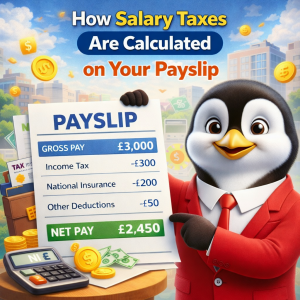
How Salary Taxes Are Calculated on Your Payslip
Your pay slip can look like a mini...
Read More
End of Employment Letters: Resignation, Termination, and Closure Explained
End of Employment Letters: Resignation, Termination, and Closure Explained Introduction...
Read More