Introduction
Every HR manager knows the pressure of filling roles quickly. But before the interviews, before the sourcing, it all begins with one essential document the job description (JD).
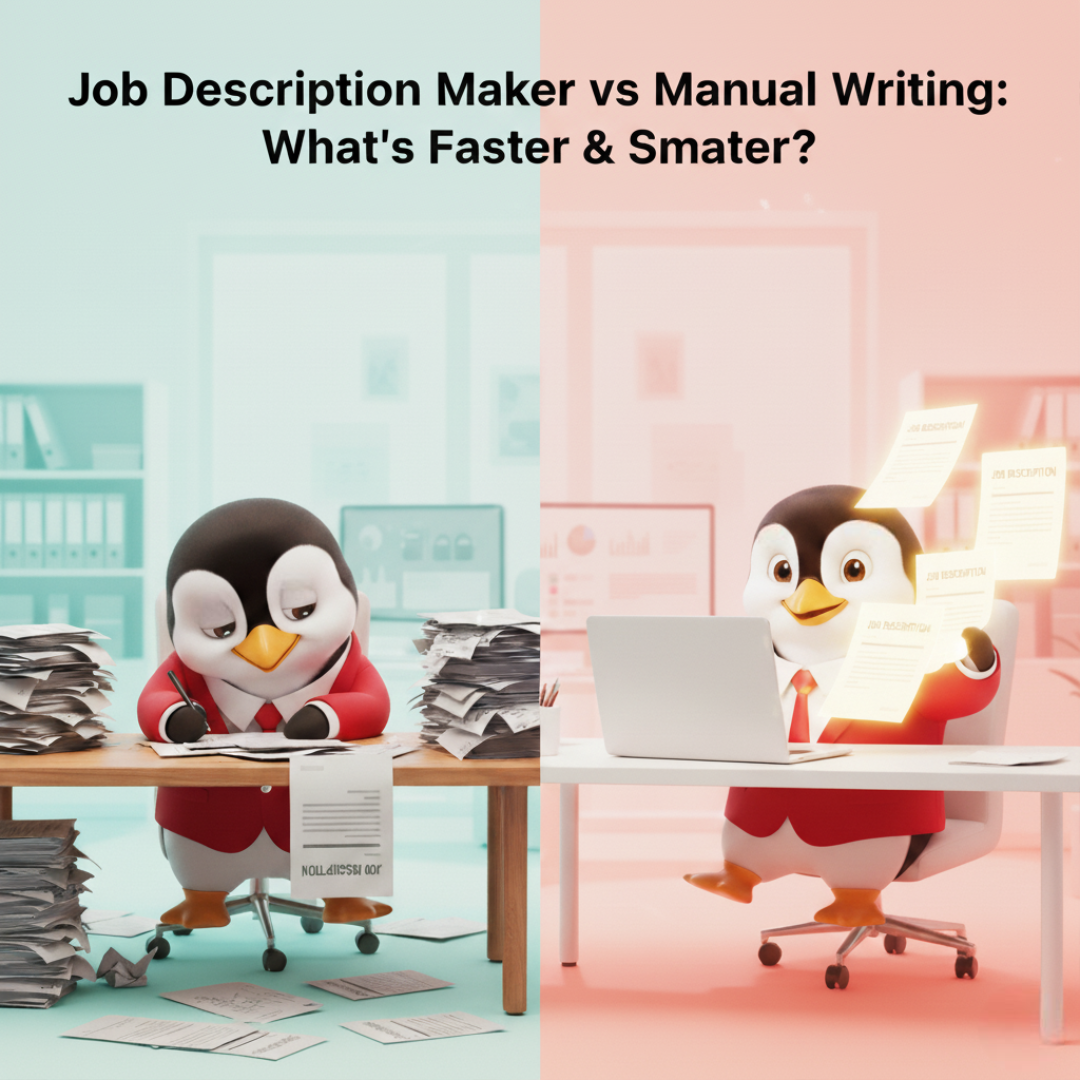
Now here’s the question: should HR professionals spend hours manually crafting JDs, or should they let AI job description makers take the lead?
It’s not about replacing HR expertise it’s about making the process faster, smarter, and more consistent. Manual JD writing has its charm, but AI is redefining how efficiently hiring teams work. Let’s explore how both methods compare, and which one truly benefits modern organizations.
The Importance of a Well-Written JD
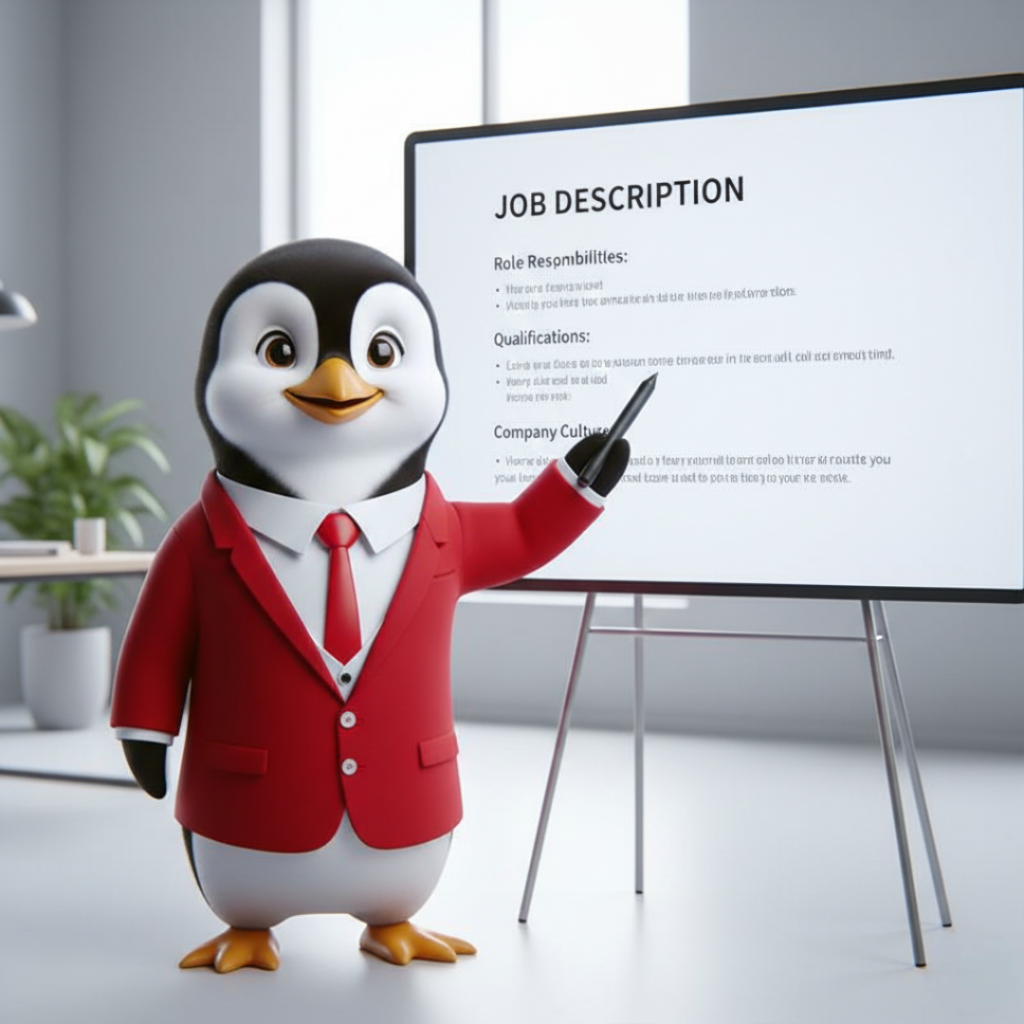
A job description isn’t just a list of tasks. It’s a company’s first introduction to a potential employee. The tone, structure, and clarity of a JD can influence whether a qualified candidate applies or scrolls away.
A good JD sets expectations, explains responsibilities, lists essential skills, and reflects company culture. But writing one from scratch and doing it well takes time and effort.
That’s where technology steps in.
Manual Job Description Writing
For years, HR teams have crafted job descriptions by hand referencing old files, researching online, and rewriting each section carefully. Let’s look at what works (and what doesn’t) with this traditional approach.
- Customization: HR professionals can tailor the tone to match the company culture formal, friendly, or creative.
- Role Familiarity: Recruiters who’ve hired for similar roles often know what the perfect candidate looks like.
- Human Context: Manual writing allows personal judgment something AI may not fully capture.
- Time-Consuming: On average, writing a single JD manually can take 2–3 hours. Multiply that by multiple roles, and you’re looking at an entire workday gone.
- Missed Keywords: Many manually written JDs lack SEO and ATS (Applicant Tracking System) keywords that job seekers search for.
- Formatting Issues: Without structured templates, JDs can look inconsistent across departments.
- Risk of Errors: Copy-pasting from old JDs often leads to outdated information or compliance mistakes.
Manual writing gives HR the freedom to be creative, but in a fast-paced hiring environment, that creativity comes at a cost time, consistency, and visibility.
AI Job Description Maker: The New Age Approach
Enter the AI job description maker, a digital tool that generates high-quality, structured JDs within minutes. It’s designed to simplify repetitive writing tasks while improving quality and compliance.
-
Pros: Why HR Teams Love It
1. Speed Like Never Before
- Instead of 2–3 hours, an AI JD Maker creates a complete description in 2–3 minutes.
- HR teams can instantly generate JDs for multiple roles, across departments and locations.
2. SEO & ATS-Ready
- AI identifies and inserts keywords candidates search for for example, “Remote Software Engineer – React” or “Digital Marketing Manager USA.”
- It ensures the JD ranks higher on job boards and works smoothly with ATS software.
3. Legally Compliant Templates :The tool integrates clauses based on country-specific labor laws.
Example:
- In the USA, it ensures Equal Opportunity and FLSA statements.
- In India, it aligns with Shops & Establishments Act norms.
- In the UAE, it adds work visa eligibility and MOHRE compliance.
4. Global Adaptability
- Whether you’re hiring in Mumbai, Dubai, or London, AI adapts tone, terminology, and compliance automatically.
- This saves hours of localization work for global HR teams.
AI isn’t magic — it still needs direction.
You’ll need to input:
Once these details are provided, the AI handles the rest structure, tone, compliance, and keywords.
Head-to-Head: Manual vs AI JD Writing
Let’s compare them side by side to see the difference more clearly:
|
Criteria
|
Manual JD Writing
|
AI Job Description Maker
|
|
Time Taken
|
2–3 hours per JD
|
2–3 minutes per JD
|
|
SEO/ATS Optimization
|
Often missing keywords
|
Automatically included
|
|
Consistency Across Roles
|
Varies per HR writer
|
Uniform, branded structure
|
|
Compliance Accuracy
|
Depends on HR’s legal awareness
|
Auto-updated regional clauses
|
|
Customization
|
High, but slow
|
High, editable instantly
|
|
Cost
|
HR time = higher cost
|
Subscription or per-use cost = lower overall
|
|
Scalability
|
Difficult for multiple roles
|
Easy to generate 100+ JDs
|
|
Error Risk
|
High with manual edits
|
Minimal with automated checks
|
The results are clear AI wins on speed, consistency, and efficiency, while manual writing wins only when hyper-personalization or niche roles demand deep contextual input.
Verdict: The Future is Smart, Not Slow
For 90% of roles, AI JD Makers outperform manual writing.
They save time, maintain brand consistency, and adapt instantly to compliance updates. HR managers can still fine-tune details afterward giving them the best of both worlds: speed and precision with a human touch.
Think of it like this:
Manual writing is a classic pen-and-paper approach detailed but slow.
AI JD Makers are the digital pens of the future fast, efficient, and smart.
In an era where roles evolve monthly and hiring spans continents, automation isn’t just convenient it’s essential.
How AI JD Makers Are Transforming HR Workflows
- From Reactive to Proactive Hiring
Instead of writing JDs under deadline pressure, HR teams now maintain a ready library of AI-generated templates, customizable anytime.
- Improved Candidate Experience
Clear, structured JDs attract more relevant applicants. Candidates appreciate transparency in roles, requirements, and benefits.
- Reduced Dependence on External Agencies
Companies can now create professional JDs internally, cutting down outsourcing costs.
- Enhanced Data Insights
AI tools track which JDs perform best, allowing HR teams to optimize future listings based on engagement and conversion data.
Common Myths About AI Job Description Makers
- Myth 1: AI makes all JDs sound the same
No, AI tools generate unique, role-based descriptions. They adapt tone, keywords, and formatting based on input data and geography.
- Myth 2: You can’t personalize AI-written JDs
You can. Most tools allow HR to edit any section adding company culture details, leadership style, or team values.
- Myth 3: AI replaces HR writers
It doesn’t. It supports them. The tool handles formatting and compliance while HR focuses on strategy and final review.
Save hours & hire smarter try Job Description Maker now.
Generate customized, compliant, and professional job descriptions in minutes