
How AI Ensures Legal Compliance in HR Policies Across Multiple Countries

Introduction
Global teams are exciting. They spark new ideas, unlock fresh markets, and level up your culture. Yet, they also introduce one serious headache: keeping HR policies compliant everywhere you operate. India, the UK, and the UAE don’t just have different rules—they have different enforcement styles, documentation norms, and update cadences. Consequently, policy drift is common, and penalties can be painful.
This is precisely where an AI-powered HR Policy Builder earns its keep. It spots the right jurisdiction, aligns clauses with local laws, and highlights risks before a document ever reaches your employees. Moreover, it makes ongoing updates simple, so your handbook doesn’t go stale the moment a regulation changes.
Who is this for? HR leaders, founders, and People Ops teams who manage multi-country headcounts and can’t afford compliance gaps—or manual chaos.
Why global compliance matters (more than you think)
- Different labor laws per region: Minimum leave in the UK. Shops & Establishments nuances in India. Gratuity rules in the UAE. The “same” policy won’t fly everywhere.
- Legal penalties for non-compliance: Fines, inspections, and, at times, litigation. Furthermore, reputational damage lingers.
- Policy consistency across branches: Consistency boosts trust. However, consistency must never override law—localization still matters.
What an AI HR Policy Builder actually does
1) Auto-detects location & scope
You add your entity’s country, state (if applicable), company size, and industry. The builder pins the correct jurisdiction and pulls in relevant statutes and guidance.
2) Suggests compliant policy templates
From Leave and Overtime to Notice Periods, Remote Work, Code of Conduct, and Grievance Redressal—templates arrive pre-aligned with local norms. Then, you tailor tone, benefits, and thresholds to your culture.
3) Monitors law updates
As regulations evolve, the system refreshes its legal backbone. As a result, you can regenerate the latest policy in minutes—no spreadsheets, no copy-paste.
4) Flags risky clauses
Before you hit download, high-risk phrases are surfaced: ambiguous termination language, conflicting overtime statements, or missing equal-opportunity lines. Therefore, you fix issues proactively.
Country deep-dives (with practical examples)
United Kingdom: Working Time Regulations & beyond
- Leave & hours: UK Working Time Regulations guide holiday entitlements, rest breaks, and weekly limits. Accordingly, your Leave Policy should reflect 5.6 weeks of statutory paid holiday for most workers, with bank-holiday logic clarified.
- Overtime & tracking: While overtime rates aren’t mandated, hours must be tracked against weekly limits. Therefore, time-recording clauses matter.
- Family-friendly rights: Maternity, paternity, shared parental leave, and flexible working requests require clear, current
How AI helps:
- Inserts the right statutory language into Leave and Working Hours policies.
- Adds flexible working process steps.
- Flags missing holiday accrual logic for part-timers and starters/leavers.
India: State-by-state Shops & Establishments realities
- Not one India: Maharashtra ≠ Karnataka. Opening hours, weekly holidays, leave accruals, registers, and notices vary.
- Overtime & notice: Overtime rates and termination notice differ by state and sometimes by establishment type and headcount.
- Standing Orders & POSH: Model Standing Orders may apply by size; POSH (anti-sexual harassment) compliance requires policy, committee formation, and training language.
How AI helps:
- Detects state jurisdiction and adjusts leave/attendance clauses accordingly.
- Ensures POSH policy presence, ICC constitution language, and reporting timelines.
- Suggests probation and confirmation wording that aligns with local practice while remaining defensible.
UAE: Gratuity, contracts, and clarity
- End-of-service benefits: Gratuity is central. Consequently, tenure, contract type, and separation reason affect calculations.
- Working hours & rest days: Normal hours, Ramadan adjustments (for Muslims), and overtime scenarios must be explicit.
- Contracts & termination: Probation, notice, and documentation standards are detailed and must be mirrored in policies and letters.
How AI helps:
- Adds gratuity computation notes and cross-references your Letter/Exit policy.
- Aligns notice & probation with your contract templates.
- Flags ambiguous termination lines before they can cause disputes.
What a compliant, multi-country policy pack includes
Even if you’re small, you’ll need a baseline set. With AI, you can generate and localize these quickly:
- Leave & Holidays Policy (jurisdiction-specific accruals, holidays)
- Attendance & Working Hours Policy (tracking, overtime, rest)
- Code of Conduct & Ethics (conflicts, confidentiality, DEI signals)
- Anti-Harassment / Dignity at Work (UK), POSH (India), anti-discrimination language
- Remote/Hybrid Work Policy (eligibility, data security, cross-border implications)
- Grievance & Disciplinary Policy (stages, timelines, representation)
- Probation & Confirmation Policy (criteria, communication, documentation)
- Separation/Exit Policy (notice, garden leave, final settlements, gratuity in UAE)
- Data Protection & Privacy (UK GDPR, India DPDP Act, UAE data nuances—where applicable)
Because the set is modular, you can roll policies out by country in phases—without losing global coherence.
Governance: the secret sauce behind sustainable compliance
1) A single source of truth
Host your live policies in one secure repository. Then, link them to your HRIS or intranet. Versioning matters; add effective dates and change logs.
2) A quarterly “mini-audit”
Every quarter, schedule a quick, AI-assisted scan: have any thresholds or references changed? If yes, regenerate. Therefore, nothing drifts.
3) Clear roles & approvals
Define who drafts, who legal-reviews, and who publishes. Meanwhile, store all comments inside your policy builder to avoid email archaeology.
4) Policy-to-letter continuity
Your Offer, Warning, Transfer, and Termination letters should reflect policy language. That way, there’s no conflict between your handbook and your documents.
Real-world workflow (step-by-step)
- Select country & entity → e.g., “UAE, Free Zone entity, 120 employees.”
- Pick policy type → Leave, Overtime, Exit, etc.
- Customize variables → Accrual caps, overtime approval flow, eligibility rules.
- Run legal checks → The AI flags gaps: missing gratuity mention, vague termination references, or no flexible-working steps in the UK.
- Publish and notify → Export to PDF/Word, publish on intranet, notify employees.
- Re-generate on updates → Labor law change? Click Regenerate and version-control the new policy.
Mistakes to avoid (and how AI prevents them)
- Copy-pasting a single global template
Fix: Generate per country. Then, harmonize headings and tone for familiarity. - Ambiguous overtime language
Fix: Insert jurisdiction-specific thresholds, approval flows, and payout/rest-day alternatives. - Skipping separation specifics
Fix: Add notice, gratuity (UAE), settlement timelines, and asset-return steps. - Forgetting anti-harassment requirements
Fix: Include POSH (India) or Dignity at Work (UK) obligations, training, and committee/process language. - No update rhythm
Fix: Run quarterly scans and regenerate in one click.
Implementation tips for busy HR teams
- Start small; scale fast. Launch Leave, Working Hours, and Anti-Harassment first. Next, ship Probation, Exit, and Remote Work.
- Map dependencies. If your Exit policy references notice periods, sync with your employment contract templates.
- Write for humans. Use short sentences, active voice, and examples. Moreover, add “At a glance” sections for quick scanning.
- Train managers. Provide a one-page policy summary per country. Therefore, managers can answer questions without escalating everything to HR.
- Measure policy health. Track how often employees search for “leave,” “notice,” or “overtime.” High searches may signal confusing language—then improve it.
Example mini-clauses (illustrative, not legal advice)
- UK—Holiday accrual for part-time staff: “Holiday entitlement accrues pro-rata based on contracted hours and includes statutory bank holidays where applicable.”
- India—POSH note: “The Internal Complaints Committee (ICC) will be constituted as per POSH Act requirements; timelines for inquiry and confidentiality norms shall apply.”
- UAE—Gratuity linkage: “End-of-service benefits (gratuity) will be calculated per UAE law considering length of service, contract type, and termination reason.”
The business impact you can expect
- Faster policy shipping: From weeks to minutes.
- Lower external spend: Routine drafting moves in-house.
- Higher employee trust: Clear, localized, and consistent.
- Audit-ready confidence: Versioning, changelogs, and aligned letters.
In short, AI turns compliance from a scramble into a repeatable, auditable process. And since policy risk compounds with every new office, the payoff grows as you scale.
Stay globally compliant with HR Policy Builder. Generate location-aware policies, flag risky clauses, and publish with confidence—across India, the UK, the UAE, and beyond.


Frequently Asked Questions
You simply regenerate the policy with the latest legal data. In addition, store the old version for audit trails.
No. For edge cases, litigation, or unionized settings, counsel remains vital. However, for 90% of routine policy drafting, AI dramatically reduces time and errors.
Yes. The builder preserves tone and structure while localizing clauses, so your culture stays constant and your compliance stays sharp.
It’s reliable for flagging, suggesting, and accelerating updates. But over-trusting automation is a mistake — the smartest approach is human validation + AI precision.
Yes. AI analyzes micro-variations — like overtime caps, holiday entitlements, notice periods, and privacy consent rules — ensuring policies don’t skip something small that becomes a big legal problem.
Job Contract Agreement Explained With Key Clauses and Examples
Job Contract Agreement Explained With Key Clauses and Examples Introduction...
Read More
What HR Teams Should Check Before Using a Sample Offer Letter
What HR Teams Should Check Before Using a Sample Offer...
Read More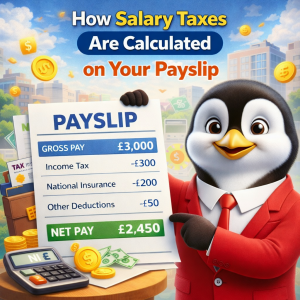
How Salary Taxes Are Calculated on Your Payslip
Your pay slip can look like a mini...
Read More
End of Employment Letters: Resignation, Termination, and Closure Explained
End of Employment Letters: Resignation, Termination, and Closure Explained Introduction...
Read More