Introduction
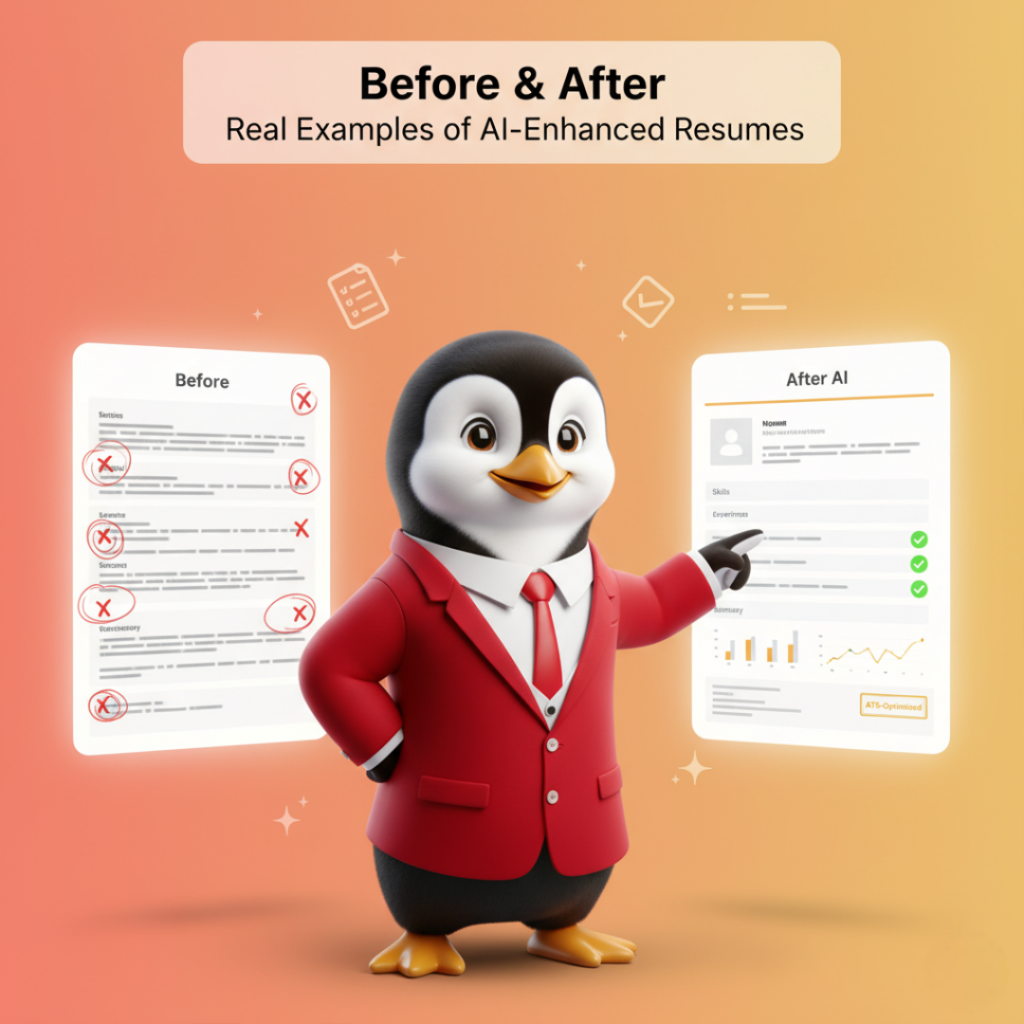
Seeing is believing especially when it comes to resumes. Many talented professionals fail to land interviews, not because they lack skills, but because their resumes fail to communicate them effectively. Recruiters spend less than ten seconds scanning each resume, and Applicant Tracking Systems (ATS) filter out most before they’re even seen.
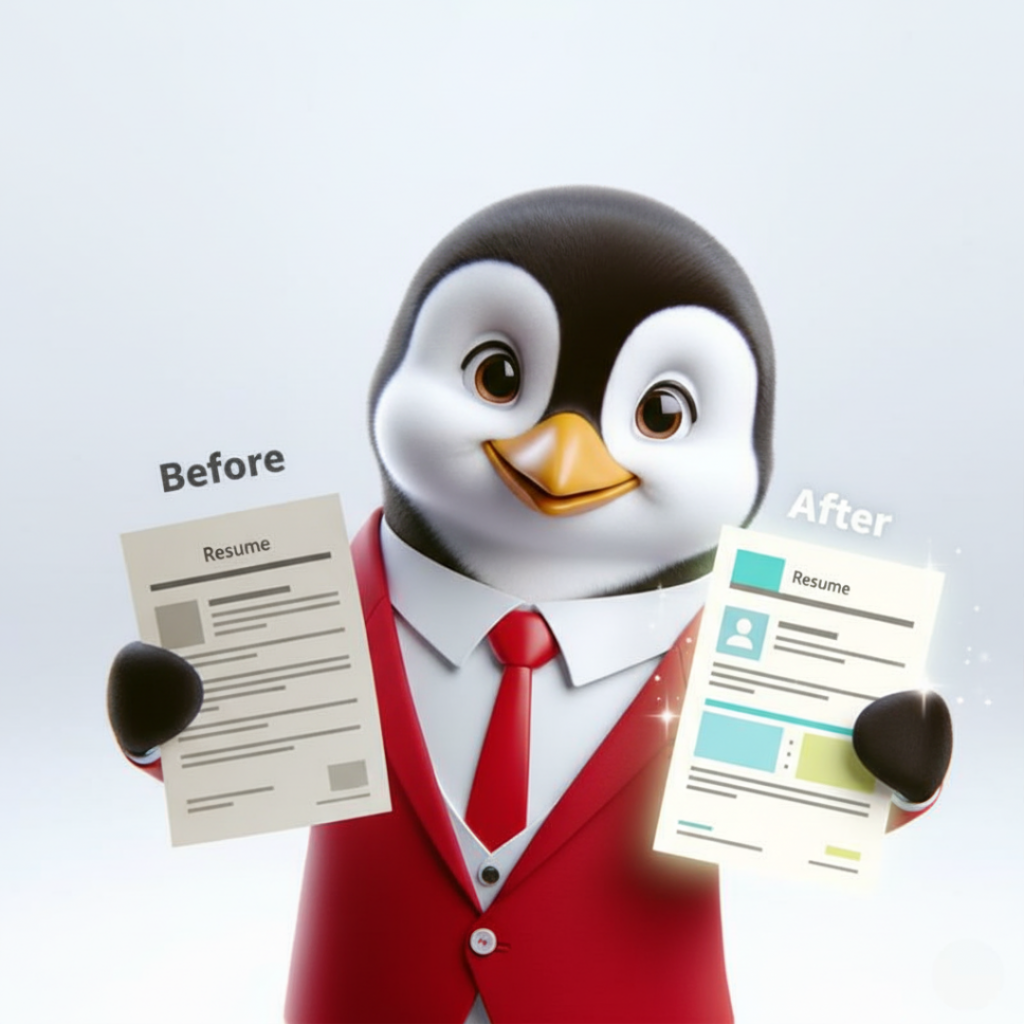
That’s where AI steps in. Using smart algorithms, AI-enhanced resumes analyse job descriptions, optimize keywords, and reframe content to make every line count. The difference between “before” and “after” is often the difference between rejection and shortlisting. Let’s explore real transformations that show how AI makes ordinary resumes stand out globally.
Example 1: IT Engineer (India)
Before
A two-page generic resume filled with technical jargon and unclear achievements. It mentioned projects but failed to describe the outcomes. The layout used tables and multiple columns, making it hard for ATS to read. Skills were buried deep within paragraphs, and keywords were missing.
After
The resume was condensed, keywords were placed strategically, and metrics were added to highlight measurable results. AI identified missing skills such as Python, DevOps, AWS, and Cloud Infrastructure, placing them in a visible “Core Skills” section. Each project was reframed with impact-driven lines like:
- “Deployed CI/CD pipelines, cutting release time by 40%.”
- “Automated AWS migration, improving uptime to 99.9%.”
The design was cleaned up no tables, no fancy fonts just a professional layout that ATS and recruiters could read easily.
Result
Within two weeks, the candidate received interview calls from three major IT firms in Pune and Hyderabad.
Example 2: Marketing Manager (UAE)
Before
The original resume looked busy long paragraphs, repeated buzzwords, and very little measurable data. It was more descriptive than strategic. It didn’t reflect leadership or results and lacked region-specific details like visa status or relocation readiness.
After
AI restructured the entire format for better clarity. The opening paragraph became a crisp professional summary highlighting marketing ROI and team leadership. Achievements were rewritten with real numbers:
- “Led digital campaigns generating $1.2M in pipeline revenue.”
- “Managed a cross-functional team of 15 to achieve 30% YoY growth.”
The tool also localized the format for UAE preferences including contact details, nationality, and visa status, which recruiters in the region value.
Result
The updated resume matched more than 85% of relevant job descriptions across LinkedIn and Bayt.com, leading to multiple interview requests within a month.
Example 3: Graduate Student (USA)
Before
Like most student resumes, this one focused on academics and lacked real-world relevance. The candidate had done projects and internships but didn’t explain their outcomes. Keywords like “React,” “Data Analysis,” or “SQL” were missing, which reduced ATS ranking drastically.
After
AI restructured the content into a one-page U.S.-style resume. Projects were reframed as accomplishments:
- “Developed a React-based web app reducing page load time by 30%.”
- “Collaborated on a database project using SQL to streamline inventory tracking.”
Internships were moved higher up the page, while a “Technical Skills” section with relevant tools was added. The resume instantly became ATS-ready for U.S. entry-level tech roles.
Result
The student’s resume started ranking higher on job portals like Indeed and Glassdoor, resulting in interviews with two tech startups within three weeks.
Why These AI Changes Matter
- Improved ATS Scoring
Most resumes fail not because of weak experience, but because they don’t match job description keywords. AI-enhanced resumes extract these terms automatically — ensuring the right skills appear in the right sections. As a result, your resume passes ATS filters more frequently.
- Sharper Professional Summaries
A good summary sets the tone. Instead of vague lines like “Dedicated professional with good communication skills,” AI refines it into something powerful: “Marketing professional with 8+ years of experience in driving 30% YoY growth across GCC markets.” That subtle change makes a huge difference.
- Achievement-Driven Bullets
Recruiters love numbers because they tell a story. AI rewrites basic tasks into achievements:
- “Handled client projects” → “Delivered 12 client projects with 98% satisfaction.”
- “Tested software” → “Executed automated tests, reducing bugs by 25%.”
This transformation turns responsibility into impact — and that’s what recruiters notice first.
- Region-Specific Optimization
Every region has its own standards. AI adapts resumes accordingly:
- India: Focus on education and project details.
- UAE: Include visa, language, and relocation details.
- USA: Prioritize concise one-page layouts with measurable impact.
This localized approach helps professionals apply confidently across borders.
- Consistency and Design Simplicity
AI ensures clean, uniform formatting — consistent spacing, clear headings, and no graphics that confuse ATS. The outcome is a resume that reads well both digitally and on paper.
How AI Does It (Behind the Scenes)
AI-enhanced resumes aren’t random they’re guided by data. Here’s how:
- Keyword Extraction: AI scans job postings, pulling out essential skills and phrases.
- Content Mapping: It compares your resume with those keywords and identifies missing ones.
- Tone Adjustment: Passive lines become active and engaging.
- ATS Formatting: It restructures the layout to suit global recruiter preferences.
- Skill Highlighting: Core skills move to prime positions where scanners and human eyes land first.
The result? A document that’s recruiter-friendly, machine-readable, and industry-appropriate.
Practical Tips to Transform Your Resume
- Keep it simple: Avoid overdesign. ATS prefers structure over style.
- Quantify achievements: Numbers add weight to every line.
- Use active verbs: Words like Led, Created, Managed, or Improved make your impact clear.
- Tailor per job: Adjust skills and achievements to match each posting.
- Include a summary: Capture your expertise and goal in three lines.
- Avoid filler words: Replace “responsible for” with “achieved” or “delivered.”
Even small tweaks can make your resume more discoverable and impactful.
Conclusion
Before-and-after examples reveal what, data can’t hide — that resume structure, clarity, and keywords truly decide visibility. AI doesn’t just enhance words; it refines how you’re perceived. Whether you’re a fresher, mid-career professional, or senior executive, an AI-enhanced resume can be the difference between “ignored” and “interviewed.”
Try your own before-and-after transformation today with Resume Enhancer